
What is a sugar twill bag, and what should you know before ordering one? Well, understanding the product is a useful first step when comparing packaging options.
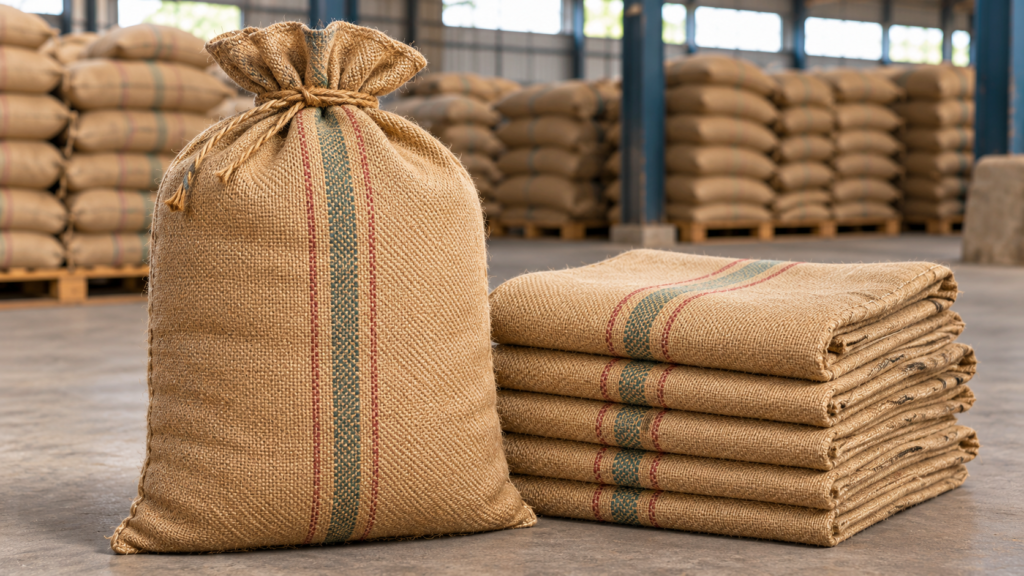
In short, a sugar twill bag is a woven jute sack used for bulk sugar packaging. Its size, fabric construction, seams, and any inner liner need to suit the intended load and handling conditions.
In this guide, we’ll explain its materials and production, unpack the specifications, and cover what to confirm before placing an order. A little product knowledge can make supplier discussions more productive.
So, let’s explore what sugar twill bags offer and how to assess them for your packaging needs.
What Is a Sugar Twill Bag, & What Is It Used For?
Sugar twill bags are jute sacks used to pack sugar for storage and transport. They are made from woven jute fabric known as sacking. “Twill” describes a weave with diagonal lines, while “sugar” points to the bag’s main use.
These bags are supplied empty, with stitched seams and an open top that is closed after filling. Moreover, some packaging specifications call for a separate inner liner. This fits inside the jute sack and forms part of the complete package.
Some of the common uses include:
- Mill and refinery packing: Packing sugar into individual bags for dispatch.
- Warehouse storage: Keeping bagged sugar before sale or shipment.
- Transport and distribution: Moving sugar between producers, traders and buyers.
- Wholesale supply: Providing empty bags to sugar packers and processors.
You may also find sugar twill bags offered for other dry agricultural goods. However, the bag’s specifications still need to match the contents, handling conditions and buyer’s requirements.
How Is a Sugar Twill Bag Made? From Jute Yarn to Finished Product
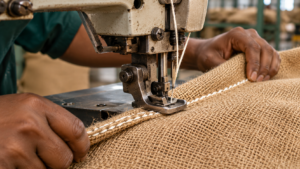
Production turns jute yarn into woven fabric, then shapes and stitches that fabric into a finished sack. Here’s how the main stages work:
- Preparing the yarn: Jute yarn is arranged for weaving. Lengthwise yarns form the warp, while crosswise yarns form the weft. Their thickness and arrangement help determine the fabric’s construction.
- Weaving the fabric: A loom interlaces the yarns according to the required weave and thread density. These details need to follow the agreed specification so the fabric is consistent across the order.
- Cutting and sewing: The fabric is cut to size and sewn into bags. The mouth is hemmed to secure the raw edge, while the seams hold the sack together.
- Checking and packing: Checks can include dimensions, bag weight, stitching, and fabric defects. Plus, fabric and seam strength testing may form part of the inspection requirements.
Finally, the finished bags are counted and packed into bales for shipment, with any agreed printing or liner requirements addressed before dispatch.
Sugar Twill Bag Specifications Explained
A sugar twill specification tells you what will be supplied, from bag size to stitching and packing.
Here’s a practical example from our published sugar twill bag specifications:
| Specification | Listed Detail | What It Tells You |
| Material | 100% jute | Identifies the outer sack’s fibre composition. |
| Dimensions | 48 × 28 inches, approximately 122 × 71 cm | Helps you assess filling and handling arrangements. |
| Empty bag weight | 1,134 g / 2.50 lb | Specifies the sack’s own weight, rather than its filling capacity. |
| Porter and shot | 6 × 8 | Describe fabric construction; confirm the counting basis and tolerances with your supplier. |
| Treatment | MOT / VOT | Lists treatment options; request details relevant to your packaging requirements. |
| Sewing | Hemmed mouth; herakle-sewn side | Describes the edge finish and seam construction. |
| Packing | 400 bags per iron-bound bale | Helps calculate order quantities and unloading requirements. |
| Identification | 2 magenta stripes | Provides a visual marking for the supplied bags. |
Also, keep bag weight separate from load capacity. Confirm the intended fill weight and strength requirements, and make sure any liner is specified separately.
Is a Sugar Twill Bag Right for Your Sugar Packaging Needs?
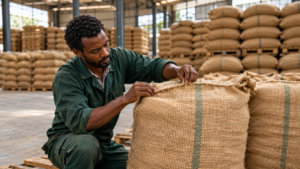
A sugar twill bag can be a practical choice when the complete package suits your sugar, packing equipment, and delivery conditions.
To decide whether it fits your needs, assess these 3 areas together:
1. Strength and Fit for Your Packing Process
Start with what happens after filling. The fabric and seams must support the intended load through lifting, stacking, and transport. Meanwhile, the bag opening and closure should work with your packing equipment.
Moreover, the weave and any liner need to contain the sugar properly, especially where smaller particles could escape during handling.
2. Moisture Protection During Storage and Transport
Moisture protection matters just as much as strength. Jute allows airflow, but it does not provide a moisture barrier. So, sugar exposed to damp conditions can become sticky or form lumps.
A suitable inner liner may therefore be needed. Its material, thickness, and closure should reflect the storage period and shipping conditions. Plus, the packaging must stay dry before filling and during handling.
3. Cleanliness and Food-Contact Suitability
Lastly, consider everything that could affect the contents. The sack, treatment, liner, and printing need to meet the requirements for the intended food-packaging use.
So ask your supplier for treatment details and relevant test reports to check that the packaging meets your buyer’s requirements.
Frequently Asked Questions
What are the typical dimensions of a sugar twill bag?
A commonly listed size is 48 × 28 inches, approximately 122 × 71 cm. However, dimensions can vary, so confirm the finished bag size and agreed tolerances before ordering.
What are sugar twill bags made of?
The outer sack is made from woven jute yarn. Some orders also include a separate inner liner, so check the complete packaging composition against your material and food-contact requirements.
How heavy is a sugar twill bag?
Our sugar twill product has a listed empty bag weight of 1,134 g, or 2.50 lb. This is the sack’s weight, not the amount of sugar it can hold.
What is the best way to store sugar?
Store sugar in clean, dry conditions, protected from moisture, strong odours, and contamination. Keep the packaging intact and follow the storage guidance for your sugar type and packaging system.
Where can I buy good-quality sugar twill bags?
At GFTCL, we supply sugar twill bags for business buyers. Tell us what you need to pack, your order quantity and destination, and let’s discuss the specifications for your order.
Final Thoughts
Choosing a sugar twill bag starts with understanding the product, but its real value comes from how well it fits your operation. That connection turns a catalogue description into a practical packaging decision.
Now, take the next step with a clearer brief and focused questions. You’ll be better prepared to discuss your needs, compare offers, and choose packaging with confidence.