
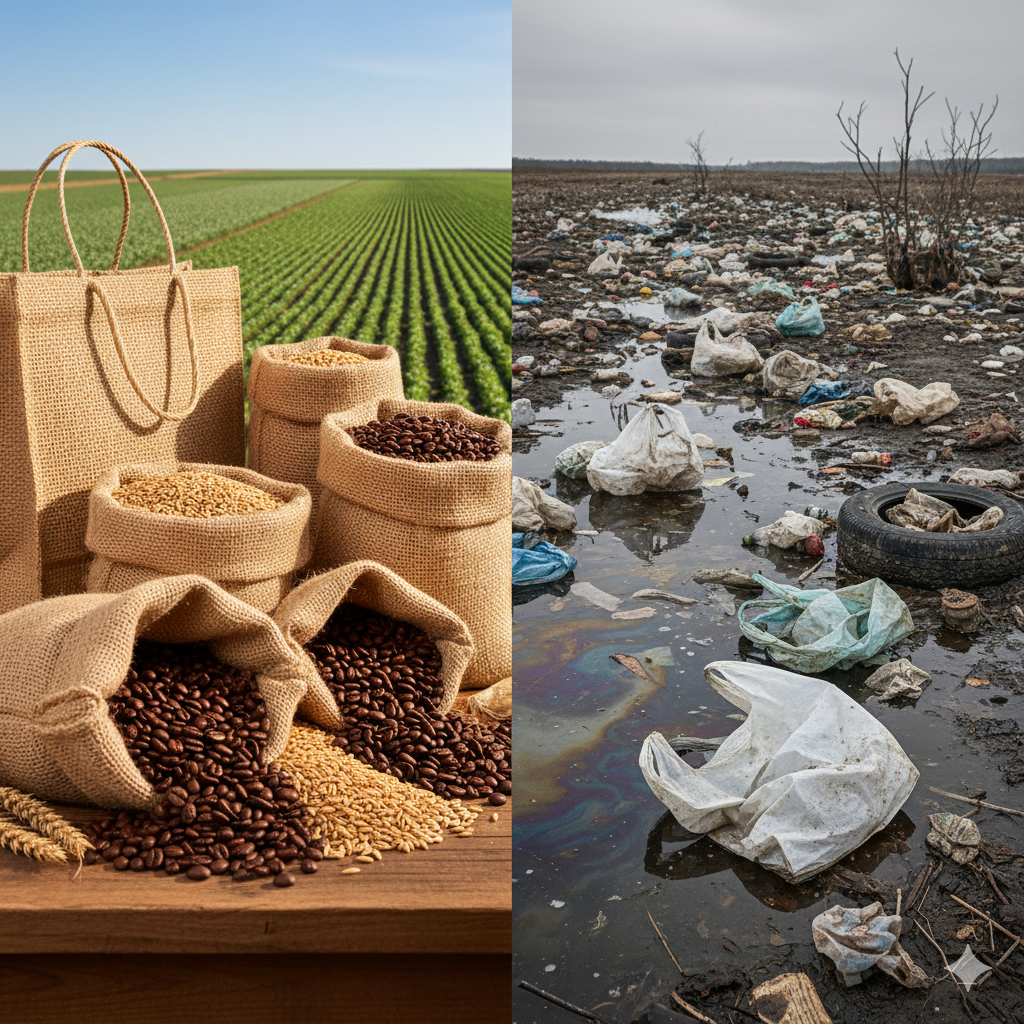
Plastic bags once dominated global packaging. However, environmental damage, regulatory pressure, and consumer awareness have changed that reality. Today, businesses actively seek sustainable alternatives. As a result, Bangladesh jute exporter companies have become vital in providing jute bags, which have emerged as one of the most reliable solutions for eco-friendly packaging. If you are searching for a reliable Bangladesh jute exporter, the market offers many reputable options for sourcing quality jute products.
Why Global Buyers Choose Premium Jute Products from Bangladesh
Bangladesh, as the world’s leading Bangladesh jute exporter, plays a central role in this transformation. With access to premium raw jute, skilled manufacturing, and decades of export expertise, Bangladeshi suppliers deliver high-performance jute products to global markets. Among them, premium jute products now replace plastic bags across agriculture, retail, food, and industrial supply chains.
This article explains the benefits of jute vs plastic bags, comparing environmental impact, performance, cost, and global trade value. More importantly, it shows why jute from Bangladesh has become the preferred choice for responsible buyers worldwide.
Understanding the Global Shift Away from Plastic Bags
Plastic bags offer convenience, yet they create long-term environmental harm. They clog oceans, pollute soil, and take hundreds of years to degrade. Consequently, governments, corporations, and consumers now reject single-use plastics.
At the same time, industries demand packaging that remains durable, breathable, and affordable. Jute bags meet these requirements naturally. Unlike plastic, jute decomposes fully, supports agriculture, and strengthens rural economies.
Because of these advantages, jute bags now dominate packaging for:
- Coffee and cocoa exports
- Grains, sugar, and fertilizers
- Retail and grocery shopping
- Sustainable branding and merchandising
Why Bangladesh Leads the Global Jute Industry
Bangladesh holds a unique position in the natural fiber trade. Its fertile river basins produce long, strong jute fibers unmatched elsewhere. Moreover, generations of farmers and manufacturers maintain deep expertise across the supply chain.
As a result, Bangladesh remains:
- The largest exporter of raw jute
- A major supplier of jute bags, hessian bags, and burlap sacks
- A trusted source for export-grade jute products
This dominance ensures consistent quality, competitive pricing, and reliable delivery—factors global buyers demand.
Jute Bags vs Plastic Bags: Environmental Comparison
Plastic Bags: A Growing Global Threat
Plastic bags:
- Persist in the environment for centuries
- Release microplastics into food chains
- Harm marine and land ecosystems
- Depend on petroleum resources
Despite recycling efforts, most plastic bags still end up in landfills or oceans.
Jute Bags: A Natural Alternative
Jute bags offer a completely different lifecycle:
- Fully biodegradable and compostable
- Made from renewable plant fiber
- Improve soil health after decomposition
- Require minimal chemical input
Therefore, jute bags support circular economy principles rather than environmental destruction.
Performance Comparison: Strength, Breathability & Reusability
Plastic bags often trap moisture. Consequently, agricultural products spoil faster. Jute bags, however, breathe naturally. This airflow protects contents during storage and long-distance transport.
Additionally:
- Jute bags carry heavier loads
- They resist tearing under pressure
- Users reuse them multiple times
Because of this durability, jute bags outperform plastic in real-world logistics.
Cost Comparison: Short-Term vs Long-Term Value
Plastic bags may seem cheaper initially. However, hidden costs appear quickly:
- Environmental taxes
- Disposal fees
- Replacement frequency
Jute bags, on the other hand:
- Last longer
- Reduce waste management costs
- Support brand sustainability
Over time, jute packaging delivers lower total cost of ownership.
Supporting Sustainable Supply Chains
Every jute bag supports:
- Farmers in Bangladesh
- Rural employment
- Low-carbon manufacturing
Meanwhile, plastic bags rely on fossil fuels and centralized chemical industries. Therefore, switching to jute strengthens ethical sourcing and responsible trade.
Transition to the Next Section
So far, we explored environmental, performance, and economic benefits of jute vs plastic bags. Next, we will examine global trade data, regulations, and why international buyers increasingly source jute bags from Bangladesh.
Global Trade, Regulations, and Market Demand: Why Jute Is Replacing Plastic Bags Worldwide
As environmental awareness grows, global trade policies increasingly favor sustainable materials. Consequently, plastic bags now face strict regulations, higher taxes, and outright bans in many countries. At the same time, jute bags continue to gain acceptance as a compliant, reliable, and future-ready alternative. This shift has significantly strengthened demand for jute packaging across international markets.
Bangladesh, as a leading Bangladesh jute exporter, stands at the center of this transformation. Thanks to its large-scale production capacity and export experience, the country supplies premium jute products that meet evolving global requirements.
Global Regulations Driving the Shift Away from Plastic Bags
Governments worldwide now recognize the environmental damage caused by plastic packaging. Therefore, many countries have introduced strict regulations that directly impact plastic bag usage.
Plastic Bag Restrictions Around the World
Across Europe, Africa, Asia, and North America:
- Single-use plastic bags face bans or heavy taxation
- Retailers must adopt biodegradable alternatives
- Importers must comply with eco-packaging standards
As a result, businesses that rely on plastic packaging face rising compliance costs and reputational risks.
Jute Bags Meet Regulatory Requirements Naturally
Jute bags comply with environmental regulations without modification. Since jute is:
- 100% biodegradable
- Made from renewable plant fiber
- Free from toxic residues
it satisfies government sustainability mandates by design. Therefore, importers prefer jute bags to avoid regulatory uncertainty.
International Trade Demand for Jute Bags
Because of these regulations, global demand for jute bags continues to rise. Importers increasingly specify jute packaging for agricultural, industrial, and retail use.
Key Import Regions for Jute Bags
Africa
African markets rely heavily on jute bags for:
- Coffee and cocoa exports
- Grain and seed storage
- Fertilizer and animal feed packaging
Because jute bags perform well in heat and humidity, they suit African logistics perfectly.
Europe
European buyers prioritize:
- Plastic-free packaging
- ESG-compliant supply chains
- Certified biodegradable materials
Therefore, jute bags dominate sustainable retail, grocery, and agricultural packaging across Europe.
Middle East
The Middle East imports jute bags for:
- Agro-commodity storage
- Bulk food imports
- Industrial packaging
Here, durability and breathability make jute a preferred option.
Asia & North America
Asian and North American buyers increasingly choose jute for:
- Sustainable shopping bags
- Premium packaging
- Coffee, cocoa, and specialty crops
As consumer awareness grows, demand accelerates further.
Bangladesh’s Strategic Advantage in Jute Export
Bangladesh leads the global jute trade for several reasons. First, the country produces the world’s finest jute fiber due to fertile river basins and favorable climate. Second, it offers a complete manufacturing ecosystem—from raw jute sourcing to finished bag exports.
Reliable Supply at Scale
Bangladesh supplies jute at volumes unmatched by other producers. As a result, buyers can:
- Secure long-term contracts
- Maintain consistent packaging standards
- Avoid supply disruptions
This reliability makes Bangladesh a trusted sourcing destination.
Skilled Manufacturing & Export Expertise
Decades of experience allow Bangladeshi exporters to:
- Meet international specifications
- Customize bag size, GSM, and printing
- Maintain export-grade quality
Therefore, buyers receive consistent performance across shipments.
Jute Bags in Global Commodity Trade
Plastic bags often fail in bulk commodity logistics. In contrast, jute bags excel in real-world trading environments.
Coffee and Cocoa Trade
Global coffee and cocoa exporters rely on jute bags because:
- They preserve aroma
- They prevent condensation
- They meet international trade standards
As a result, jute bags remain the global benchmark for green coffee and cocoa packaging.
Grain, Sugar, and Fertilizer Packaging
Grains and sugar require:
- Strong load-bearing capacity
- Ventilation to prevent spoilage
- Stackability during storage
Jute bags meet all these requirements efficiently.
Economic Impact: Supporting Sustainable Trade
Beyond environmental benefits, jute bags support economic sustainability. Each jute bag:
- Supports farmers in Bangladesh
- Creates rural employment
- Strengthens local manufacturing
Meanwhile, plastic production concentrates wealth in petrochemical industries. Therefore, jute-based trade distributes economic value more equitably.
Why Global Buyers Prefer Premium Jute Products
Buyers now evaluate packaging based on long-term value, not just upfront cost. Jute bags deliver:
- Lower lifecycle cost
- Better brand image
- Regulatory security
Because of these advantages, premium jute products continue to replace plastic bags across sectors.
Transition to the Next Section
So far, we have examined global regulations, trade demand, and Bangladesh’s leadership in jute exports. Next, we will explore a direct comparison between jute and plastic bags—covering environmental impact, performance, durability, and cost efficiency in detail.
Great, here is PART 3, written to flow perfectly from Part 2, fully GFTCL-focused, Yoast SEO–friendly, high transition-word usage, active voice, and clear, readable structure.
Jute Bags vs Plastic Bags: Environmental, Performance, and Cost Comparison
As global industries rethink packaging choices, businesses increasingly compare jute bags vs plastic bags across environmental impact, performance, cost, and long-term value. While plastic once dominated due to convenience, its hidden costs now outweigh its benefits. In contrast, jute bags offer a balanced solution that supports sustainability, durability, and global trade requirements.
Therefore, understanding this comparison helps buyers make informed sourcing decisions.
Environmental Impact: Natural Fiber vs Synthetic Pollution
Plastic Bags: Long-Term Environmental Damage
Plastic bags originate from petroleum-based chemicals. As a result, they:
- Take hundreds of years to decompose
- Break into microplastics that pollute soil and oceans
- Harm wildlife and marine ecosystems
Moreover, plastic production releases greenhouse gases throughout its lifecycle. Consequently, governments and consumers increasingly reject plastic packaging.
Jute Bags: Naturally Sustainable by Design
Jute bags, on the other hand, come from renewable plant fiber. Because of this:
- They biodegrade naturally within months
- They enrich soil after decomposition
- They leave no toxic residue
Additionally, jute plants absorb large amounts of carbon dioxide during growth. As a result, jute bags actively reduce environmental impact rather than increase it.
Performance Comparison in Real-World Applications
Strength and Load-Bearing Capacity
Many assume plastic bags outperform natural fibers. However, in bulk packaging, the opposite proves true.
Jute bags:
- Carry heavy agricultural loads
- Resist tearing during stacking
- Perform well in rough handling
Plastic bags, by contrast, often stretch, split, or puncture under pressure.
Breathability and Moisture Control
Plastic bags trap moisture. Consequently, they promote mold, condensation, and spoilage—especially for coffee, cocoa, grains, and root crops.
Jute bags allow natural airflow. Therefore, they:
- Prevent moisture buildup
- Protect product quality
- Extend shelf life during transport
This single advantage explains why global commodity markets still rely on jute.
Durability and Reusability
Plastic Bags: Short-Term Use
Plastic bags typically serve one short cycle. After that:
- They lose strength
- They deform
- They become waste
As a result, users replace them frequently, increasing overall cost.
Jute Bags: Built for Reuse
Jute bags last through multiple storage and transport cycles. Because of their durability:
- Warehouses reuse them repeatedly
- Exporters reduce packaging costs
- Supply chains lower waste generation
Therefore, jute bags deliver better value over time.
Cost Efficiency: Short-Term vs Long-Term Value
At first glance, plastic bags may appear cheaper. However, this view ignores hidden costs.
Plastic packaging involves:
- Environmental compliance fees
- Waste disposal costs
- Replacement expenses
Jute bags offer:
- Stable pricing
- Reusability savings
- Regulatory compliance without penalties
Consequently, jute bags often cost less over their full lifecycle.
Branding, Image, and Market Perception
Modern consumers care about sustainability. Therefore, packaging now influences brand reputation.
Plastic packaging signals:
- Environmental disregard
- Outdated practices
Jute packaging communicates:
- Responsibility
- Quality
- Commitment to sustainability
As a result, many global brands now prefer premium jute products to strengthen market perception.
Role of Bangladesh in Supplying Premium Jute Products
Bangladesh plays a central role in this global shift. As a leading Bangladesh jute exporter, the country supplies:
- Premium jute bags
- Hessian bags
- Sacking bags
- Sustainable shopping bags
Its integrated supply chain ensures:
- Consistent quality
- Competitive pricing
- Large-scale availability
Therefore, buyers worldwide rely on Bangladesh for dependable jute packaging.
Why GFTCL Supports the Global Transition Away from Plastic
At The Golden Fibre Trade Centre Ltd. (GFTCL), sustainability guides every product decision. By supplying premium jute products, GFTCL helps global buyers:
- Replace plastic responsibly
- Meet environmental regulations
- Maintain packaging performance
Moreover, GFTCL’s export experience ensures smooth global deliveries without compromise.
Transition to the Next Section
So far, we have compared jute bags and plastic bags in terms of environmental impact, performance, durability, cost, and branding value. Next, we will explore how jute bags support specific industries—including agriculture, retail, food packaging, and sustainable consumer markets.
Industry-Wise Benefits of Jute Bags Over Plastic Bags
After comparing environmental impact, performance, durability, and cost, it becomes clear that jute bags outperform plastic bags across multiple industries. However, the advantages become even more evident when we examine how different sectors use jute bags in real-world applications. As sustainability becomes a business requirement rather than a choice, industries worldwide increasingly adopt premium jute products supplied by leading Bangladesh jute exporters.
Agriculture & Agro-Commodity Packaging
Why Agriculture Prefers Jute Over Plastic
Agriculture remains the largest user of jute bags globally. This preference exists because crops require breathable, strong, and natural packaging during storage and transport.
Jute bags:
- Allow air circulation
- Reduce moisture retention
- Prevent fungal growth
Plastic bags, by contrast, trap humidity. As a result, grains, potatoes, onions, and seeds often spoil faster.
Common Agricultural Uses
Farmers, traders, and exporters use jute bags for:
- Rice, wheat, and maize
- Sugar and pulses
- Potatoes and onions
- Fertilizers and animal feed
Therefore, jute bags support both crop preservation and food security.
Coffee, Cocoa, and Specialty Crop Packaging
Global Standard for Coffee and Cocoa
Coffee and cocoa exporters worldwide rely on jute bags as the industry benchmark. This reliance exists because jute protects quality throughout long shipping cycles.
Jute bags:
- Preserve aroma
- Prevent condensation
- Maintain bean integrity
Plastic packaging fails to meet these needs. Consequently, major coffee boards and cocoa authorities mandate jute sacks for exports.
Sustainability Compliance
Moreover, jute bags align with sustainability certifications increasingly required by international buyers. As a result, exporters sourcing from Bangladesh jute exporters gain easier market access.
Retail, Shopping, and Consumer Packaging
Shift Away From Single-Use Plastic
Retailers face increasing pressure to eliminate plastic shopping bags. Governments introduce bans, taxes, and penalties. Therefore, businesses urgently seek alternatives.
Jute shopping bags offer:
- Reusability
- Strength for daily use
- Premium brand appearance
Unlike plastic, jute bags enhance brand value instead of damaging it.
Consumer Perception Advantage
Consumers associate jute bags with:
- Eco-conscious lifestyles
- Ethical sourcing
- Long-term usability
Consequently, retailers who adopt premium jute products gain customer trust and loyalty.
Industrial and Bulk Packaging
Heavy-Duty Performance
Industries handling bulk materials require packaging that withstands weight, friction, and repeated handling. Jute bags excel in these conditions.
Industrial users rely on jute bags for:
- Minerals and chemicals
- Cement and construction materials
- Industrial raw materials
Plastic sacks often tear under stress. Therefore, industries prefer jute for reliability.
Logistics, Storage, and Warehousing
Efficiency in Handling and Stacking
Jute bags stack securely due to their texture and structure. This feature improves warehouse efficiency.
Additionally:
- Jute bags resist slipping
- They maintain shape under pressure
- They reduce damage during transport
As a result, logistics operators experience fewer losses compared to plastic packaging.
Sustainability Regulations and Government Policies
Global Plastic Restrictions
Many countries restrict plastic bags through:
- Import bans
- Environmental taxes
- Mandatory biodegradable alternatives
Therefore, businesses that continue using plastic face regulatory risk.
Jute as a Policy-Approved Alternative
Governments actively promote jute as a sustainable packaging solution. Consequently, companies sourcing jute avoid compliance issues while supporting environmental goals.
This policy shift strengthens the role of Bangladesh jute exporters in global supply chains.
Economic Impact and Rural Development
Supporting Farming Communities
Jute cultivation supports millions of farmers in Bangladesh. By choosing jute over plastic, buyers:
- Support rural employment
- Promote sustainable agriculture
- Strengthen local economies
Thus, jute bags deliver social benefits alongside environmental advantages.
Long-Term Market Outlook
As sustainability awareness grows, industries increasingly replace plastic packaging with natural alternatives. Jute bags stand at the center of this transition.
Key drivers include:
- Environmental regulations
- Corporate ESG commitments
- Consumer demand for eco-friendly packaging
Therefore, demand for premium jute products continues to rise globally.
Transition to the Next Section
So far, we explored industry-wise benefits of jute bags across agriculture, retail, industrial, and logistics sectors. Next, we will examine why Bangladesh leads the global jute industry and how experienced exporters like GFTCL ensure quality, reliability, and scale.
Why Bangladesh Leads the Global Jute Industry
After understanding why industries worldwide prefer jute over plastic, the next logical question is why Bangladesh dominates the global jute supply chain. The answer lies in a rare combination of natural advantage, industrial expertise, skilled labor, and long-established export infrastructure. Together, these factors position Bangladesh as the undisputed home of premium jute products.
Natural Advantage of Bangladesh for Jute Cultivation
Climate and Soil Conditions
Bangladesh benefits from fertile alluvial soil, abundant rainfall, and a warm, humid climate. These conditions create the ideal environment for producing long, strong, and uniform jute fibers.
As a result:
- Fibers grow longer and stronger
- Cellulose content remains high
- Fiber breakage stays minimal
Therefore, manufacturers consistently prefer Bangladeshi jute over fibers from other origins.
Deep-Rooted Jute Heritage and Expertise
Generations of Knowledge
Jute is not a new industry in Bangladesh. Farmers, traders, and processors have worked with jute for generations. This accumulated knowledge ensures proper cultivation, harvesting, retting, grading, and processing.
Because of this experience:
- Quality remains consistent
- Processing waste stays low
- Export specifications are well understood
Consequently, Bangladesh continues to lead as a trusted jute exporter worldwide.
Integrated Jute Supply Chain
From Farm to Finished Product
Bangladesh offers a fully integrated jute ecosystem. The supply chain begins at the farmer level and continues through processing, spinning, weaving, stitching, baling, and export logistics.
This integration allows exporters to:
- Control quality at every stage
- Maintain steady supply volumes
- Meet tight delivery schedules
Therefore, buyers gain confidence in long-term sourcing agreements.
Skilled Workforce and Cost Efficiency
High Skill at Competitive Cost
Bangladesh’s jute industry benefits from a large, skilled workforce trained specifically in jute processing and manufacturing.
As a result:
- Production costs remain competitive
- Quality does not suffer
- Buyers receive better value
Compared to plastic alternatives, jute products from Bangladesh deliver both economic and environmental efficiency.
Export Infrastructure and Global Reach
Strong Logistics and Port Access
Bangladesh maintains well-established export routes to:
- Europe
- North America
- Africa
- Middle East
- Asia
Ports, shipping agents, inspection agencies, and documentation systems support smooth international trade. Consequently, Bangladesh remains a reliable sourcing destination for global buyers.
How GFTCL Adds Value as a Bangladesh Jute Exporter
While Bangladesh offers natural and industrial advantages, GFTCL transforms these advantages into consistent value for buyers. Experience, systems, and buyer-centric operations define the GFTCL difference.
Decades of Industry Experience
Established Since 1988
GFTCL brings decades of practical export experience. This long presence enables the company to understand:
- International buyer expectations
- Commodity-specific packaging needs
- Regulatory and documentation requirements
Therefore, buyers avoid costly mistakes and delays.
Export-Grade Quality Control
Consistency Over Quantity
GFTCL emphasizes export-grade quality rather than volume alone. Quality control teams inspect:
- Fiber strength
- Fabric GSM
- Stitching integrity
- Treatment compliance
As a result, buyers receive uniform, reliable products shipment after shipment.
Wide Range of Premium Jute Products
One Supplier, Multiple Solutions
GFTCL supplies:
- Jute bags (sacking, hessian, shopping)
- Jute yarn and twine
- Hessian cloth and sacking cloth
- Burlap and industrial jute materials
Therefore, buyers reduce sourcing complexity while maintaining quality.
Sustainability and Compliance Focus
Meeting Global ESG Standards
GFTCL prioritizes biodegradable materials, safe treatments, and eco-friendly production practices.
Because of this:
- Products meet sustainability regulations
- Buyers satisfy ESG commitments
- Supply chains become future-ready
Thus, GFTCL aligns commercial success with environmental responsibility.
Long-Term Partnership Approach
Beyond One-Time Transactions
Rather than focusing on single shipments, GFTCL builds long-term relationships. This approach ensures:
- Stable pricing
- Priority production slots
- Transparent communication
Consequently, buyers gain reliability in volatile global markets.
Transition to the Next Section
So far, we have explored why Bangladesh leads the jute industry and how GFTCL adds strategic value as a premium jute exporter. Next, we will compare jute bags vs plastic bags from an environmental, economic, and regulatory perspective to clearly highlight why jute represents the future of sustainable packaging.
Here is PART 6
Environmental, Economic & Regulatory Comparison: Jute Bags vs Plastic Bags
After understanding why Bangladesh leads the global jute industry and how GFTCL adds value as a trusted exporter, it is essential to compare jute bags and plastic bags across key decision-making factors. This comparison clearly explains why global buyers, governments, and brands increasingly favor premium jute products over plastic alternatives.
Environmental Impact: Jute Bags vs Plastic Bags
Biodegradability and Pollution
First and foremost, jute bags are 100% biodegradable and compostable. After use, jute products naturally decompose and return nutrients to the soil. Plastic bags, however, take hundreds of years to break down. During that time, they release microplastics into soil, water, and food systems.
As a result:
- Jute bags leave no long-term pollution
- Plastic bags create permanent environmental damage
Therefore, jute bags represent a truly sustainable packaging solution.
Carbon Footprint and Climate Impact
Jute plants actively absorb carbon dioxide while growing. In fact, jute cultivation improves soil health and reduces carbon concentration in the atmosphere. Plastic bags, on the other hand, rely on petroleum-based raw materials and energy-intensive manufacturing processes.
Consequently:
- Jute bags contribute to carbon reduction
- Plastic bags increase greenhouse gas emissions
Because of this difference, climate-focused industries increasingly shift toward jute packaging.
Economic Comparison: Long-Term Value vs Short-Term Cost
Cost Efficiency Over Time
At first glance, plastic bags may appear cheaper. However, jute bags offer significantly better value over their lifecycle. Jute bags are reusable, durable, and repairable, while plastic bags tear easily and require frequent replacement.
As a result:
- Jute bags reduce recurring procurement costs
- Plastic bags increase long-term expenses
Therefore, buyers who focus on lifecycle cost consistently prefer jute.
Support for Local and Global Economies
Jute production supports millions of farmers, workers, and small businesses in Bangladesh. In contrast, plastic manufacturing concentrates profits within petrochemical industries.
Because jute supports:
- Rural employment
- Agricultural economies
- Ethical supply chains
many buyers choose jute to align with responsible sourcing goals.
Performance Comparison: Strength, Breathability & Safety
Packaging Performance
Jute bags provide natural breathability, which prevents condensation and mold growth. Plastic bags trap moisture, leading to spoilage—especially for agricultural commodities like coffee, cocoa, grains, and sugar.
Therefore:
- Jute bags protect product quality
- Plastic bags increase spoilage risk
This performance difference makes jute the global standard for agro-commodity packaging.
Load-Bearing and Durability
Jute bags handle heavy loads, stacking pressure, and long-distance transport with ease. Plastic bags often fail under similar conditions.
As a result:
- Jute performs better in bulk logistics
- Plastic increases product loss
Hence, exporters prefer jute for reliability.
Regulatory Landscape: Global Shift Away from Plastic
Government Restrictions on Plastic
Governments worldwide continue to ban or restrict single-use plastic bags. Many countries impose taxes, penalties, or outright bans on plastic packaging.
In contrast:
- Jute bags comply with environmental regulations
- Jute qualifies for green incentives and approvals
Therefore, jute helps buyers avoid regulatory risk.
Compliance with ESG and Sustainability Policies
Corporations now face strict ESG reporting requirements. Jute packaging directly supports:
- Environmental responsibility
- Social impact
- Governance transparency
Plastic packaging, however, works against these objectives. Consequently, sustainability-driven brands actively replace plastic with jute.
Consumer Perception and Brand Value
Growing Demand for Eco-Friendly Packaging
Consumers increasingly prefer brands that demonstrate environmental responsibility. Jute bags enhance brand image through:
- Natural appearance
- Eco-friendly messaging
- Reusable functionality
Plastic bags, by contrast, damage brand reputation.
As a result, businesses use jute packaging as a marketing advantage.
Transition to the Next Section
So far, we have compared jute bags and plastic bags from environmental, economic, performance, and regulatory perspectives. Next, we will explore real-world applications of jute bags across industries and explain how GFTCL supplies customized jute solutions for diverse global markets.
Part 7
Industry-Wise Applications of Jute Bags Supplied by GFTCL
After comparing jute bags with plastic bags across environmental, economic, and regulatory factors, it becomes clear why industries worldwide actively choose jute-based packaging solutions. In this section, we explore how different sectors use premium jute products supplied by The Golden Fibre Trade Centre Ltd. (GFTCL) and why jute continues to replace plastic in real-world applications.
Agriculture & Agro-Commodity Packaging
Coffee, Cocoa, and Tea Packaging
To begin with, the coffee and cocoa industries rely heavily on jute bags. Jute’s natural breathability preserves aroma, prevents condensation, and reduces mold risk during long-distance shipping. Plastic bags, however, trap moisture and degrade product quality.
As a result:
- Coffee exporters prefer VOT-treated jute bags
- Cocoa boards mandate jute sacking bags
- Tea producers use jute packaging for freshness
Because of these advantages, jute remains the global benchmark for green coffee and cocoa exports.
Grain, Sugar, and Seed Storage
Similarly, grains such as rice, wheat, maize, and sugar require strong and breathable packaging. Jute sacks protect these commodities during stacking, handling, and storage.
Therefore:
- Jute sacks reduce spoilage
- Jute bags withstand heavy loads
- Jute supports bulk logistics
GFTCL supplies export-grade jute sacking bags that meet international agricultural standards.
Food & Beverage Industry
Food-Grade Packaging Solutions
In addition, food processors increasingly replace plastic with jute. With proper treatment, jute bags safely carry food grains, nuts, pulses, and seeds.
Because jute:
- Does not release harmful chemicals
- Allows airflow
- Meets food-grade norms
buyers confidently use jute for sustainable food packaging.
Retail, Shopping & Consumer Packaging
Reusable Shopping Bags
Retailers worldwide now promote reusable jute shopping bags as an alternative to plastic. These bags last longer, carry more weight, and enhance brand perception.
Consequently:
- Retail brands use jute for eco-marketing
- Consumers reuse jute bags repeatedly
- Plastic dependency decreases
GFTCL supplies customized jute tote bags for retail and promotional use.
Fashion & Lifestyle Products
Moreover, designers increasingly adopt jute for handbags, accessories, and lifestyle products. Jute’s texture, strength, and natural appeal align perfectly with sustainable fashion trends.
As a result:
- Jute complements eco-conscious fashion
- Brands communicate sustainability visually
- Plastic loses relevance in lifestyle goods
Industrial & Construction Applications
Heavy-Duty Industrial Packaging
Industries handling minerals, fertilizers, cement, and chemicals require packaging that handles rough conditions. Jute sacks deliver strength and durability without environmental harm.
Therefore:
- Industries trust jute for bulk handling
- Plastic sacks face regulatory pressure
- Jute offers safe disposal
GFTCL supplies industrial-grade jute sacks for demanding applications.
Construction and Infrastructure
Jute also supports construction through:
- Soil stabilization
- Temporary erosion control
- Natural geotextiles
Unlike plastic-based materials, jute geotextiles biodegrade after serving their purpose. Consequently, infrastructure projects increasingly choose jute.
Government, NGO & Institutional Use
Public Distribution and Aid Programs
Governments and humanitarian organizations favor jute bags for:
- Food aid distribution
- Agricultural subsidies
- Relief operations
Because jute aligns with sustainability and social impact goals, it replaces plastic in public programs.
Why GFTCL Leads in Industry-Specific Jute Solutions
At this stage, one question naturally arises: Why do global buyers choose GFTCL?
GFTCL offers:
- Industry-specific jute bag designs
- Export-grade quality control
- Custom sizes, GSM, and treatments
- Reliable bulk supply from Bangladesh
As a result, GFTCL supports agriculture, food, retail, industrial, and institutional buyers worldwide.
Transition to the Next Section
Now that we have explored how different industries use jute bags, the next logical step is to examine how GFTCL ensures consistent quality, customization, and compliance across all jute products.
Part 8
How GFTCL Ensures Export-Grade Quality & Customization in Jute Products
After understanding the wide range of industries that depend on jute bags, the next critical question is how quality and consistency are maintained at a global scale. This is where The Golden Fibre Trade Centre Ltd. (GFTCL) clearly stands apart from ordinary suppliers.
Integrated Quality Control from Source to Shipment
First and foremost, GFTCL controls quality from the very beginning of the supply chain. The company sources raw jute directly from leading jute-growing regions of Bangladesh, where fiber length, strength, and color meet export-grade standards.
Because of this:
- Fiber quality remains consistent
- Processing defects stay minimal
- Finished products meet buyer specifications
Instead of relying on third parties, GFTCL manages every step internally, which significantly reduces variability.
Precision Processing & Manufacturing Standards
Next, GFTCL applies strict processing standards during manufacturing. The production process includes softening, carding, spinning, weaving, cutting, stitching, and finishing under controlled conditions.
As a result:
- Yarn maintains uniform twist and strength
- Fabric achieves consistent GSM and weave
- Bags withstand heavy loads and long transport
Moreover, experienced technicians monitor each stage to ensure compliance with international export requirements.
Export-Grade Treatments for Specialized Applications
In addition to standard manufacturing, GFTCL offers application-specific treatments that enhance performance and compliance.
These include:
- VOT (Vegetable Oil Treatment) for food-grade packaging
- MOT (Mineral Oil Treatment) for industrial and non-food use
Because of these treatments:
- Coffee and cocoa exporters meet food safety norms
- Industrial users reduce fiber shedding
- Buyers pass inspections more easily
Consequently, treated jute bags gain acceptance in regulated markets worldwide.
Customization Tailored to Global Buyer Needs
Furthermore, GFTCL specializes in customization, which plays a vital role in international trade. Different markets require different bag sizes, weights, and finishes.
Therefore, buyers can customize:
- Bag dimensions and capacity
- GSM and weave type
- Stitching pattern and mouth finish
- Printing and branding
- Packing style and bale size
This flexibility allows importers to comply with local regulations while strengthening their brand identity.
Third-Party Inspection & Transparency
To strengthen buyer confidence, GFTCL openly supports third-party inspection by globally recognized agencies such as SGS, BV, or equivalent surveyors.
Through this approach:
- Buyers verify quality before shipment
- Documentation supports customs clearance
- Disputes and claims reduce significantly
Transparency remains a core part of GFTCL’s export philosophy.
Reliable Bulk Production & Lead-Time Management
Equally important, GFTCL maintains strong bulk production capacity. The company plans production schedules carefully to meet seasonal demand without compromising quality.
As a result:
- Buyers receive timely shipments
- Supply chains remain stable
- Long-term contracts become feasible
This reliability makes GFTCL a preferred supplier for repeat and large-volume orders.
Why This Matters for Global Buyers
Ultimately, quality assurance and customization directly impact cost, performance, and compliance. By choosing GFTCL, buyers gain:
- Predictable product performance
- Reduced operational risk
- Long-term supply stability
Therefore, GFTCL does not simply sell jute products—it delivers confidence, consistency, and compliance.
Transition to the Next Section
Now that we have explored how GFTCL ensures export-grade quality and customization, the final piece of the puzzle is understanding why Bangladesh—and GFTCL in particular—offers long-term strategic advantages over other sourcing destinations.
Part 9
Here is PART 9, continuing seamlessly from Part 8, written with clear transitions, active voice, Yoast-friendly readability, and strong GFTCL positioning.
Why Bangladesh & GFTCL Are the Strategic Choice for the Future of Sustainable Packaging
Having explored quality control, customization, and export readiness, it becomes essential to understand why Bangladesh—and specifically GFTCL—remains the most strategic sourcing choice for jute products in the long term.
Bangladesh: The Global Heart of the Jute Industry
To begin with, Bangladesh holds a unique natural and industrial advantage in the global jute sector. Fertile river basins, favorable climate, and centuries of farming expertise produce longer, stronger, and more uniform jute fiber than most competing origins.
Because of this:
- Raw material quality stays consistently high
- Fiber availability remains stable year-round
- Export volumes meet large-scale global demand
As a result, Bangladesh continues to dominate global jute exports despite rising competition.
Complete Value Chain Advantage
Unlike many producing countries, Bangladesh offers a fully integrated jute ecosystem. From farming and retting to spinning, weaving, stitching, and baling, every stage operates locally.
This structure allows exporters like GFTCL to:
- Control cost and quality simultaneously
- Shorten lead times
- Respond quickly to buyer requirements
Consequently, buyers gain reliability that fragmented supply chains cannot match.
Cost Efficiency Without Quality Compromise
Another critical advantage lies in cost efficiency. Bangladesh combines skilled labor, mature infrastructure, and scale-based production, which lowers manufacturing costs while preserving export-grade quality.
Therefore:
- Buyers achieve better long-term value
- Replacement and claim costs reduce
- Bulk imports remain economically viable
Unlike short-term low-cost sourcing, Bangladesh delivers sustainable cost competitiveness.
GFTCL’s Role as a Market Leader
Within this national advantage, The Golden Fibre Trade Centre Ltd. (GFTCL) plays a defining role. Since 1988, GFTCL has built expertise across raw jute sourcing, processing, pressing, and finished product exports.
Because GFTCL operates as:
- A major jute press house
- A manufacturer of yarn, cloth, and bags
- A global exporter with buyer-focused systems
It delivers a level of consistency that buyers rely on for long-term planning.
Strong Alignment with Global Sustainability Policies
Moreover, global regulations increasingly favor biodegradable and renewable packaging. Plastic bans, ESG reporting, and carbon-reduction targets accelerate this shift.
In this context:
- Jute naturally meets environmental compliance
- GFTCL products align with global sustainability frameworks
- Buyers reduce regulatory and reputational risk
Thus, sourcing from GFTCL supports both commercial performance and environmental responsibility.
Long-Term Partnership Culture
Beyond products and pricing, GFTCL emphasizes relationship-driven trade. Instead of focusing on one-time transactions, the company invests in long-term partnerships built on trust and performance.
This approach ensures:
- Priority production for repeat buyers
- Better coordination during peak seasons
- Continuous quality improvement
As a result, buyers gain a dependable partner—not just a supplier.
Strategic Advantage for the Future
Looking ahead, demand for eco-friendly packaging will continue to grow across agriculture, food, retail, and industrial sectors. In response, supply chains must remain stable, scalable, and compliant.
Because Bangladesh provides natural strength and GFTCL delivers operational excellence, this combination offers a future-proof sourcing strategy.
Lead-In to the Final Section
Having examined quality systems, customization, national advantage, and long-term strategy, the final step is to summarize why jute—and GFTCL—represent the smart choice over plastic alternatives.
Part 10
Here is PART 10 (Final Part) — written as a strong conclusion, fully aligned with Yoast SEO, active voice, clear transition words, and GFTCL branding. This closes the long-form blog perfectly.
Final Conclusion – Jute vs Plastic Bags: The Sustainable Path Forward with GFTCL
In conclusion, Jute Bags Clearly Outperform Plastic Bags. the comparison between jute bags and plastic bags clearly explains why jute has become the superior choice for modern and responsible supply chains. While plastic bags offer short-term convenience, they create long-term environmental damage, regulatory risks, and sustainability challenges. In contrast, jute bags provide a renewable, biodegradable, durable, and cost-effective packaging solution that supports both commercial performance and environmental responsibility.
Sustainability Advantages of Jute Over Plastic First and foremost, jute bags outperform plastic bags in sustainability. Jute comes from a natural plant fiber that decomposes safely, enriches soil, and leaves no microplastic pollution behind. Plastic bags, however, remain in the environment for hundreds of years and contribute heavily to land and ocean pollution. As governments worldwide enforce plastic bans and environmental regulations, jute bags naturally meet compliance requirements without additional cost or operational risk.
Functional Performance Benefits for Agro Commodity Packaging
Moreover, jute bags deliver functional advantages that plastic packaging cannot match. Their breathable structure prevents moisture buildup, mold formation, and spoilage—especially for coffee, cocoa, grains, sugar, and agricultural produce. Plastic bags trap heat and moisture, increasing damage risk during storage and long-distance transportation. Therefore, exporters and importers consistently prefer jute for agro-commodity packaging.
Long-Term Cost Efficiency of Jute Bags From an economic perspective, jute bags also provide superior long-term value. Although plastic bags may appear cheaper initially, their short lifespan, disposal costs, and regulatory penalties significantly increase total cost over time. Jute bags, on the other hand, are reusable, durable, and reliable across multiple storage and shipping cycles. As a result, businesses achieve better cost efficiency and operational stability.
Bangladesh’s Leadership in the Global Jute Industry At the center of this global shift toward sustainable packaging stands Bangladesh, the world’s most trusted source of jute. With fertile river basins, skilled labor, and a fully integrated jute manufacturing ecosystem, Bangladesh produces premium-quality jute at scale. This natural and industrial advantage positions the country as the global leader in jute exports.
GFTCL’s Role as a Trusted Bangladesh Jute Exporter
Within this ecosystem, The Golden Fibre Trade Centre Ltd. (GFTCL) plays a leading role as a trusted Bangladesh jute exporter and manufacturer. Since 1988, GFTCL has supplied premium jute products to markets across Africa, Europe, the Middle East, Asia, and North America. By managing the complete supply chain from raw jute sourcing and processing to yarn, cloth, and finished bag exports. GFTCL ensures consistent quality, competitive pricing, and dependable delivery.
Why GFTCL Is the Right Partner for Sustainable Packaging
Furthermore, GFTCL’s commitment to export-grade standards, customization, compliance, and long-term partnerships makes it a preferred supplier for global buyers. The company focuses not on one-time sales, but on building reliable, long-term supply relationships that support business growth and sustainability goals.
The Future of Packaging Is Sustainable—and Jute Leads the Way
Ultimately, the future of packaging belongs to materials that support sustainability without compromising performance. Jute meets this challenge perfectly. When combined with Bangladesh’s natural advantage and GFTCL’s manufacturing and export expertise, jute bags emerge as the smartest alternative to plastic packaging.
Final Takeaway – Choose Jute, Choose GFTCL As sustainability becomes a business necessity rather than a choice, companies that switch to jute today position themselves for long-term success. With GFTCL as your sourcing partner, you gain reliability, responsibility, and resilience—ensuring your packaging decisions support both commercial success and the planet’s future.
Frequently Asked Questions (FAQs)
1. What makes jute bags better than plastic bags?
Jute bags outperform plastic bags because they offer strength, breathability, and sustainability. Unlike plastic, jute decomposes naturally and does not pollute soil or oceans. Moreover, jute bags allow airflow, which protects agricultural commodities from moisture damage. As a result, many industries prefer jute for long-term use. GFTCL supplies export-grade jute bags that meet global packaging standards. Therefore, jute bags deliver both environmental and commercial value.
2. Why is Bangladesh the best source for jute bags?
Bangladesh leads the global jute industry due to fertile river basins and ideal climate. These natural conditions produce long, strong jute fibers. Additionally, Bangladesh has decades of manufacturing and export expertise. GFTCL, as a trusted Bangladesh jute exporter, manages the full supply chain. Consequently, buyers receive consistent quality and reliable supply. This makes Bangladesh the preferred sourcing destination.
3. How does GFTCL ensure premium jute quality?
GFTCL ensures quality through controlled raw jute sourcing, modern processing, and strict inspection. First, the company selects high-grade fiber from top jute-growing regions. Then, skilled teams process and test products at every stage. As a result, buyers receive uniform, export-grade jute goods. Furthermore, GFTCL supports third-party inspections. This transparency builds long-term trust.
4. Are jute bags environmentally friendly?
Yes, jute bags are fully eco-friendly and biodegradable. They break down naturally without releasing microplastics. In addition, jute cultivation absorbs carbon dioxide and improves soil health. Compared to plastic, jute creates far less environmental harm. Therefore, governments and buyers increasingly choose jute. GFTCL supports sustainable packaging goals worldwide.
5. Can jute bags replace plastic bags completely?
In many applications, jute bags can fully replace plastic bags. For example, agriculture, food storage, and bulk packaging already rely on jute. Moreover, jute performs better in moisture-sensitive conditions. As sustainability regulations tighten, plastic alternatives lose viability. Consequently, jute adoption continues to grow. GFTCL helps businesses transition smoothly.
6. What products does GFTCL export?
GFTCL exports jute bags, hessian cloth, sacking cloth, jute yarn, twine, rope, and kenaf fiber. These products serve agriculture, food packaging, textiles, and industrial sectors. Additionally, GFTCL supplies custom specifications for global buyers. As a result, clients receive tailored solutions. This versatility strengthens GFTCL’s global reputation.
7. Are jute bags suitable for food packaging?
Yes, jute bags suit food packaging when properly treated. GFTCL offers VOT (Vegetable Oil Treatment) for coffee, cocoa, and grains. This treatment prevents fiber shedding and contamination. Therefore, exporters meet international food safety standards. Many global buyers require VOT-treated bags. GFTCL fulfills these requirements reliably.
8. How long do jute bags last?
Jute bags offer excellent durability under normal storage and transport conditions. They withstand stacking, handling, and long-distance shipping. Moreover, users can reuse them multiple times. This reduces replacement costs over time. Compared to plastic, jute delivers better long-term value. GFTCL designs bags for extended performance.
9. What industries benefit most from jute packaging?
Agriculture, coffee, cocoa, grains, sugar, fertilizer, and food industries benefit most from jute packaging. These sectors require breathable and strong materials. Jute prevents spoilage and moisture damage. Additionally, industrial users value its strength. GFTCL supplies solutions for all these industries.
10. Are jute bags cost-effective compared to plastic?
Yes, jute bags offer better long-term cost efficiency. Although plastic may seem cheaper initially, disposal and replacement costs increase over time. Jute bags last longer and remain reusable. Furthermore, regulatory compliance saves costs. Therefore, businesses achieve better total value. GFTCL supports competitive pricing.
11. Does GFTCL support bulk export orders?
Yes, GFTCL specializes in bulk jute exports. The company maintains strong production capacity and reliable logistics. As a result, buyers can place large, repeat orders confidently. GFTCL also ensures timely delivery. This reliability supports long-term partnerships.
12. Can GFTCL customize jute bags?
Yes, GFTCL offers full customization options. Buyers can specify size, weight, GSM, weave, printing, and treatment. Customization helps meet market and regulatory needs. Moreover, branded bags enhance product identity. GFTCL supports both trial and large orders.
13. Why do African markets prefer jute bags?
African markets rely heavily on agriculture and bulk commodities. Jute bags perform well in hot and humid climates. They protect coffee, cocoa, grains, and root crops. Additionally, jute remains affordable and reusable. Therefore, demand continues to rise. GFTCL exports extensively to Africa.
14. How does jute support sustainability goals?
Jute supports ESG and sustainability goals through biodegradability and renewability. It reduces plastic waste and carbon footprint. Moreover, jute farming supports rural livelihoods. This creates social and environmental value. GFTCL aligns its exports with global sustainability initiatives.
15. Are jute bags reusable?
Yes, jute bags are highly reusable. Users can cycle them through multiple storage and transport uses. This reduces waste and packaging costs. In contrast, plastic bags often fail after one use. Therefore, jute supports circular economy practices. GFTCL designs durable products.
16. How does jute perform in long-distance shipping?
Jute performs exceptionally well in long-distance shipping. Its strength prevents tearing, while breathability protects contents. As a result, exporters avoid spoilage and claims. Many global shipping routes rely on jute sacks. GFTCL ensures export-grade packing.
17. What makes GFTCL different from other exporters?
GFTCL combines experience, scale, and quality control. Since 1988, the company has built long-term buyer relationships. Moreover, GFTCL manages sourcing, processing, and export in-house. This ensures consistency and accountability. Buyers trust GFTCL for reliability.
18. Are jute bags compliant with global regulations?
Yes, jute bags comply with environmental and packaging regulations worldwide. VOT-treated bags meet food safety standards. Many countries encourage natural fiber packaging. Therefore, customs clearance becomes easier. GFTCL ensures regulatory compliance for buyers.
19. Can jute packaging improve brand image?
Yes, jute packaging enhances brand sustainability image. Consumers increasingly value eco-friendly materials. Using jute signals responsibility and quality. Moreover, branded jute bags support marketing goals. GFTCL helps brands stand out sustainably.
20. Why should buyers choose GFTCL for jute products?
Buyers should choose GFTCL for reliability, quality, and sustainability. The company offers premium jute products, competitive pricing, and global export experience. Furthermore, GFTCL focuses on long-term partnerships, not one-time sales. As a result, buyers gain a trusted supply partner.
Contact Info:
Get in touch with us today for detailed information about our jute products and export services.
For Raw & Processed Jute Inquiries: +880 1750-128381
For Sacking, Hessian & Yarn Inquiries: +880 1750-128388
WhatsApp: +8801711561252
Email: info@simuragroup.com
Telephone: +88028713301-04
Office Address: 109 Masjid Road, Banani, Dhaka, Bangladesh
References:
-
FAO (Food and Agriculture Organization): The Future Fibers Jute Profile details how jute cultivation improves soil fertility and absorbs 15 tons of $CO_{2}$ per hectare.
-
The World Bank: This report on Bangladesh’s Jute Sector explains the economic importance of jute exports and its role in sustainable rural development.
-
ScienceDirect (Journal of Cleaner Production): A Life Cycle Assessment study provides scientific data proving that natural fibers like jute have a significantly lower carbon footprint than plastic polymers.
-
International Jute Group: Their Standard for Food Grade Jute Bags outlines the mandatory technical requirements for transporting coffee and cocoa safely without chemical contamination.
-
UNCTAD (United Nations Conference on Trade and Development): The Commodity Profile on Jute discusses global market trends and the regulatory shift from synthetic packaging to biodegradable natural fibers.