
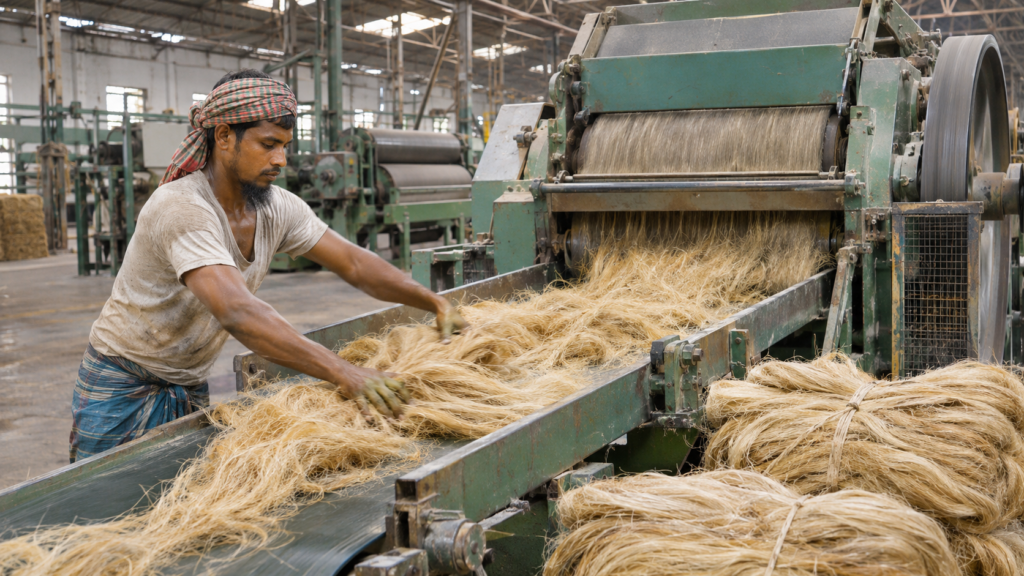
How does a bundle of rough jute fibre become a neatly woven sack? Well, the transformation involves several stages, each helping prepare the material for its next use.
The jute manufacturing process starts with extracting and preparing fibre from plant stems. Inside a jute mill, that fibre is softened, carded, drawn, and spun into yarn, which can then be woven into fabric.
In this guide, we’ll follow the journey from harvesting to finished products, explain the machinery and terms, and cover the quality checks that matter along the way.
So, let’s step through how jute is made and what these stages mean for the products you choose.
Jute Manufacturing Process at a Glance
The jute manufacturing process follows 3 main stages: preparing raw fibre, turning fibre into yarn, and making fabric and finished products. Here’s how the material changes along the way.
| Main Stage | What Happens | Main Output |
| From Plant to Raw Fibre | Jute plants are grown, harvested, and bundled. Retting loosens the fibre from the stems, allowing it to be stripped, washed and dried. The fibre is then graded and prepared for the mill. | Graded raw jute fibre |
| From Raw Fibre to Yarn | Selected fibres are combined into batches, softened and conditioned. Carding opens the fibre bundles and forms a sliver, a loose band of fibres. Drawing improves its evenness before spinning adds twist to form yarn. Twisting or plying may follow where needed, and winding prepares the yarn for its next use. | Yarn for sale, weaving or further processing |
| From Yarn to Finished Products | Warp and weft yarns are prepared and woven into fabric, which receives the required finishing. For bags, the fabric is cut, hemmed, and sewn. Specified features, such as printing or liners, are added before inspection and packing. | Finished fabric or products such as jute bags |
However, yarn and fabric can also be sold separately. This overview follows the woven-product route; nonwovens and composites use different production methods.
How Is Jute Prepared? From Plant to Raw Fibre
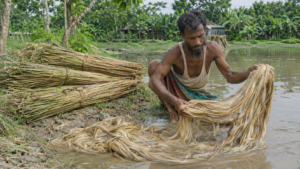
Jute preparation begins in the field, where plants are grown for their bast fibre, found beneath the stem’s outer bark. Along the way, care during harvesting, extraction, and drying helps preserve the quality of the raw jute fibre delivered to the mill.
Here’s how each step prepares the fibre for processing.
Growing and Harvesting the Jute Plants
The 2 main cultivated types are Tossa jute and white jute. Both favour warm, humid conditions, although their soil and drainage needs differ. Farmers harvest the stems and gather them into bundles, with harvest timing influencing fibre yield and quality.
Retting: Loosening the Fibre from the Stems
Next, the bundled stems are soaked in water. Microorganisms break down the tissues holding the fibre bundles in place, making them easier to separate.
Getting this stage right matters. Too little retting makes extraction difficult, while excessive retting can weaken the fibre.
Stripping, Washing and Drying the Fibre
Once retting is complete, workers pull the loosened fibre from the stems and wash away remaining plant matter. The fibre is then spread or hung to dry.
Thorough drying helps reduce the risk of mould and deterioration during storage. Plus, keeping the dried fibre clean protects the work already done.
Grading and Preparing Raw Jute for the Mill
Finally, the dried fibre is sorted into jute grades based on qualities such as strength, colour, fineness and cleanliness, then bundled or baled for supply.
These grades help describe the raw material available to the mill. From there, the mill can select suitable fibre and prepare batches for the yarn it intends to produce.
How Does a Jute Mill Turn Raw Fibre into Yarn?
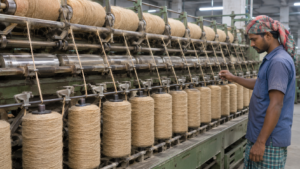
A jute mill turns bundles of raw fibre into yarn by making the material softer, separating the strands, and gradually drawing them into a more even form. Spinning then adds the twist that holds the fibres together.
Here’s how each stage prepares the material for the next.
Selection and Batching: Choosing Fibre for the Intended Yarn
First, the mill chooses fibres that suit the yarn it plans to make. Suitable grades are then combined into a batch to help balance differences in strength, fineness, and other qualities.
Workers also comb the fibre where needed (a process known as hackling) to separate and straighten the strands before further processing.
Softening: Making the Fibre Easier to Process
Raw jute is stiff, which can make it difficult to move through machinery without breaking. So softening machines work the fibre through rollers, while a mixture of oil and water adds moisture and lubrication. This oil-in-water emulsion helps the strands bend and slide more easily.
Moreover, the treatment needs to suit the intended product. Too little or too much treatment can affect processing, so the mixture and application need control.
Conditioning: Allowing Moisture and Processing Aids to Spread
After softening, the treated fibre is left to rest so moisture and processing aids can spread more evenly. This stage is called conditioning, or piling.
Unlike retting, it prepares extracted fibre for mill processing rather than releasing it from plant stems. The resting period depends on the fibre, treatment, and production conditions.
Carding: Separating Fibre Bundles and Forming a Sliver
Next, breaker carding opens the softened bundles, separates strands, and removes some unwanted material. Finisher carding then further prepares and combines the material.
The machines deliver a sliver, a loose, continuous band of fibres. Think of it as the material being gathered into a manageable form before spinning. It is not finished yarn yet, because it has not received the twist needed to hold it together.
Drawing: Preparing an Even Sliver for Spinning
Drawing helps reduce thick and thin sections in the sliver. Machines bring several slivers together, called doubling, then pull the combined material out into a thinner band, called drafting.
Combining and drawing the slivers helps balance uneven sections and improve fibre alignment. The number of drawing stages depends on the yarn and production setup.
Spinning: Adding Twist to Form the Yarn
The prepared sliver now enters a spinning frame. The machine draws it out further and adds twist, helping the fibres grip one another and form a continuous yarn.
At this stage, the mill controls yarn count and twist. Count describes the yarn’s weight for a given length, while twist affects how the fibres hold together.
Twisting and Plying: Combining Yarns Where Needed
Some yarns need additional twist or must be combined for a particular use. Plying means twisting 2 or more yarns together to make one yarn.
This can be useful for products such as twine. However, it is an optional stage, rather than something every single yarn must pass through.
Winding: Preparing Yarn for Delivery or Weaving
Finally, winding transfers the yarn into packages that are suitable for handling and the next operation. The required format depends on whether the yarn will be sold or used for further manufacturing.
Package weight and identification can be checked before dispatch or transfer. The yarn is then ready for delivery or preparation for weaving.
For buyers, these stages come together in the yarn specification. At GFTCL, our jute yarn options cover different counts and ply requirements. We can also discuss twist, oil content, moisture limits, and packaging to help match the supply to your production needs.
How Is Jute Yarn Turned into Fabric and Finished Products?
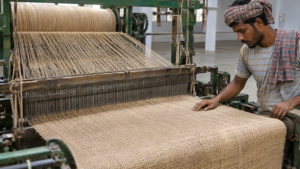
Once yarn is ready, it can be sold separately or continue into weaving. The resulting fabric may be supplied as cloth or made into bags and other products.
Here’s how that part of the process works.
Preparing the Warp and Weaving the Fabric
Weaving uses 2 sets of yarn: the warp runs lengthwise, while the weft runs across it. The warp yarns are arranged and wound onto a large beam so they can feed into the loom in order.
Where needed, a protective treatment called sizing helps the warp withstand friction during weaving. The loom then interlaces both sets of yarn to create fabrics such as hessian cloth. The weave pattern and spacing between yarns shape the fabric’s construction.
Finishing the Fabric for Its Intended Use
Once woven, the cloth may need further treatment to achieve the required surface or appearance. For example, calendering passes it through rollers to make it smoother and flatter.
Some orders may also require bleaching, dyeing, or other finishes. These are optional, depending on the product. If the fabric is being supplied as cloth, it may be folded into manageable lengths, a process called lapping.
Cutting, Hemming, and Sewing Bags
To make products such as sacking bags, workers or machines cut the fabric to the required size. Edges are folded and stitched where needed to prevent fraying, while seams join the fabric into a bag.
The cutting measurements must allow for hems and seams. Plus, the stitching needs to suit the intended load and handling, so the finished bag performs as required.
Adding Specified Features and Packing the Goods
The order may also call for printed names, identification marks, liners or handles. These features are added at the appropriate point in production. For instance, printing can take place before the fabric is sewn into bags.
Finally, the finished goods are checked, counted, and packed in the agreed format. Labels identify the order, while suitable packing helps protect the goods from dirt, damp, and damage during storage and shipment.
How Does the Jute Manufacturing Process Change by Product?
The finished product determines which stages are needed. Yarn, cloth, and bags share parts of the process, but their production routes have different requirements and stopping points.
Here’s how the production route changes for 4 common jute products:
| Product | How the Production Route Changes |
| Jute yarn | After spinning and winding, yarn can be supplied directly to another manufacturer. Additional twisting or plying depends on the specification. |
| Hessian cloth | Yarn is woven, typically in a plain weave, then finished and supplied as cloth or used for making bags. |
| Sacking bags | Suitable yarn and fabric construction are selected for the packaging needs. The fabric is then cut, hemmed and sewn, with printing or liners where specified. |
| Twine | Yarn may receive further twisting or plying to achieve the required thickness and construction. It does not need weaving. |
Other products take different routes altogether. Nonwoven textiles are formed by bonding or entangling fibres rather than weaving yarn.
Meanwhile, fibre-reinforced composites combine jute with another material, such as a polymer. These products may use loose fibres, fibre mats or woven fabric, depending on their design.
How Is Quality Checked Throughout the Jute Manufacturing Process?
Quality checks follow the material through production, helping identify problems before they affect the next stage. The checks and acceptable limits should reflect the product specification.
Here’s what those checks can cover:
- Raw fibre: Grade, moisture, cleanliness, and signs of damage are checked against the intended use. This helps establish whether the material is suitable before processing begins.
- Yarn: Checks cover count, twist, evenness and tensile strength. Tensile testing measures the force needed to break the yarn, while evenness checks identify variations along its length.
- Fabric and bags: Fabric weight, width, weave density and visible defects are compared with the specification. For bags, inspection can also cover finished dimensions, stitching and seam strength.
- Finished orders: Quantities, cleanliness, labels and packing are checked before dispatch. Batch identification helps connect the supplied goods with the relevant production and inspection records.
For your order, agree on acceptance limits, test methods and inspection arrangements before production. A sample or visual check is useful, but it cannot confirm every performance requirement.
What Challenges Affect Jute Manufacturing, and What Is Improving?
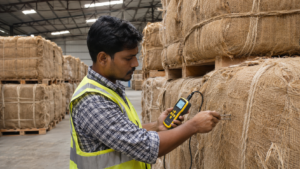
Consistent jute production depends on managing the fibre, machinery, and working conditions together. Here are 3 challenges and practical ways to address them:
- Retting quality and water management: Poorly controlled retting can make fibre harder to extract or weaken it. Decomposing plant matter can also affect water quality. Monitoring retting conditions and using suitable improved methods can help manage these problems.
- Moisture control: Fibre needs moisture during processing, but finished goods should not remain damp in storage. Appropriate conditioning, moisture checks and dry storage help meet these different needs and reduce deterioration.
- Machinery, energy and waste: Worn parts or unsuitable settings can increase fibre breakage and uneven output. Regular maintenance, suitable upgrades and production monitoring can help reduce avoidable losses. Suitable fibre waste may also be recovered for other uses.
Managing water, energy and waste contributes to jute’s sustainability, connecting better production practices with more responsible use of resources.
Frequently Asked Questions
How to grow jute?
Jute is grown from seed in warm, humid conditions. Farmers prepare a fine seedbed, sow the seeds, then manage spacing, weeds, moisture and nutrients.
What is the raw material for jute?
Raw jute fibre comes from the stems of jute plants. Mills process this fibre into yarn, which can become fabric, bags, and other products.
Which soil is best for jute?
Deep, fertile loam or alluvial soil with good drainage generally suits jute. Drainage matters especially for young plants, which are sensitive to waterlogging.
How is jute prepared?
After harvesting, stems are soaked through retting to loosen the fibres. The fibres are then stripped, washed, dried, and graded before entering mill production.
Which plant produces jute?
Jute mainly comes from 2 plant species: Corchorus olitorius, known as Tossa jute, and Corchorus capsularis, known as white jute. Both supply commercial fibre.
At what temperature does jute grow?
Jute favours warm, humid weather, with an optimum daily temperature range of approximately 22–34°C. Colder conditions can slow its growth.
Does jute need a lot of water?
Jute needs adequate moisture, but rainfall supplies much of its growing water. Irrigation may be needed during dry periods, while retting requires water separately.
Final Thoughts
Behind every jute product is a series of decisions that shape how it performs. Understanding that journey gives you a stronger starting point for choosing materials, comparing specifications, and discussing your next order.
Ready to put that knowledge to work? Share your product requirements with us at GFTCL, and let’s explore the jute options that fit your plans.