
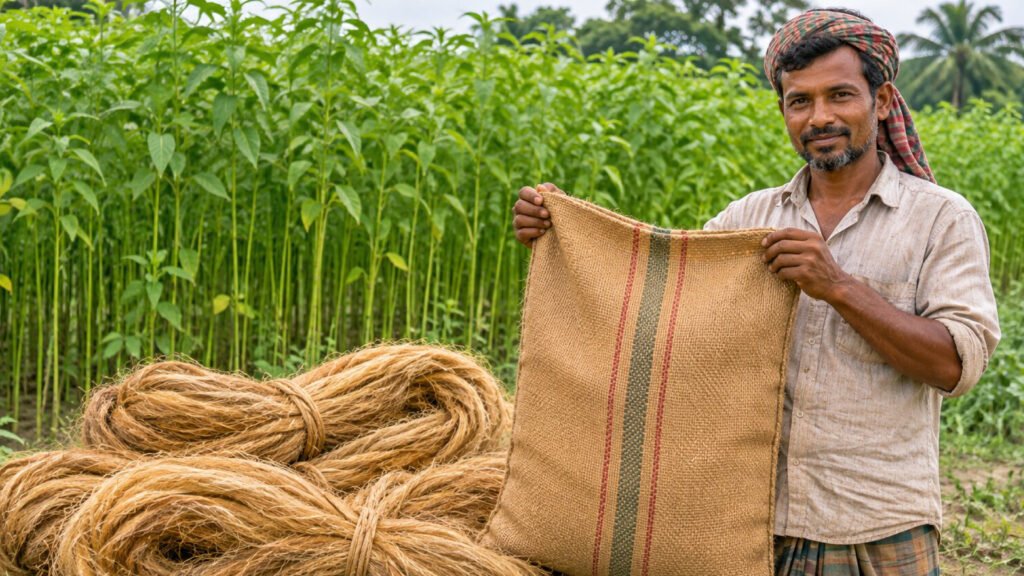
Considering jute for your packaging, but wondering what makes it a sustainable choice? Well, knowing the benefits is useful, and understanding how they apply to the product you buy makes that knowledge more practical.
So, is jute sustainable? Yes, jute is a renewable, biodegradable natural fibre, grown largely with rainfall. However, the overall environmental impact of the finished product depends on processing, added materials, reuse, and disposal.
In this guide, we’ll explain what makes jute sustainable, where its environmental impact comes from, and how it compares with plastic. What’s more, we’ll cover what to check when choosing jute products.
Now, let’s unpack the reasons behind jute’s sustainable reputation and how to make the most of its benefits.
What Makes Jute a Sustainable Natural Fibre?
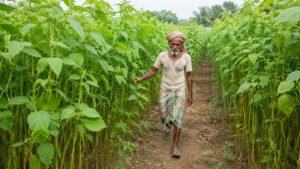
Jute’s environmental benefits begin with how the crop grows. Its annual growing cycle, reliance on rainfall, and contribution to soil organic matter help explain why it is widely considered a sustainable fibre.
Here are 5 features behind that reputation and what each means in practice.
1. An Annual Crop That Renews the Supply
Jute grows within a single agricultural season, so farmers can plant a fresh crop each year. This provides a renewable fibre supply. Plus, jute can fit into rotations with rice and other crops where local conditions allow.
2. Rainfall Supplies Much of Its Growing Water
Jute is predominantly rain-fed, meaning rainfall supplies much of the water needed during cultivation. This can reduce reliance on irrigation. However, additional watering may still be needed when rainfall is insufficient, particularly during the early stages of growth.
3. Relatively Modest Agricultural Inputs
FAO describes jute cultivation as requiring relatively small quantities of fertilisers and pesticides. That is a useful advantage, although the amount needed depends on soil conditions, pests, and farming practices. So, growing jute responsibly still involves managing these inputs carefully.
4. Plant Residues Can Support Soil Health
Fallen leaves and plant residues can return organic matter to the soil. Combined with suitable soil management, retaining these materials can help improve soil structure and organic carbon. This supports the soil used for future crops, adding value beyond the harvested fibre.
5. Growing Plants Take Up Carbon
As jute grows, it absorbs carbon dioxide and stores carbon in its plant material. This is part of its environmental value. Still, the carbon taken up during growth needs to be considered alongside emissions from production, transport and disposal when assessing a finished product.
How Do Jute Products Support More Sustainable Use?
Jute’s benefits become more practical when a product stays useful for the long term. A bag you reach for regularly, or a sack that performs well through handling, makes better use of the material and effort that went into making it.
For everyday use, a well-made jute bag can accompany you on repeated shopping trips. For businesses, suitable sacks, ropes and furnishings can provide lasting service when chosen for the job and cared for properly. The more useful service you get, the further those production resources go.
Plus, natural jute fibre can break down biologically under suitable conditions. That is a useful benefit after use, although any coatings, liners or other added materials need separate consideration.
On top of that, there is value beyond the main fibre. Jute sticks and cuttings can become raw materials for products such as pulp and paper, while suitable fibre waste may be reprocessed.
So, getting more from jute means using products well and checking which recovery or disposal options are actually available locally.
What Affects the Sustainability of a Finished Jute Product?
How jute becomes a finished product matters just as much as where the fibre comes from. Two bags made with jute can have different environmental impacts because of their processing, construction, and added materials.
Here are the main factors:
- Retting and water management: Jute stems are soaked to loosen the fibres. As plant matter breaks down, it can affect the water quality, so careful retting and water management are important.
- Manufacturing and finishing: Making yarn and fabric takes energy, and transport adds to the footprint. Oils used in processing, along with bleaching, dyes, and other finishes, also influence the overall impact.
- Coatings, liners and blends: A jute bag may include a plastic lining, synthetic thread or blended fabric. These additions can serve useful purposes, but they also affect what happens after disposal.
For example, a liner may help protect the contents from moisture. However, the complete bag should not automatically be described as plastic-free or fully compostable.
So, look beyond the outer fabric. Understanding the whole product makes its environmental benefits easier to assess.
Is Jute More Sustainable Than Plastic?

Jute can be a more sustainable choice than plastic, especially when a suitable product is used repeatedly. However, a fair comparison needs to consider what each product does, how it is made, and what happens after use.
Take shopping bags, for example. A strong jute bag can replace many disposable bags over time. But making a heavier bag also takes resources, so using it once and putting it away leaves much of that benefit unused.
Plus, plastic comes in different forms. A thin shopping bag and a woven plastic sack have different weights, strengths, and uses. To compare either with jute, check that both options can do the same job.
For packaging, protecting the contents matters too. Switching materials offers less benefit if it leads to damaged goods or wasted products.
So, choose something that works well, use it for as long as practical, and check how it can be handled after use. These details help you make a more informed choice.
What Should You Check Before Choosing Jute Products?
Choose a jute product that suits your needs and comes with clear information about its materials and care. Whether you’re buying one bag or placing a business order, a few checks can make the decision easier.
Here’s what to look for:
- Complete material details: Check whether the product is entirely jute or includes coatings, liners, synthetic threads or other fibres.
- Suitability for the job: Consider what it needs to carry or protect. For business orders, confirm size, construction and strength requirements, then review a sample.
- Care and expected use: Ask how to clean and store it, and whether it is suitable for repeated use in your intended setting.
- Disposal guidance: Check which parts can be separated and whether a local service accepts them for recycling or composting.
- Evidence behind environmental claims: Ask what terms such as “biodegradable” or “compostable” apply to, and request supporting information.
Clear answers help you choose with confidence and understand what you’re getting.
Frequently Asked Questions
Is jute eco-friendly?
Yes, jute offers environmental benefits as a renewable, biodegradable fibre. The finished product’s impact also depends on how it is made, used and discarded.
Is jute 100% natural?
Jute fibre is natural and comes from plant stems. However, a finished product may contain synthetic threads, coatings or liners, so check its composition.
Is Jute a better alternative than Plastic?
Jute can be a better choice when it suits the job and is reused. Compare products that offer the same protection and carrying performance.
Does jute grow mold?
Yes, mold can develop if jute stays damp. Keep products dry, allow airflow during storage and follow the care instructions.
Is Jute Sustainable in the Long Term?
Jute can support long-term sustainability through responsible farming, careful processing, useful product life and suitable disposal. Those practices help its benefits count.
Final Thoughts
Jute offers a promising starting point for more sustainable choices. Turning that promise into practical value means choosing products that work for you and making the most of their useful life.
Ready to explore your options? Share your packaging or material needs with us at GFTCL, and let’s discuss how jute could fit your next project.