
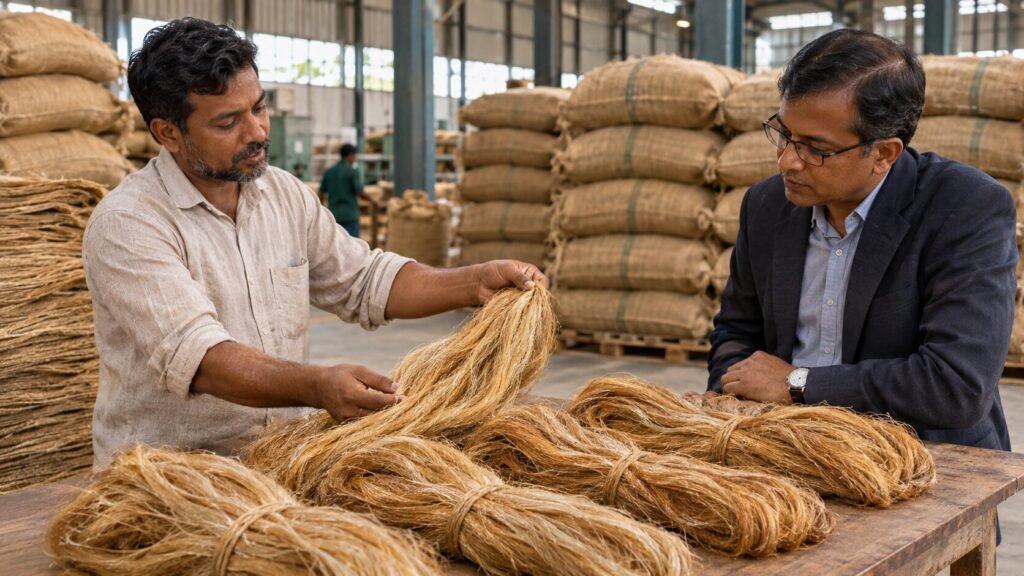
Comparing raw jute offers and wondering what codes like BTA, BTC, and BTE actually tell you? Well, understanding those letters gives you a clearer starting point for comparing fibre quality.
Bangla Tossa jute grades classify Bangladeshi Tossa fibre by characteristics such as strength, texture, colour, and cleanliness. The names include Special, grades A–E, and Rejection, with cutting grades listed separately.
In this guide, we’ll compare the grades, explain how the fibre is assessed, clear up cutting codes, and cover what to check before ordering.
So, let’s make sense of the grading terms and what they mean when choosing fibre for your production needs.
What Is Bangla Tossa Jute, and What Do Its Grades Mean?
Bangla Tossa is raw Tossa jute from Bangladesh, obtained from the stems of Corchorus olitorius. After harvesting, the stems typically undergo retting, a soaking process that loosens the fibre so it can be stripped, washed, and dried.
However, the resulting fibre is not all alike. Growing conditions, harvesting, retting, and handling can affect its quality. Therefore, sorting it into grades helps suppliers describe those differences and buyers specify what they need.
For example, BTC means Bangla Tossa C. It identifies a commercial fibre grade, rather than a plant variety or finished yarn specification.
Bangla Tossa Jute Grades Compared: From Special to Rejection
Bangla Tossa grades range from Special through A–E, with Rejection listed separately. The differences involve more than strength: colour, texture, cleanliness, and fibre preparation also help distinguish one grade from another.
Here’s how the commercial grades compare. Confirm the detailed requirements against the grading standard agreed for your order.
|
Grade |
Name |
Key Characteristics |
|
BTS |
Bangla Tossa Special |
Very strong fibre with a fine texture, high lustre and uniform golden or reddish colour; carefully cleaned and prepared. |
|
BTA |
Bangla Tossa A |
Strong, fine-textured fibre with good lustre. Colour descriptions include uniform silver-grey to golden, or light golden to reddish. |
|
BTB |
Bangla Tossa B |
Sound, clean fibre with good texture and average lustre. Light-to-medium grey or reddish shades occur within the descriptions. |
|
BTC |
Bangla Tossa C |
Mixed colours and average strength. Some bark and small, soft barky spots may be permitted, with more thoroughly prepared ends than D. |
|
BTD |
Bangla Tossa D |
Mixed colours and average strength, with rougher preparation and greater allowance for incompletely separated or gummy fibre tips than C. |
|
BTE |
Bangla Tossa E |
Broader colour and strength allowances, with bark and hard central portions permitted. This does not mean unrestricted acceptance of damaged fibre. |
| BTR | Bangla Tossa Rejection |
A separately traded rejection category. Confirm the lot’s condition and acceptance requirements directly with the supplier. |
Notice that C and D can both be described as having average strength. Their differences also concern preparation and permitted defects, so comparing grade letters alone can miss details that matter during processing.
You can also explore our Bangla Tossa range to see the grades we list.
How Is Bangla Tossa Jute Graded?
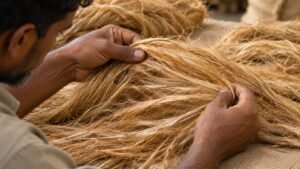
Bangla Tossa jute is graded by checking several fibre qualities together. Graders compare the fibre with the requirements of the grading system being used, rather than judging it by appearance alone.
The main checks include:
- Strength: How well the fibre resists breaking when pulled.
- Texture and fineness: How fine or coarse it feels.
- Colour and lustre: Its shade, evenness of colour, and natural shine.
- Cleanliness and defects: The presence of bark, specks, knots, or poorly separated sections.
- Preparation: How thoroughly the fibre has been sorted, cleaned, and its ends prepared.
Also, Bangladesh uses 2 sorting systems: kutcha assortment for local trade, where the hard lower ends remain attached, and pucca assortment for export, where those ends are removed. The Bangla Tossa codes discussed here belong to the export system.
So, a bright colour or strong-looking bundle tells only part of the story. The grade reflects the fibre’s overall quality across these checks.
What Are Tossa Cutting Grades, and How Do They Differ?
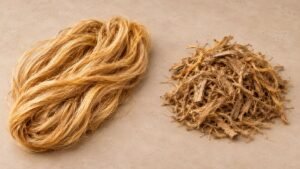
Tossa cutting grades describe the hard, barky lower ends removed when preparing long jute fibre. These ends are commonly called “roots” in trade, although they come from the stem, rather than the underground roots.
The 2 common cutting grades are:
- BTCA: Bangla Tossa Cutting A.
- BTCB: Bangla Tossa Cutting B.
Cutting A and Cutting B are separate quality categories within the cuttings trade. When comparing them, ask your supplier to explain the differences in the offered lots, including cleanliness, bark content, piece length, and fibre condition. The grade code helps identify the product, while the agreed description makes the expected quality clearer.
Also, watch the lettering: BTC means Bangla Tossa C, a long-fibre grade. It does not mean Cutting A or Cutting B.
Finally, cuttings are different from processed fibre that has been mechanically cut to a set length. So, state whether you need traditional root-end cuttings or cut-to-length fibre when requesting a quotation.
How Do You Choose the Right Tossa Jute Grade?
Choose a Tossa jute grade around what your production process needs. Start with the product you plan to make, then work with your supplier to identify fibre that meets your quality and processing requirements.
Here’s what to check before settling on a grade:
- Define the end use: Explain whether you are making yarn, twine, fabric, or another product. Share the required finished-product quality and any processing constraints.
- Agree on the fibre requirements: Confirm the grade alongside acceptable strength, texture, colour, cleanliness, and preparation. Also, specify the moisture limit and how it will be measured.
- Review a representative sample: Compare it with the agreed description. Where processing performance matters, arrange a trial before committing to a larger order.
- Compare offers on the same basis: Check grade, net weight, bale packing, inspection arrangements and delivery terms together. A lower price is less useful if the supplied fibre needs more cleaning or produces more waste.
Finally, keep the approved sample and agreed specifications as references for the order. This gives both sides a clearer basis for checking the shipment.
Frequently Asked Questions
What is the difference between Tossa and white jute?
Tossa comes from Corchorus olitorius, while white jute comes from Corchorus capsularis. They are different plant species, and both fibres are graded, so compare the offered quality alongside the type.
What does BTR mean in jute grading?
BTR stands for Bangla Tossa Rejection. It is traded separately from grades A–E, so ask what the offered lot contains and agree on its acceptable condition before ordering.
How can I check raw jute quality before buying?
Request a representative sample and compare it with the agreed grade description. Also, confirm moisture, cleanliness, and inspection requirements, and consider a processing trial where performance matters.
Can the same jute grade vary between shipments?
Yes, some natural variation can occur within a grade. Agree on acceptable limits and check each shipment against the specifications and retained sample, especially for repeat production.
What are the different Bangla Tossa jute grades?
The names include Special (BTS), A–E (BTA–BTE), and Rejection (BTR). Cutting A (BTCA) and Cutting B (BTCB) are separate cutting categories.
Final Thoughts
Understanding the grades gives you a clearer way to discuss quality, compare offers, and plan your next order. The real value comes from connecting that knowledge to what your business needs to produce.
Ready to put it into practice? Share your production needs with us at GFTCL, and let’s discuss the Tossa jute options for your next order.