
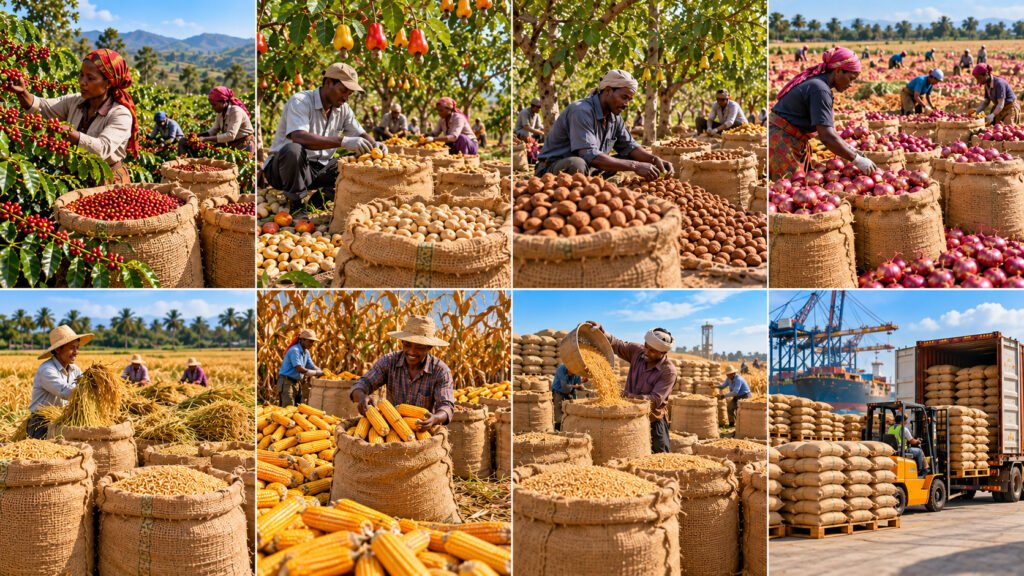
Wholesale jute bags for agro packaging provide a practical packaging solution for agricultural commodities that move through demanding international supply chains. Coffee beans may travel from a farm to a collection centre, warehouse, port, overseas importer, and roasting facility. Likewise, cashew nuts, rice, wheat, grains, seeds, and other commodities pass through several stages before reaching their final markets. Throughout this journey, suitable jute packaging must support practical filling, handling, stacking, storage, and transportation.
That is why international commodity businesses continue to source wholesale jute bags for agro packaging. Jute sacks have a long history in agricultural trade and remain a practical packaging option for coffee, cashew nuts, rice, wheat, paddy, grains, seeds, onions, and other suitable agricultural commodities.
However, professional importers should look beyond a generic jute bag, jute sack, or gunny bag. Bag dimensions, fabric construction, bag weight, stitching, capacity, printing, packing method, and intended commodity all influence whether the finished product suits the buyer’s supply chain.
Bangladesh has a long-established jute industry, giving international buyers access to a broad range of jute products. The Golden Fibre Trade Centre Ltd. (GFTCL) works with overseas buyers seeking Bangladesh-origin jute Sacking, hessian, jute bags , jute yarn, jute twine, and other jute products.
If you plan to buy jute bags in bulk, the goal should not simply be to find the lowest quoted price. Instead, you need a bag specification that matches your commodity, handling requirements, destination market, and commercial expectations.
Why Wholesale Jute Bags for Agro Packaging Remain Important
Agricultural packaging faces demanding conditions. Workers may fill and sew a bag at one location, carry it to a warehouse, stack it, move it again, load it into a container, unload it at the destination, and finally deliver it to a processor or distributor.
Woven jute offers strength and flexibility for many suitable dry agricultural commodities. Depending on the construction, buyers can select anything from a relatively lightweight sack to a heavy duty jute bag designed for more demanding handling requirements.
Jute also comes from a plant-based natural fibre. Consequently, buyers researching natural jute bags, sustainable jute bags , organic jute bags, and eco friendly jute products often consider jute when reviewing natural-fibre packaging options.
Still, sustainability should not replace technical evaluation. A bag must first perform its intended packaging function. Size, fabric construction, stitching, capacity, workmanship, and storage conditions all matter.
For example, an importer buying thousands of bags for grain should not select a product simply because another buyer uses it for coffee. Although both products may use jute, their specifications can differ.
The same principle applies when comparing 25 kg jute bags, 50 kg jute bag, gunny bags 50 kg, or 100 kg jute bags. Nominal carrying capacity alone does not provide enough information to manufacture the correct product.
Therefore, successful sourcing starts with the commodity and its packaging requirements. The supplier can then develop or quote the appropriate specification.
Jute Bags for Coffee, Cashew Nuts, Grain and Other Agro Products
Coffee is one of the agricultural commodities most strongly associated with traditional jute and burlap packaging. Buyers commonly search for coffee gunny bags, large burlap coffee bags, small burlap coffee bags, burlap coffee sacks for sale, and burlap coffee bags for sale.
Professional coffee buyers, however, need more information than a product name. They should define dimensions, bag construction, required weight, sewing, printing, quantity, and any other agreed characteristics before confirming a bulk order.
Coffee exporters may also need printed jute bags carrying the exporter’s name, country of origin, commodity information, lot identification, handling marks, or other buyer-approved details. As a result, printing becomes an important part of the specification.
Cashew nuts create another potential application for agricultural jute packaging. Buyers should select the sack according to the intended product, packing weight, storage environment, and handling system rather than assuming that every jute sack performs the same way.
Grain, rice, wheat, and paddy buyers face similar decisions. Search terms such as gunny bags for rice, rice gunny bag, burlap rice sack, jute bag for rice, jute bag for wheat, jute bags for paddy, and jute grain bags all describe commercial interest in this packaging segment.
The following table shows how an importer can approach different requirements:
| Commodity / Application | Relevant Jute Bag Type | Important Buyer Considerations |
| Coffee beans | Coffee gunny bags / jute sacks | Size, construction, stitching, printing and handling |
| Cashew nuts | Agricultural jute sacks | Capacity, dimensions, strength and storage conditions |
| Rice | Gunny / jute grain bags | Packing weight, size, fabric construction and stitching |
| Wheat & grain | Heavy-duty jute sacks | Capacity, handling, stacking and transport |
| Paddy | Paddy jute gunny bags | Dimensions, construction, weight and sewing |
| Onion / vegetables | Suitable jute sacks | Ventilation, handling, storage and commodity requirements |
| Export commodities | Custom printed jute bags | Branding, markings, specifications and shipment requirements |
This table provides a sourcing framework rather than a universal specification. The exact construction should always match the buyer’s product and supply chain.
Binola, Onion and Vegetable Jute Bags
Binola jute bags are another recognized agricultural packaging category. International buyers seeking Binola bags should specify dimensions, fabric construction, bag weight, sewing, quantity, and intended application instead of relying only on the term “Binola.”
Buyers also search for jute bag for onion, onion gunny bags, burlap onion bag, burlap sack of onions, jute bag for potato and vegetable jute bag. However, fresh produce can have specific ventilation, moisture, handling, and storage requirements.
Therefore, a bag that works well for a dry grain should not automatically be selected for vegetables. Buyers should tell GFTCL exactly what they plan to pack so that the requirement can be assessed against the intended use.
The same principle applies to medium jute bag, large jute sack, big gunny bags, and other size descriptions. Measurable technical specifications provide far more value than generic product names.
How to Specify Custom and Bulk Jute Bags for International Markets
One common sourcing mistake is requesting only a price. Asking, “What is your 50 kg gunny bag price?” does not give a supplier enough information to make a reliable like-for-like quotation.
Start with the commodity. Then specify the required capacity, bag dimensions, fabric construction, bag weight, sewing method, mouth finish, printing requirements, order quantity, packing method, destination port, and commercial terms.
If you already use a suitable bag, provide its technical specification or a reference sample where practical. This gives the supplier a clearer production benchmark.
Customization is also important for agricultural exporters. custom jute bags, branded jute bags, printed jute bags , custom printed burlap bags, custom hessian bags, and custom printed hessian bags can help identify commodities as they move through the supply chain.
A buyer may require a company name, logo, country of origin, product description, lot number, crop information, or handling marks. Therefore, artwork should be confirmed before bulk production.
The buyer should also specify printing colours, positioning, print dimensions, and any relevant production requirements. Clear instructions reduce misunderstandings between the purchase order and finished goods.
This becomes even more important when ordering jute bags bulk quantities. A small misunderstanding repeated across thousands of bags can become a significant commercial problem.
International buyers should also distinguish jute from other natural fibres. For example, sisal gunny bags sometimes appear in searches alongside jute products. Sisal and jute are different fibres, so purchase documents should identify the required material clearly.
GFTCL ’s core product range focuses on jute and jute goods. Therefore, buyers seeking wholesale jute bags for agro packaging should specify jute clearly when requesting quotations.
Quality, Sustainability and Cost of Wholesale Jute Bags for Agro Packaging
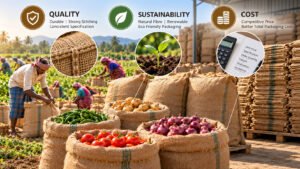
Price is naturally important to agricultural exporters and importers. Search phrases such as gunny bag cost, gunny bag price, cost of jute bag, jute sack price, 40 kg jute bag price, 50 kg jute bag price, and 100 kg gunny bags price demonstrate strong price interest.
However, the cheapest quoted bag may not produce the lowest overall packaging cost.
If sacks fail during filling, carrying, stacking, storage, or transportation, buyers can face commodity losses, repacking costs, operational delays, and customer complaints. Therefore, buyers should evaluate quality and specification alongside unit price.
Depending on the agreed product, quality checks can cover dimensions, weight, fabric construction, stitching, printing, workmanship, packing, and other contractual requirements.
Consistency matters even more when purchasing jute bags in bulk. Small production variations become much more significant when an order contains thousands of sacks.
Buyers should therefore approve the specification before production. Where appropriate, a sample can provide a physical reference for the agreed product.
Jute also has a natural-fibre advantage. Interest in sustainable jute bags, natural jute bags, green jute bags, and eco friendly jute products reflects broader demand for natural packaging materials.
Still, environmental claims should accurately reflect the finished product. Coatings, liners, treatments, printing, usage, and disposal conditions can influence the environmental characteristics of a particular bag.
Finally, compare quotations on the same basis. Dimensions, construction, weight, printing, packing, order quantity, freight, destination, and Incoterms can all influence the commercial offer.
A very low jute bag lowest price is not meaningful if the specification differs from what your operation actually requires.
Why International Buyers Source Jute Bags from Bangladesh and GFTCL
Bangladesh has extensive experience across the jute value chain. For international buyers, this provides access to jute Sacking, hessian, bags, yarn, twine, and other jute products from an established producing country.
GFTCL focuses on connecting international buyers with Bangladesh-origin jute products according to their commercial requirements. For agricultural packaging, that process starts with understanding what the customer intends to pack.
A coffee exporter may need coffee gunny bags with customized markings. A grain trader may require heavy-duty sacks in a specific capacity. A cashew buyer may prioritize dimensions, strength, and handling. Another importer may need custom jute bags for several agricultural commodities.
These are different requirements, even though each buyer may initially search for a generic jute sack.
GFTCL therefore focuses on specification-based sourcing. Buyers can discuss jute bags alongside other products such as jute Sacking, hessian, jute yarn, and jute twine when relevant to their procurement programme.
For repeat orders, maintaining an approved specification can also improve communication. The buyer and supplier have a clear reference for dimensions, construction, sewing, printing, and other agreed requirements.
International buyers should also consider shipment planning. Order quantity, bale packing, container planning, destination, documentation, and agreed trade terms can influence the complete procurement process.
This makes a B2B enquiry very different from searches such as jute gunny bags near me, jute sack near me, burlap bags nearby, or small jute bags online. Those phrases often indicate retail intent, while GFTCL focuses on international commercial supply.
How to Order wholesale jute bags for agro packaging from GFTCL
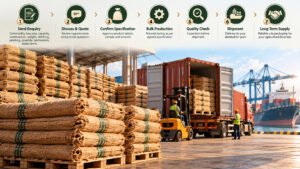
The easiest way to obtain an accurate quotation is to provide a complete enquiry. Tell GFTCL what agricultural commodity you intend to pack, required bag size, capacity, construction, bag weight, stitching, printing, quantity, destination, and preferred trade terms.
If you need custom jute bags, provide artwork and branding instructions. If you already use a particular sack, share the specification or reference sample where possible.
Before bulk production, both parties should confirm the agreed product details. This creates a clear reference for manufacturing and subsequent quality checks.
Ultimately, reliable agricultural packaging comes from matching the bag to the commodity rather than simply choosing the cheapest available sack.
For coffee exporters, cashew processors, grain traders, agricultural businesses, commodity importers, packaging distributors, and wholesalers, wholesale jute bags for agro packaging can provide a practical natural-fibre packaging solution when properly specified.
The Golden Fibre Trade Centre Ltd. can discuss Bangladesh-origin jute packaging for coffee, cashew nuts, rice, wheat, paddy, grain, seeds, onions, and other suitable agricultural applications.
If you are planning a bulk order, send GFTCL your required specification, quantity, commodity, destination port, and commercial requirements.
Frequently Asked Questions (FAQs)
What agricultural products can be packed in jute bags ?
Jute sacks can serve many suitable dry agricultural commodities, including coffee beans, rice, wheat, paddy, grains, seeds, nuts, and other products. However, buyers should not assume one bag specification fits every commodity. The required size, construction, capacity, stitching, and handling characteristics should match the actual product.
Can GFTCL supply custom printed and bulk jute bags?
GFTCL can discuss bulk and customized jute packaging according to the buyer’s commercial requirements. Buyers seeking printed jute bags, branded jute bags, custom jute bags, or other customized packaging should provide the bag specification, artwork, colours, printing position, quantity, and destination details when requesting a quotation.
What information should I provide when requesting a jute bag quotation?
Provide the commodity, bag dimensions, required capacity, fabric or construction specification, bag weight, sewing details, printing requirements, quantity, destination port, and preferred trade terms. If you already use a suitable bag, a specification sheet or reference sample can make the enquiry more precise.
Are jute bags available in 25 kg, 50 kg and 100 kg capacities?
Buyers commonly search for 25 kg jute bags, 50 kg jute bags , and 100 kg jute bags. However, capacity alone does not define the correct sack. GFTCL recommends confirming dimensions, fabric construction, bag weight, stitching, and intended commodity before placing a bulk order.
Why should international buyers source jute bags from Bangladesh?
Bangladesh has an established jute sector and produces a broad range of jute goods for domestic and international markets. For overseas buyers, sourcing from Bangladesh provides access to products such as Sacking, hessian, agricultural jute bags , yarn, and twine. GFTCL works with international buyers to match those products with defined commercial requirements.