
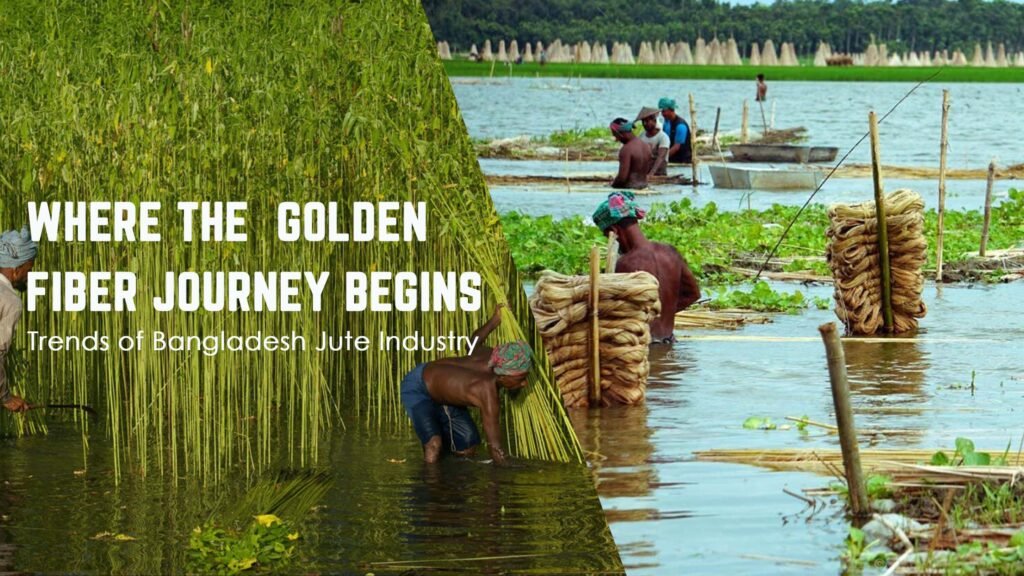
The Bangladesh jute industry is not simply a legacy sector. Instead, it has evolved into a modern, export-focused, sustainability-driven supply chain. Today, international buyers look for traceability, food-contact safety, consistent stitching, clean printing, on-time shipment, and reliable communication. At the same time, they value the story of a natural fiber that can replace plastic while supporting farmers and rural communities. This combination makes the Bangladesh jute industry uniquely valuable in 2026 and beyond.
The Golden Fiber Trade Center Ltd. (GFTCL) plays an active role in this transformation. The company operates as a Bangladesh jute exporter and a solution partner for global buyers who need premium jute products, jute bags, hessian bags, and jute sack packaging. Instead of selling standard bags, GFTCL helps buyers choose the right fabric, weave, weight, and finishing so the product performs well in real shipping conditions.
In this long-form guide, you will learn what is changing inside the Bangladesh jute industry and why these changes matter for importers. The article also explains market trends, product developments, export practices, and buyer expectations in a clear and practical way.
Bangladesh Jute Industry Snapshot: Where the Market Stands Now
The Bangladesh jute industry includes farming, primary processing, spinning, weaving, finishing, converting, and exporting.It supports rural jobs and factory jobs while creating strong export earnings.Bangladesh remains one of the world’s most important sources for raw jute, jute yarn, hessian cloth, and diversified jute goods.However, the industry has moved beyond the “commodity-only” mindset.Buyers increasingly ask for products that are ready for retail shelves or for international logistics systems.
Therefore, jute products exporters in Bangladesh now invest in better finishing, cleaner production, improved packaging, and more reliable quality systems. GFTCL works with experienced mills and converting partners to supply consistent export-grade jute goods. As a Bangladesh jute exporter, GFTCL focuses on practical performance: strong seams, correct moisture control, consistent fabric weight, and accurate printing. When buyers need premium jute bags or hessian coffee sacks, they also need a supplier who understands shipping, warehouse handling, and final customer requirements.
Why the World Returns to Jute: Sustainability Is Not a Trend, It Is a Requirement
Global sustainability policies now shape procurement. Plastic restrictions expand across many regions, and big brands face ESG and packaging commitments. Because jute is renewable and biodegradable, jute bags and burlap bags offer a direct alternative to single-use plastics. Yet sustainability alone does not close export orders. Buyers also compare consistency, price stability, shipping lead time, and compliance.
This is where the Bangladesh jute industry improves year by year. Modern suppliers do not rely only on tradition. They focus on process control, testing, and documentation. For GFTCL, sustainability means measurable results.The goal is not to claim “eco” in marketing copy only.The goal is to deliver durable, reusable bags that last through real use cycles. When the bag lasts longer, the buyer reduces waste, and the end customer trusts the product.
The Biggest Trends in Bangladesh Jute Industry (2026 and Beyond)
Several trends define today’s Bangladesh jute industry. These trends influence product design, quality demands, export strategy, and the buyer-supplier relationship.
- Trend A: Higher demand for premium jute products. Buyers want cleaner fabric, improved finishing, and stronger performance.
- Trend B: Growth of branded and customized packaging. Logo jute bags, printed hessian bags, and retail-ready jute tote bag designs are increasing.
- Trend C: Expansion in coffee, cocoa, and agricultural packaging. Burlap coffee bags and hessian coffee sacks remain core export items.
- Trend D: Stronger compliance expectations. Buyers ask for test reports, food-contact assurances when relevant, and traceability details.
- Trend E: More structured export workflows. Buyers expect proforma invoice discipline, consistent documentation, and reliable shipping coordination.
- Trend F: Digital marketing and direct sourcing. Buyers search online for “jute bag exporter in Bangladesh” and choose suppliers with clear product pages and fast responses.
GFTCL aligns with these trends by offering product clarity and export reliability. When buyers ask about jute export from Bangladesh, they want a supplier who can explain options and execute the order without surprises.
Premium Jute Products: What ‘Premium’ Means in Practice
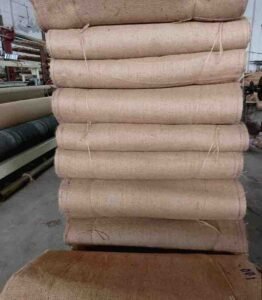
Premium jute products cannot be defined by one feature alone. Instead, the concept refers to bags that meet higher standards across several important factors. Fabric quality, stitching strength, printing clarity, odor control, moisture management, and finishing all play a key role in determining whether a jute product qualifies as premium.
For example, a premium jute tote bag for retail needs:
A neat hem and strong handles.
A consistent fabric shade across the lot.
Accurate printing that does not crack easily.
Proper packing that keeps the bags clean in transit.
Likewise, premium jute bags for coffee beans need:
Breathability to reduce mold risk.
Strong seams for heavy handling.
Correct dimensions for standard export packing.
Optional food-grade inner liners or treatments if the buyer requires them.
A jute manufacturer Bangladesh can produce both commodity sacks and premium goods. The difference comes from process discipline, inspection routines, and communication. GFTCL supports premium requirements by confirming specs early, controlling sample approvals, and applying lot-based QC checks.
The Export Engine: Jute Bag Export from Bangladesh and Market Demand
Jute bag export from Bangladesh grows when buyers see predictable quality and stable supply. Many markets buy jute sacks for agricultural commodities, while other markets buy retail bags and promotional packaging.
Key demand segments include:
- Coffee and cocoa: burlap coffee bags, coffee bean burlap sacks, hessian bags.
- Grains and seeds: jute sack, jute sacking bags, and heavy-duty sacks.
Retail and gifting: jute tote, jute handbag, eco tote bag, and customized jute bags.
Home and lifestyle: storage bags, organizers, and decorative burlap products. - In addition, many buyers search for “jute exporters in Bangladesh” because they want direct sourcing.
- Direct sourcing reduces middle costs and improves customization.
GFTCL supports this approach by sharing fabric options, printing methods, and packing plans clearly so the buyer can choose quickly.
Where Bangladesh Competes Best: Strengths of the Bangladesh Jute Industry
The Bangladesh jute industry competes strongly because it has:
- Strong raw material availability.
- Skilled weaving and sewing workforces.
- Established mill capacity for Yarn, Hessian, and Sacking.
- Experience in export documentation and global shipping.
- A mature ecosystem of printing, lamination, and converting partners.
However, the most important strength is experience in real-world packaging performance.A jute sack must survive heavy loading, truck vibration, port handling, and stacking. A retail jute tote bag must survive daily carry cycles. Bangladesh suppliers understand these realities, and they keep improving. GFTCL adds value by working closely with buyers on performance needs.For instance, if a buyer wants a burlap tote bag with soft handles and neat finishing, GFTCL guides handle thickness, stitching reinforcement, and packing methods. If a coffee exporter needs a strong Sacking Bag for 60 kg, GFTCL aligns fabric GSM and stitching style to the buyer’s handling method.
Innovation in Jute Manufacturing: From Traditional Mills to Modern Export Readiness
Innovation in the Bangladesh jute industry does not always mean expensive robots. Often, innovation means better standardization and better consistency.
Here are examples of practical innovation:
- Better batching and blending of raw fiber to reduce shade variation.
- Improved loom maintenance to keep weave consistent.
- Higher focus on moisture control during storage.
- Cleaner finishing and dust reduction for premium exports.
- Stronger packaging for retail-ready shipments.
- Digital proofing for print layouts and faster approvals.
Many jute bag manufacturers now offer advanced customization. Buyers can request specific sizes, gussets, hems, eyelets, drawstrings, stripes, and multi-color printing. GFTCL supports this trend by maintaining clear pre-production checklists and sample approval steps. This discipline reduces rework and improves delivery performance.
Product Trend Deep Dive: Jute Tote Bag, Retail Bags, and Lifestyle Packaging
Retail and lifestyle products continue to grow because consumers prefer reusable, natural-looking packaging. A jute tote bag offers a strong eco message and strong daily performance.
Common retail product requests include:
- Jute shopping bags for supermarkets and boutique stores.
- Eco friendly tote bags for events, promotions, and corporate gifting.
- Jute handbag designs for fashion brands.
- Jute crossbody bags and jute backpacks for lifestyle segments.
- Decorative burlap tote bags for seasonal campaigns.
Buyers also ask for features like inside pockets, zippers, cotton lining, and laminated interiors. These features require tighter finishing control, and they increase the value per unit. For GFTCL, retail bags work best when the buyer confirms the target use case early. A retail bag used for heavy grocery loads needs stronger handles than a promotional bag used for light items. When the supplier matches the design to the use case, the bag performs well and repeat orders follow.
Coffee and Cocoa Packaging: Why Burlap Coffee Bags Stay Essential
Coffee and cocoa supply chains rely on strong, breathable packaging. Many exporters still choose jute bags for coffee beans because the fiber supports ventilation and handling strength. Burlap coffee bags and hessian coffee sacks remain key export items from Bangladesh. Buyers commonly request standard sizes and weights. They also request neat stitching, clean smell, correct printing, and consistent bale packing.
In this segment, trust matters. A buyer who ships coffee cannot risk weak seams or inconsistent sizes. Therefore, jute products exporter Bangladesh partners must maintain stability and documentation discipline.
GFTCL supports coffee packaging with:
- Standard specs alignment (size, weight, stitch type).
- Pre-shipment inspection routines.
- Clear marking and printing control.
- Export-friendly packing plans to reduce transit damage.
When the coffee exporter receives consistent bags, they can focus on their core business instead of packaging problems.
Jute Yarn and Fabric Trends: The Backbone of Export Growth
Jute yarn export from Bangladesh remains a foundation of the industry. Yarn supplies weaving and diverse applications. Similarly, Hessian and Sacking Fabrics support both domestic converting and export.
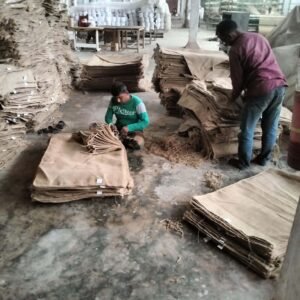
Key trends in yarn and fabric include:
Demand for consistent quality for industrial buyers.
Better tolerance control in weaving (width, weight).
Stronger emphasis on moisture and cleanliness during storage.
Increased requests for specific weaves for specialized uses.
A jute yarn exporter in Bangladesh must offer consistent lots to avoid buyer production issues. Likewise, hessian cloth buyers want predictable weight and weave density. GFTCL works with reliable sources and aligns quality checks with buyer needs.
Export Compliance and Documentation: What Buyers Expect from a Bangladesh Jute Exporter
Export success depends on clear documentation. Buyers usually need a proforma invoice, commercial invoice, packing list, bill of lading, certificate of origin, and any specific certificates the destination market requests. Some buyers also request test reports for fabric weight, breaking strength, or food-contact compliance where relevant.
A professional Bangladesh jute exporter keeps documentation clean and consistent. This discipline reduces customs delays and protects the buyer’s schedule.
GFTCL keeps export workflows structured:
- Confirm specs and quantities in writing.
- Approve samples before mass production.
- Share packing plans and container loading details early.
- Coordinate shipping schedules with the buyer.
When buyers see a stable workflow, they trust the supplier and expand their sourcing scope.
How to Export Jute Products from Bangladesh: A Practical Step-by-Step Guide
Many first-time buyers ask, “How to export jute products from Bangladesh?” The process becomes simple when both sides follow clear steps.
Step 1. Define the product: Choose the product type (jute bags, hessian bags, jute tote bag, jute sack), size, fabric GSM, stitching style, and printing details.
Step 2. Request a quotation: Ask the supplier for price based on quantity, printing, accessories, packing, and destination terms (FOB, CFR, CIF, etc.).
Step 3. Sample development and approval: Approve the sample before mass production. Confirm print artwork, color, and placement.
Step 4. Confirm payment terms: Common terms include TT, LC, or negotiated terms based on relationship history.
Step 5. Production planning: The supplier schedules material sourcing, weaving, cutting, stitching, printing, and final inspection.
Step 6. Packing and shipment booking: Confirm bale packing, carton packing, palletizing if needed, and container booking.
Step 7. Final inspection and documentation: Conduct final checks. Then prepare invoices, packing list, and shipping documents.
Step 8. Dispatch and tracking: After shipment, share BL copy and tracking details.
GFTCL helps buyers follow these steps with clear communication and fast document sharing. This approach supports both new importers and experienced global brands.
Quality Parameters Buyers Use When Sourcing Jute Bags Exporters Bangladesh
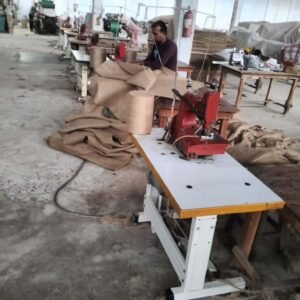
Buyers use clear parameters to compare jute bags exporters Bangladesh. They check quality in a practical way because they face real warehouse and shipping conditions.
Key quality checks include:
- Fabric weight (GSM) and tolerance.
- Fabric weave consistency.
- Stitch density and seam strength.
- Dimensional accuracy.
- Print clarity and rubbing resistance.
- Moisture level and odor control.
- Cleanliness (dust, loose fibers).
- Packing integrity (bales or cartons).
When a supplier controls these points, the buyer experiences fewer complaints and less waste. GFTCL emphasizes these checks during production and pre-shipment inspection.
Pricing in the Bangladesh Jute Industry: What Shapes Jute Bag Price
Buyers often ask about jute bag prices and why prices change.Pricing depends on several factors, and understanding them helps buyers plan procurement.
Major price drivers include:
- Raw jute price movement and seasonality.
- Fabric GSM and weave type.
- Bag size and gusset requirements.
- Stitching style and reinforcement.
- Printing method, color count, and design complexity.
- Accessories: zipper, lining, pocket, eyelets, drawstring, label tags.
- Packing method: bale, carton, pallet.
- Freight conditions and container availability.
A jute manufacturer Bangladesh can reduce cost volatility by planning early and confirming specs quickly. GFTCL supports buyers with transparent quotations so they can compare options and select the best value.
The Role of Industry Associations: BJGEA and Export Support
The Bangladesh jute goods exporters association, widely known as BJGEA, supports exporters through industry coordination and trade representation. Buyers may also search for “Bangladesh jute exporters association” to confirm that a supplier operates within the formal export ecosystem.
Associations can support:
- Trade promotion and exhibitions.
- Policy advocacy.
- Export awareness and compliance updates.
- Networking among mills, exporters, and service providers.
For international buyers, a professional exporter’s transparency and track record matter most. GFTCL focuses on product performance and export discipline while operating within the industry ecosystem.
GFTCL’s Position in the Bangladesh Jute Industry: Export-Ready, Buyer-Focused, Solution-Driven
The Golden Fiber Trade Center Ltd. positions itself as a quality-driven Bangladesh jute exporter and supply partner. GFTCL focuses on communication clarity, consistent quality, and practical performance in the destination market.
GFTCL supports buyers with:
- Product selection guidance: jute sack vs. hessian bags vs. retail jute tote bag.
- Customization: logo jute bags, stripes, multi-color print, private label packing.
- Quality checks: fabric weight checks, stitching checks, print checks, packing checks.
- Export coordination: timely documentation and shipping communication.
In modern trade, buyers value response speed and problem prevention. GFTCL builds trust by confirming specs early, sharing progress updates, and delivering consistent lots. This approach helps buyers reorder with confidence and scale their programs.
Use Cases: How Buyers Use Premium Jute Products from Bangladesh
Different industries use jute products in different ways. Therefore, the best supplier does not offer one generic solution only. Instead, the supplier matches product design to the buyer’s use case.
Use Case 1: Coffee Exporter
A coffee exporter uses burlap coffee bags to pack green beans.
They need strong seams, correct size, breathable fabric, and clean smell.
Use Case 2: Supermarket Chain
A supermarket chain needs durable, reusable shopping bags with strong handles and clear printing.
They want a consistent appearance across stores.
Use Case 3: Corporate Gifting
A corporate buyer needs elegant tote bags with branded logo printing.
They want neat finishing, consistent shade, and premium feel.
Use Case 4: Grain Trader
A grain trader needs heavy-duty jute sacks with strong stitching and stable dimensions for stacking and transport.
The Golden Fiber Trade Center Ltd designs export plans around these real use cases so that the product performs, and the buyer grows repeat demand.
Trends in Global Demand: Where the Bangladesh Jute Exporter Opportunity Is Growing
Global demand patterns keep shifting. Some markets buy high volumes of commodity sacks.
Other markets buy smaller volumes of higher-value retail bags. Both segments matter for the Bangladesh jute industry.
High-volume segments often include:
Africa and parts of Asia for agricultural sacks.
Coffee and cocoa origins for standard export sacks.
Higher-value segments often include:
Europe, UK, and North America for retail eco bags and branded packaging.
Premium gifting and lifestyle brands for fashion-oriented jute bags.
The Golden Fiber Trade Center Ltd supports both segments by offering a flexible product range and clear export processes. When buyers diversify products, GFTCL helps them standardize quality across different bag styles.
Risk Control: Common Problems Buyers Face and How GFTCL Prevents Them
Buyers often face avoidable problems such as late approvals, unclear specs, weak seams, and inconsistent packing. These issues cost money and damage schedules.
The Golden Fiber Trade Center Ltd reduces risk through a simple approach:
- Confirm specifications before production.
- Approve artwork and samples in writing.
- Conduct in-process checks to catch issues early.
- Use final inspections to confirm dimensions and seam strength.
- Pack goods properly to prevent transit damage.
This discipline supports long-term buyer confidence and improves the reputation of the Bangladesh jute industry.
The Next Five Years: Future Outlook for Bangladesh Jute Industry
The Bangladesh jute industry has strong long-term fundamentals. Sustainability policies will keep expanding. Brands will continue to reduce plastic. Consumers will continue to prefer natural materials. However, the winners will be suppliers who control quality and execute exports professionally. The market will reward suppliers who communicate clearly, document carefully, and deliver stable lots.
GFTCL prepares for this future by focusing on:
- Premium product capability.
- Stable export workflows.
- Buyer-centric problem solving.
- Continuous improvement in quality checks.
As a result, The Golden Fiber Trade Center Ltd aims to remain a trusted name when buyers search for a jute manufacturer Bangladesh or Bangladesh jute exporter.
Bangladesh Jute Industry, Jute Exports, and GFTCL
The Bangladesh jute industry plays a vital role in global natural fiber trade. Bangladesh produces high-quality raw jute and supplies a wide range of jute products to international markets. These products include jute sacks, hessian cloth, jute yarn, and diversified retail bags. Because Bangladesh combines strong farming capacity with experienced mills and export infrastructure, the country remains one of the world’s most important sources of jute goods.
Today, sustainability trends increase global demand for natural fibers. As a result, many businesses search for suppliers within the Bangladesh jute industry to replace plastic packaging with eco-friendly alternatives. Buyers often look for a reliable jute manufacturer Bangladesh or a professional Bangladesh jute exporter who can deliver consistent quality and reliable shipments.
Role of The Golden Fiber Trade Center Ltd. in the Bangladesh Jute Industry
GFTCL works as a trusted Bangladesh Jute Exporter that supports international buyers with export-ready jute products. Instead of acting as a simple trading company, GFTCL operates as a solution partner that coordinates product sourcing, quality control, and export documentation.
Global buyers often search online for Jute Bag Exporter in Bangladesh or Jute manufacturer Bangladesh when sourcing sustainable packaging. GFTCL helps these buyers by providing clear product specifications, sample approvals, and reliable communication throughout the export process. This approach ensures that buyers receive consistent quality and timely shipments.
Premium Jute Products and Quality Expectations
The demand for premium jute products continues to grow in international markets. Buyers expect higher finishing standards, durable construction, and accurate printing on retail bags and packaging products. Premium jute products typically include cleaner fabric, stronger seams, balanced handles, and neat stitching.
For example, a premium jute tote bag for retail stores requires comfortable handles, consistent color shade, and accurate logo printing. Meanwhile, burlap coffee bags used for green coffee export require breathable fabric, strong stitching, and reliable dimensions. GFTCL supports these requirements by confirming specifications early and applying quality inspection during production.
Common Products in Jute Bag Export from Bangladesh
The jute bag export from Bangladesh includes a wide range of products used across industries. Traditional jute sacks remain essential for agricultural packaging, while hessian bags support coffee and cocoa exports. In addition, modern retail markets demand jute tote bags, eco-friendly shopping bags, and customized promotional bags.
These products serve different buyers around the world. Coffee exporters need strong sacks for bulk packaging, while retailers require stylish tote bags for branding campaigns. Because each product has different specifications, buyers must choose suppliers who understand both product design and export logistics. GFTCL guides buyers in selecting the right bag size, fabric weight, and finishing options.
Choosing the Right Jute Bag Supplier
Selecting a reliable supplier is critical for successful sourcing. Buyers should choose suppliers who confirm specifications clearly and provide production samples before mass manufacturing begins. In addition, suppliers should maintain strict quality checks and share export documentation properly. A professional Bangladesh jute exporter communicates quickly and provides transparent quotations. This approach reduces risks and helps buyers manage supply chains efficiently. GFTCL follows these practices by maintaining strong communication and structured production workflows.
Coffee Packaging and Burlap Coffee Bags
Coffee exporters represent an important segment of the Bangladesh jute industry. Many coffee exporters require Burlap coffee bags and Hessian Coffee Sacks to pack green coffee beans for export. These sacks must provide breathable fabric to prevent moisture problems and strong seams to withstand heavy handling. In addition, coffee exporters require accurate markings for traceability and branding. Clean fabric and consistent bag dimensions also play an important role. GFTCL supports coffee exporters by aligning bag specifications with global coffee packaging standards and ensuring that shipments meet quality expectations.
Jute Yarn and Fabric Export
Another important segment of the Bangladesh jute industry involves jute yarn export from Bangladesh. Jute yarn supports weaving operations and industrial uses in different countries. Buyers expect consistent fiber quality, stable spinning performance, and reliable packaging. Because yarn quality influences fabric strength and appearance, exporters must maintain strict quality control during production. GFTCL works with reliable mills and partners to ensure that buyers receive consistent yarn and fabric products.
Export Documentation and Compliance
Export success depends not only on product quality but also on proper documentation. Buyers usually require documents such as a commercial invoice, packing list, bill of lading, and certificate of origin. Some destinations may also request additional certificates depending on regulations. Professional exporters maintain organized documentation systems to avoid delays during customs clearance. GFTCL follows structured export workflows so that shipments move smoothly from production to port.
Sustainability and Eco-Friendly Jute Bags
Sustainability trends strongly support the growth of the Bangladesh jute industry. Many companies now replace plastic packaging with eco-friendly jute bags and reusable shopping bags. Because jute is biodegradable and renewable, it offers a practical alternative to single-use plastics. Retailers also value jute bags for marketing purposes. Customers reuse these bags frequently, which increases brand visibility in public spaces. As a result, durable jute bags create both environmental and promotional value for businesses.
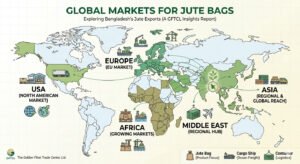
Global Markets for Bangladesh Jute Products
The Bangladesh jute industry exports products to many international markets, including Europe, the United Kingdom, the United States, Africa, the Middle East, and Asia. Each region demands different product types. For example, European buyers often focus on retail jute bags and eco-friendly tote bags. African markets frequently purchase heavy-duty jute sacks for Agricultural Packaging. Meanwhile, coffee-producing countries import burlap coffee bags for export packing. GFTCL supplies these markets by adapting specifications according to buyer requirements.
Industry Associations and Export Support
Industry organizations also support the growth of the Bangladesh jute industry. The Bangladesh Jute Goods Exporters Association (BJGEA) represents exporters and promotes international trade. These organizations help improve industry standards, promote export opportunities, and support cooperation among manufacturers and exporters. Buyers often review jute export data of Bangladesh to understand market trends and supply stability. By analyzing export statistics, buyers can identify reliable product segments and plan long-term sourcing strategies.
The Future of the Bangladesh Jute Industry
The future of the Bangladesh jute industry remains strong because global sustainability demand continues to increase. Businesses across the world are adopting natural fibers and reusable packaging solutions. Suppliers who maintain quality control, professional communication, and reliable export systems will lead this growth. As a Bangladesh jute exporter, The Golden Fiber Trade Center Ltd. (GFTCL) focuses on delivering consistent products, efficient export coordination, and practical solutions for global buyers. Through strong partnerships and continuous quality improvement, GFTCL aims to strengthen the international reputation of the Bangladesh jute industry and support buyers who seek reliable and sustainable packaging solutions.
Work with GFTCL for Reliable Jute Exports
If you want stable quality, clear communication, and export-ready execution, work with The Golden Fiber Trade Center Ltd. (GFTCL). Whether you need jute sacks for commodities, hessian bags for coffee, or customized jute tote bags for retail branding, GFTCL can guide the specification and deliver consistent results. Contact GFTCL to share your size, weight, printing, and packing requirements. A clear specification today leads to smoother production, faster shipment, and better repeat business tomorrow.
Market-by-Market Demand in the Bangladesh Jute Industry: How Buyers Use Jute in Different Regions
Global Demand Trends in the Bangladesh Jute Industry
The Bangladesh jute industry serves many global markets because jute products support both sustainability and practical packaging needs. Buyers across different regions purchase jute products for different reasons. Therefore, exporters must understand each market’s expectations before designing products or preparing export plans. A professional Bangladesh jute exporter must adapt specifications based on climate, logistics, and buyer preferences. The Golden Fiber Trade Center Ltd. (GFTCL) supports this approach by supplying both high-volume commodity sacks and premium retail bags. By adjusting product design, packing methods, and quality control standards, GFTCL helps buyers receive reliable jute packaging that fits their market requirements.
Europe and the UK: Demand for Sustainable Retail Packaging
Europe and the United Kingdom represent major markets for sustainable retail packaging. Many businesses in these regions promote eco-friendly products and actively replace plastic packaging with natural fiber alternatives. As a result, buyers often search for suppliers within the Bangladesh jute industry who can supply eco-friendly bags, sustainable shopping bags, and premium jute products. Retailers in these markets prefer jute tote bags with cotton handles, neat finishing, and accurate logo printing. These bags must look clean and consistent because they appear directly on store shelves and represent the brand image. Therefore, European buyers expect strict quality control, balanced color placement, and uniform bag dimensions.
GFTCL supports these expectations by confirming bag specifications early in the order process. The company also checks printing quality, stitching strength, and finishing details before shipment. In addition, exporters must discuss labeling rules and compliance requirements when supplying to European markets. This preparation helps prevent delays and protects the buyer’s brand reputation.
United States Market: Promotional and Branding Applications
The United States market also values sustainability, but the product focus often includes promotional bags and event merchandise. Businesses frequently use jute tote bags for marketing campaigns, trade shows, and retail promotions. Because these campaigns depend on brand visibility, US buyers prefer large printing areas and durable bag designs. In addition, American buyers expect repeatability. When a marketing campaign performs well, companies often reorder the same bag design multiple times. Therefore, suppliers must maintain stable fabric quality and consistent printing results.
The Golden Fiber Trade Center Ltd. (GFTCL) supports this requirement through structured production control and lot-based quality inspection. By keeping artwork approvals and sample records organized, GFTCL ensures that repeat orders maintain the same quality standard. This consistency strengthens long-term partnerships between international buyers and the Bangladesh jute industry.
Africa: Agricultural Packaging and Coffee Sacks
Africa remains an important destination for traditional packaging products from the Bangladesh jute industry. Many agricultural traders in African markets require durable jute sack bags to pack grains, seeds, and other commodities. At the same time, coffee-producing countries often import burlap coffee bags and hessian coffee sacks for green coffee export. These bags must offer strong seams, breathable fabric, and consistent dimensions. Because coffee exporters rely on these sacks to protect product quality, reliability becomes essential.
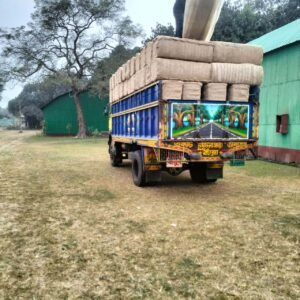
African buyers also focus heavily on logistics efficiency. Bale packing often reduces container space and lowers transport cost. Therefore, exporters must design packing systems that match warehouse handling and port operations. GFTCL helps buyers select packing methods that improve shipping efficiency while protecting product quality during transit.
Middle East: Mixed Demand for Industrial and Retail Bags
The Middle East market shows a mixed demand pattern. Some buyers import jute sacks for industrial packaging and bulk storage. At the same time, retail chains and promotional campaigns require jute shopping bags and eco-friendly tote bags. Because many businesses in this region operate fast distribution systems, buyers pay close attention to delivery schedules. Reliable shipment coordination becomes as important as product quality. Suppliers who communicate clearly and provide accurate production timelines build stronger trust with buyers.
As a Bangladesh jute exporter, GFTCL supports this need by sharing production progress updates and shipment planning information. Clear communication helps buyers maintain inventory stability and plan distribution schedules more effectively.
Asian Markets: Industrial Materials and Competitive Pricing
Asian markets demonstrate a diverse demand for jute products. Some buyers purchase jute yarn, hessian cloth and jute fabric for industrial converting operations. Others import finished jute bags for retail packaging and sustainable product lines. In these markets, pricing competitiveness often plays an important role. However, quality consistency still determines long-term supplier relationships. Buyers prefer suppliers who deliver stable product specifications and maintain reliable export documentation.
When exporters combine competitive pricing with strong export discipline, they strengthen the reputation of the Bangladesh jute industry in regional markets. The Golden Fiber Trade Center Ltd. (GFTCL) follows this strategy by maintaining quality standards while supporting efficient export coordination for international buyers.
Why Market Understanding Matters for the Bangladesh Jute Industry
Understanding regional demand helps exporters design better products and build stronger trade partnerships. Each market has unique expectations related to product design, packaging style, and logistics requirements.The Bangladesh jute industry benefits from this diversity because it can supply both traditional commodity sacks and modern retail packaging products. Suppliers who adapt to these differences create stronger long-term relationships with global buyers.
The Golden Fiber Trade Center Ltd. (GFTCL) supports international buyers by aligning product specifications with market demand. Through careful quality control, export coordination, and communication, GFTCL helps buyers source reliable jute products from Bangladesh for different global markets.
Technical Guide: Choosing the Right Jute Bag Specification
A jute bag is not one product. It is a system of fabric, size, stitching, printing, and packing. When buyers share clear specifications, suppliers can quote accurately and deliver reliably. When buyers keep specs vague, problems appear later. Therefore, GFTCL encourages buyers to confirm the following points at the quotation stage.
Bag purpose: Is it for coffee beans, cocoa, grains, retail shopping, promotional events, or gifting.
The purpose determines the fabric weight, reinforcement style, and finishing level. For example, a coffee sack needs breathability and strength, while a retail tote bag needs neat finishing and comfortable handles.
Size and capacity: Size impacts fabric use and cost. It also impacts packing efficiency.
For commodity sacks, buyers often use standard sizes based on common weight units. For retail bags, buyers prefer sizes that fit daily use. If you are unsure, share your target product and weight. Then the supplier can recommend a suitable size.
Fabric GSM and weave.
GSM indicates weight per square meter. Higher GSM usually increases strength and cost. Weave density influences look and print behavior. A smoother fabric can show printing more cleanly. However, the best choice depends on use case and budget. GFTCL helps buyers choose GSM and weave so the bag meets performance expectations without unnecessary cost.
Stitching and seam style: Stitch density and seam construction decide real-world strength.
For heavy-duty sacks, reinforced seams reduce failure risk. For tote bags, neat stitching improves appearance and handle comfort. Buyers should confirm whether they want single stitch, double stitch, or reinforced corners where applicable.
Handles and accessories
Retail bags may use jute handles, cotton webbing handles, or rope handles Accessories can include zippers, inside pockets, labeltags, and liners. Each accessory changes lead time and cost. GFTCL recommends adding accessories only when they create clear value for the end customer.
Printing details: Printing needs a clear artwork file, color references, and placement instructions.
The buyer should confirm whether the bag needs one side printing, two side printing, or all-over patterns. They should also confirm color count and desired durability level. GFTCL supports print approvals through digital proofs and physical samples where needed.
Packing and shipment terms: Bale packing, carton packing, and pallet packing each have advantages.
Bales often maximize container capacity for commodity bags. Cartons often protect retail bags and keep them clean. Pallets help distribution systems that use forklifts. The Golden Fiber Trade Center Ltd aligns packing to the buyer’s warehouse and transport flow.
Printing, Branding, and Design: The Growth Engine for Premium Jute Products
Branding as a Growth Engine for Premium Jute Products
Branding has become one of the most powerful drivers in the Bangladesh jute industry, especially for the premium product segment. Today, many buyers do not purchase a bag only for carrying goods. Instead, they choose bags that improve brand visibility and strengthen customer memory. Because of this trend, logo jute bags and customized jute bags continue to grow in international markets.
A well-designed jute bag functions as more than packaging. It becomes a reusable marketing tool that promotes a company’s brand wherever the bag travels. When a bag looks attractive and performs well in daily use, customers carry it repeatedly. As a result, the bag acts as a moving advertisement for the brand. Therefore, printing quality and finishing standards play an important role in the success of premium jute products exported from Bangladesh.
Export Discipline and Logistics Quality
In the Bangladesh jute industry, export success depends on more than production quality. Logistics quality also plays a critical role in buyer satisfaction. Even a well-made jute bag can cause problems if it arrives dirty, damaged, or delayed. Therefore, exporters must manage packing discipline and shipment coordination carefully. Professional exporters understand that product protection during transport is as important as manufacturing standards. The Golden Fiber Trade Center Ltd. (GFTCL) follows a structured export process that combines careful packing methods, efficient container loading, and clear shipment planning. This approach ensures that international buyers receive products in good condition and on schedule.
Packing Methods for Different Jute Products
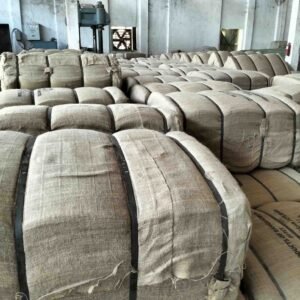
Different jute products require different packing methods depending on their final use and transportation conditions. In the Bangladesh jute industry, commodity bags such as Jute Sack and Hessian are often packed in compressed bales. Bale packing reduces shipment volume and allows exporters to maximize container space. As a result, transportation costs remain competitive for bulk buyers. However, bale packing requires proper strapping and moisture control. If exporters do not secure the bales correctly, bags may shift or absorb moisture during transit. GFTCL manages these risks by using strong binding methods and monitoring storage conditions before shipment.
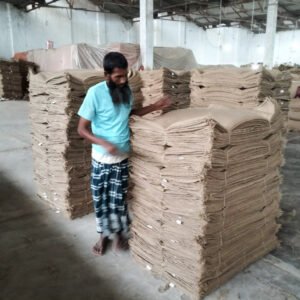
Retail products require a different approach. Jute tote bags, eco-friendly shopping bags, and customized retail bags are usually packed in cartons. Carton packing keeps the bags clean and protects printed surfaces during transport. When the buyer opens the shipment, the bags remain presentable and ready for distribution or retail display.
Managing Consistency: How the Best Jute Exporters in Bangladesh Build Repeat Orders
Repeat orders build long-term growth. A buyer rarely wants one shipment only. They want a stable supplier who can deliver the same quality again and again. In jute, consistency requires attention to fiber, weaving, stitching, printing, and packing.
Top exporters create repeatability through:
- Standardized specifications and tolerances.
- Clear sample approvals.
- Lot-based inspection records.
- Stable supplier coordination.
- Honest communication about lead times.
GFTCL supports repeatability by keeping specifications clear and by tracking buyer preferences.
When a buyer approves a certain printing style or handle type, GFTCL records that preference and uses it for repeat shipments. This approach reduces uncertainty and builds trust.
Sustainability Storytelling: How GFTCL Turns ‘Eco’ Into Buyer Value
Many buyers want a sustainability story. Yet they do not want vague claims. They want a story that connects to real product performance. A jute bag that lasts longer and replaces multiple single-use plastics creates stronger sustainability value. Therefore, durability becomes part of sustainability.
GFTCL supports buyer storytelling by:
- Explaining jute’s natural origin and biodegradable nature.
- Helping buyers choose durable construction for longer reuse cycles.
- Supporting clean, export-ready packing that protects product quality.
- Offering customization that strengthens brand visibility and reuse behavior.
When the final customer reuses the bag, the buyer’s brand appears again and again. This creates a business value that goes beyond “eco.” It creates a marketing asset.
Competitive Landscape: Bangladesh vs Other Origins in Jute Export in World Markets
In jute export in world markets, Bangladesh competes with other origins. Buyers compare price, quality, lead time, and product range. Bangladesh remains strong because it offers quality fiber, mature mills, and a long export history. However, buyers should not choose only based on country name. They should choose based on supplier discipline. A good supplier prevents quality issues, handles documentation correctly, and communicates clearly. This is where GFTCL positions itself: export-ready and buyer-focused.
When buyers evaluate “list of jute exporters in Bangladesh,” they should check:
- Product photos and real production capability.
- Willingness to provide samples and clear specs.
- Documentation clarity and export experience.
- Response speed and problem-solving attitude.
A supplier that performs well on these points becomes a long-term partner rather than a one-time vendor.
Buyer Checklist: What to Send When Requesting a Quote from GFTCL
To receive the fastest and most accurate quotation, buyers can share a simple checklist.
This checklist also improves Yoast-friendly clarity because it turns vague buying into clear specification.
Share:
- Product type: jute sack, hessian bag, jute tote bag, retail shopping bag.
- Size: width x length x gusset (if needed).
- Fabric: GSM and weave preference (or target use case if you want recommendation).
- Quantity and packing: bales or cartons, units per bale/carton.
- Printing: one side or two sides, color count, artwork file.
- Accessories: handles, zipper, lining, label tags, drawstring, eyelets.
- Shipment term: FOB, CFR, CIF, and destination port.
- Target shipment date.
When the buyer shares these details, GFTCL can quote quickly and guide the best options.
Extended Product Ideas for SEO and Buyer Discovery
Buyers search with many keywords, including “jute bags,” “hessian bags,” “burlap bags,” “eco friendly bags,” and “sustainable bags.”
To capture this long-tail demand, a content strategy should explain product categories clearly and connect them to real uses.
Content-friendly product clusters include:
- Jute bags for coffee beans: coffee jute bags, burlap coffee sacks, hessian coffee sacks.
- Retail jute bags: jute tote, jute tote bag, jute shopping bags, eco tote bag.
- Promotional bags: logo jute bags, customized jute bags, event tote bags.
- Heavy-duty sacks: jute sack, jute sacking bags, bulk jute bags.
- Premium lifestyle items: jute handbag, jute purse, jute basket bag, stylish jute bags.
GFTCL can use these clusters to build product pages and internal links that support SEO for “Bangladesh jute industry” and “jute manufacturer Bangladesh.”
Jute Export Statistics of Bangladesh: How to Read the Numbers for Better Buying
Buyers often ask for jute export statistics of Bangladesh because they want confidence in supply continuity. While exact figures change year by year, the practical approach stays the same: look at the trend direction, the product mix, and the stability of diversified exports.
When you review jute export data of Bangladesh, focus on:
- How much export comes from raw jute versus value-added goods.
- Whether diversified products keep expanding.
- Which markets import the most from Bangladesh.
- Whether yarn and fabric exports stay stable.
If diversified exports grow, it shows that the Bangladesh jute industry invests in quality and product development. This trend reduces risk for buyers because the industry becomes more resilient. GFTCL uses this resilience by offering multiple product options to the same buyer. For example, a coffee exporter may buy coffee sacks and also buy retail tote bags for marketing campaigns. This combination increases order stability for both sides.
Buyers also ask about “jute export from Bangladesh 2022” because they want historical reference. The best way to use a historical year is to compare it with more recent years and see how the product mix changes. If the share of premium jute products rises over time, it indicates stronger conversion capacity in the market. It also indicates that exporters improve finishing, printing, and packaging quality. In procurement, data is useful, but performance is more useful. A stable supplier with clear QC routines will protect your business even if market conditions fluctuate.
Therefore, pair export trend analysis with supplier capability checks. The Golden Fibre Trade Center Ltd. supports this approach through transparent sampling, clear documentation, and practical product advice.
Case Stories: How GFTCL Solves Typical Buyer Problems
The global jute trade involves many practical challenges that buyers may encounter during sourcing, production, or shipment. These challenges may relate to product durability, branding consistency, or supply speed. A professional exporter does more than simply supply bags; they help buyers solve operational problems that affect their business. The Golden Fiber Trade Center Ltd. (GFTCL) works closely with buyers to identify these issues and implement practical solutions. The following real-world case stories demonstrate how a reliable Bangladesh jute exporter can add value through technical guidance, process discipline, and supply chain coordination.
Case Story 1: The Coffee Exporter Who Needed Stronger Seams
A coffee exporter relied on jute bags to pack green coffee beans for international shipment. However, they began experiencing seam failures during port handling. Instead of assuming the bags were defective, the buyer examined the logistics process carefully. They discovered that during loading operations, bags were often dropped from height onto hard surfaces, which created significant stress on the seams. After reviewing the situation, GFTCL recommended reinforcing the seam structure and adjusting the stitching method to improve durability. The solution included a stronger stitch pattern and additional seam reinforcement designed to withstand heavy handling.
Testing and Performance Improvement
Before moving to full production, the buyer approved new samples and tested them under real warehouse and port handling conditions. The results were positive. Seam complaints dropped significantly, and the buyer gained confidence in the packaging performance. As a result, the exporter increased order volume for future shipments. This case highlights how a Bangladesh jute exporter can add value by solving a performance problem rather than simply supplying standard products.
Case Story 2: The Retailer Who Needed Consistent Printing
A retail company used eco-friendly jute tote bags as part of a promotional campaign. However, their initial supplier delivered bags with inconsistent logo placement. Some prints appeared slightly higher or lower than expected, which created visual inconsistency across the batch. Because these bags were part of the retailer’s branding strategy, the issue raised concerns about brand image and customer perception.
To address the problem, GFTCL introduced a structured printing control process. The team created a simple placement guide that included alignment marks to ensure consistent logo positioning during printing. In addition, GFTCL confirmed the final artwork proof before starting production to prevent design errors.
When the shipment arrived, the retailer found that the printing placement was consistent across the entire batch. The bags were distributed across multiple stores, and the brand presentation remained uniform. This case demonstrates how disciplined production processes are essential for premium jute bags used in branded retail programs.
Case Story 3: The Importer Who Needed Faster Reorders
An online retailer selling jute shopping bags experienced growing demand for a particular bag design. The product performed well in the market, and repeat orders increased quickly. However, the importer needed faster production and shipment for repeat orders to keep up with customer demand.
Instead of rushing production, GFTCL focused on improving process efficiency. The team worked with the buyer to standardize the bag specification, confirm the exact handle type, and archive the approved artwork files. By maintaining stable specifications and ready-to-use production references, the manufacturing process became more predictable.
Because the design remained consistent, future production cycles required fewer adjustments and approvals. As a result, repeat orders moved through the production system more quickly. This case illustrates an important lesson in supply chain management: speed often comes from standardization and planning rather than from rushing production schedules.
Building a Long-Term Supply Program: Forecasting, Standardization, and Reorder Strategy
If you want stable pricing and stable quality, build a supply program instead of placing random orders. A supply program uses forecasting, standardized specifications, and repeatable production plans. This approach helps the supplier reserve capacity and helps the buyer reduce urgent shipping costs.
Start by standardizing:
- Your top-selling bag sizes.
- Your most common fabric GSM choices.
- Your handle types and accessories.
- Your printing templates and logo placement.
Then forecast your demand in simple ranges. Even a rough forecast helps. For example: “We need 50,000 to 80,000 pieces per quarter” is more helpful than “We may order later.” With a forecast, GFTCL can plan material availability and manage production scheduling. Next, create a reorder calendar. When you order early, you protect yourself from peak season load and freight volatility. In many cases, early ordering also improves price stability. This program approach builds trust and reduces surprises for both sides.
Improving SEO and Buyer Conversion
This structured approach strengthens both search engine optimization and buyer experience. When product pages use clear keywords and organized content, search engines can understand the website more easily. As a result, the site becomes more visible for searches related to the Bangladesh jute industry, jute manufacturer Bangladesh, and jute bag exporter in Bangladesh. At the same time, detailed product pages help convert visitors into buyers. Instead of searching through multiple pages, potential customers can immediately see specifications, product photos, and inquiry options. By combining strong SEO structure with clear product information, The Golden Fiber Trade Center Ltd. (GFTCL) can attract more international buyers and strengthen its presence in the global Bangladesh jute industry.
Why the Bangladesh Jute Industry and GFTCL Matter for Global Buyers
The Bangladesh jute industry stands at a strong point in global trade. Sustainability demand keeps rising, and buyers keep searching for alternatives to plastic. At the same time, buyers require performance, consistency, and reliable exports. This combination creates a clear opportunity for suppliers who work professionally and deliver stable quality. GFTCL supports buyers who want more than a basic supplier. As a Bangladesh jute exporter and solution partner.
GFTCL helps buyers choose the right bag, confirm the right specification, and execute the shipment with clarity. Whether your focus is coffee packaging, agricultural sacks, retail jute tote bags, or customized promotional bags, the right export workflow protects your schedule and your brand. If you want to grow your jute sourcing program, start with clear specifications and strong communication. Then choose a supplier who treats your order as a long-term relationship rather than a one-time transaction. This approach will keep your supply stable and your customers satisfied, while also supporting the long-term growth of the Bangladesh jute industry.
Request a Quote from GFTCL
- If you want to source from the Bangladesh jute industry with confidence, contact The Golden Fiber Trade Center Ltd. (GFTCL) today.
- Share your product type, size, GSM, quantity, printing needs, packing method, and destination port.
- GFTCL will reply with a clear quotation and practical recommendations so you can choose the best option for your market.
- Whether you need jute sacks for commodities, hessian bags for coffee, or premium jute tote bags for retail, GFTCL can support your program with consistent quality and export-ready service.
Care, Handling, and Reuse: Helping End Customers Get the Best from Jute Bags
Care, Handling, and Reuse of Jute Bags in the Bangladesh Jute Industry
In the modern Bangladesh jute industry, proper care and handling of jute bags play an important role in maintaining product quality and customer satisfaction. Many global buyers now include simple care instructions with retail jute bags. This small step reduces product complaints and increases the overall lifespan of the bag. As a result, longer product life improves sustainability value and supports repeat brand exposure. When customers reuse a jute bag regularly, the brand logo appears in public spaces again and again. Therefore, proper care guidance benefits both the end user and the brand owner.
Basic Care Guidelines for Jute Tote Bags and Shopping Bags
Retail products such as jute tote bags, eco friendly sacking bags, and reusable shopping bags require simple but effective care practices. Users should keep the bag dry and store it in a well-ventilated place. If the bag becomes wet, it should dry naturally in open air rather than inside a closed space. Long storage in damp environments should be avoided because moisture can affect the natural fiber structure of jute.
In addition, gentle cleaning methods help preserve the fabric quality. A damp cloth works well for spot cleaning, while harsh chemical washing should be avoided unless the bag design supports it. Overloading should also be avoided because each bag has a specific weight capacity. For example, a grocery tote bag requires stronger handles than a lightweight promotional tote bag. Furthermore, storing the bag away from direct sunlight helps maintain its natural color and fabric strength over time.
Proper Handling of Coffee and Commodity Jute Sacks
Industrial packaging products such as burlap coffee bags, jute sacks, and hessian bags also require proper handling practices. Coffee exporters and commodity traders should store sacks in clean and dry warehouse environments. Keeping the sacks on pallets helps prevent direct contact with floor moisture and protects the natural jute fibers. Good warehouse ventilation also plays an important role in controlling humidity levels. In addition, sacks should remain away from strong odors because natural fibers easily absorb surrounding smells. When exporters follow these simple storage rules, the quality of the packaging remains stable throughout the supply chain.
Conclusion: Bangladesh Jute Industry and GFTCL Key Takeaways
The Bangladesh jute industry continues to grow as global demand for sustainable and environmentally friendly packaging increases. Many international buyers now look for alternatives to plastic packaging, and jute provides a natural, biodegradable, and durable solution. As a result, exporters in Bangladesh continue to expand their production capacity and focus more on value-added products. Today, the industry supplies a wide range of goods including jute sacks, hessian bags, burlap coffee bags, and retail jute tote bags that serve both agricultural and consumer markets worldwide.
Quality and Performance of Premium Jute Products
In global trade, premium jute products succeed when they combine several important qualities. Clean and uniform fabric improves appearance and usability, while strong stitching ensures durability during handling and transportation. Accurate printing helps maintain brand visibility, and export-ready packing protects the product during shipment. Therefore, buyers prefer suppliers who maintain strict quality control and provide consistent production standards. When these quality factors remain stable, jute bag export from Bangladesh becomes reliable and efficient for international buyers.
Importance of Standard Specifications and Order Planning
Successful sourcing in the Bangladesh jute industry also depends on clear specifications and early planning. Buyers who standardize bag sizes, fabric weight, printing design, and packing methods experience fewer production issues. In addition, planning repeat orders in advance helps suppliers reserve production capacity and maintain consistent quality across shipments. Clear communication between buyer and exporter reduces delays, protects lead times, and ensures that shipments arrive according to schedule.
GFTCL as a Reliable Bangladesh Jute Exporter
The Golden Fiber Trade Center Ltd. (GFTCL) plays an important role as a reliable Bangladesh jute exporter and supply partner. The company focuses on consistent product quality, clear communication, and efficient export coordination. By offering customized product solutions and structured export workflows, GFTCL helps global buyers source premium jute products with confidence. This approach strengthens long-term partnerships and supports the global growth of sustainable packaging. Contact us for Inquiries.
Start Your Jute Sourcing Program with GFTCL
If you plan to source jute bags, hessian bags, coffee sacks, or Hessian Sand Bag the best first step is to share your product requirements with The Golden Fiber Trade Center Ltd (GFTCL). Buyers should provide key details such as bag size, fabric weight, printing requirements, quantity, packing method, and destination port. With clear specifications, GFTCL can prepare an accurate quotation and recommend the most suitable product options. Clear communication at the beginning leads to smoother production, reliable shipment schedules, and stronger long-term cooperation. Through this approach, buyers can confidently participate in the growing global market of the Bangladesh jute industry while working with a trusted export partner like GFTCL.
FAQ: Bangladesh Jute Industry, Jute Exports, and GFTCL
1. What makes the Bangladesh jute industry globally important?
The Bangladesh jute industry plays a vital role in the global natural fiber market because Bangladesh produces some of the highest-quality raw jute in the world. The country has a strong ecosystem that includes jute farming, spinning mills, weaving units, and export companies that produce a wide range of jute goods. Products such as jute sacks, hessian cloth, burlap bags, jute yarn, and retail tote bags are exported to markets across Europe, the United States, Africa, and Asia. In addition, global demand for sustainable and biodegradable packaging continues to grow as governments and brands reduce plastic usage. Because jute is renewable and environmentally friendly, it has become a preferred alternative to plastic packaging. As a result, exporters like The Golden Fiber Trade Center Ltd. (GFTCL) help international buyers source high-quality jute products directly from Bangladesh.
2. Is GFTCL a jute manufacturer in Bangladesh or an exporter?
The Golden Fiber Trade Center Ltd. (GFTCL) operates primarily as a Bangladesh jute exporter and supply partner for international buyers. Instead of focusing only on manufacturing, GFTCL coordinates the entire export supply chain. This includes product sourcing, quality control, customization, packaging, and export documentation. By working closely with experienced jute mills and production partners, GFTCL ensures that buyers receive export-grade jute bags, hessian sacks, jute yarn, and customized retail bags. This model allows global buyers to access consistent quality and professional export service when sourcing jute products from Bangladesh.
3. What are premium jute products?
Premium jute products refer to high-quality jute goods that offer improved finishing, stronger construction, and better performance compared with basic commodity sacks. These products typically include features such as cleaner fabric, consistent weaving, reinforced stitching, and accurate logo printing. For example, a premium jute tote bag for retail markets often includes cotton handles, neat hemming, and consistent color finishing. Similarly, premium burlap coffee bags require precise stitching and breathable fabric to protect coffee beans during transportation. Suppliers like GFTCL focus on these quality details to deliver reliable products for international buyers.
4. Which products are most commonly exported from Bangladesh in the jute sector?
The most common exports from the Bangladesh jute industry include several types of packaging and textile products. Popular export items include jute sacks for agricultural commodities, hessian bags, burlap coffee bags, jute tote bags, shopping bags, and jute yarn used for industrial applications. In recent years, demand has also increased for customized jute shopping bags and eco-friendly retail bags because many brands want sustainable packaging solutions. Companies such as GFTCL supply both commodity sacks and value-added jute products to global buyers.
5. How do I choose the right jute bag supplier in Bangladesh?
Choosing the right jute bag exporter in Bangladesh requires careful evaluation of several factors. First, the supplier should clearly confirm product specifications such as bag size, fabric weight (GSM), stitching style, and printing requirements. Second, the supplier should provide samples for approval before mass production. Reliable suppliers also maintain quality control procedures, share export documentation properly, and communicate quickly with buyers. Companies like GFTCL follow structured export processes that include sampling, inspection, and shipment coordination to ensure smooth delivery for international customers.
6. What are typical buyer requirements for coffee sacks?
Buyers who purchase burlap coffee bags usually require breathable and durable packaging. Coffee exporters typically need sacks that allow ventilation to prevent moisture buildup while maintaining strong stitching to handle heavy loads.
In addition, buyers often require consistent bag dimensions, clean fabric without strong odors, and clear printing for identification marks. Exporters such as GFTCL supply hessian coffee sacks and burlap coffee bags that meet these requirements for global coffee exporters.
7. Does Bangladesh export jute yarn?
Yes, jute yarn export from Bangladesh remains an important part of the jute industry. Jute yarn is widely used for weaving fabrics, making ropes, carpets, and industrial materials. Bangladesh has strong spinning capacity, which allows exporters to supply consistent yarn quality to international markets. Many global textile companies import jute yarn from Bangladesh because of its durability and natural fiber properties.
8. What documents are required for jute exports from Bangladesh?
Export shipments from Bangladesh usually require several standard trade documents. These documents include a commercial invoice, packing list, bill of lading, certificate of origin, and sometimes quality certificates or inspection reports depending on the buyer’s requirement. Professional exporters such as GFTCL manage these documents carefully to ensure smooth customs clearance and timely shipment delivery.
9. How can I reduce risk when placing my first jute bag order?
When placing your first order with a jute manufacturer in Bangladesh, it is important to follow several practical steps. Buyers should clearly define product specifications, including size, GSM, stitching style, and printing design. Approving samples before production is also essential. Buyers should confirm packing methods, labeling instructions, and shipping schedules. By maintaining clear communication with the exporter, buyers can significantly reduce production and shipment risks.
10. Can jute bags replace plastic bags effectively?
Yes, jute bags are widely used as a sustainable alternative to plastic bags. Jute is biodegradable, renewable, and strong enough for repeated use. Many retailers and brands now promote eco friendly tote bags and reusable shopping bags made from jute. Because of these environmental benefits, demand for jute packaging continues to grow worldwide.
11. What are the common uses of hessian bags?
Hessian bags, also known as burlap bags, are commonly used for packaging agricultural commodities such as coffee beans, cocoa, grains, and spices. The breathable nature of jute fabric allows airflow, which helps preserve product quality during storage and transportation. In addition, hessian cloth is also used for decorative packaging, gardening applications, and industrial uses.
12. Can customized jute bags be ordered with logos?
Yes, many Bangladesh jute exporters offer customized printing options. Buyers can order jute bags with logos, stripe patterns, product markings, or brand labels. Companies like GFTCL support customized bag production for retail brands, corporate promotions, and packaging programs.
13. How can buyers verify jute bag quality before shipment?
Quality verification usually involves checking several factors. Buyers often confirm fabric GSM, stitching strength, bag dimensions, print quality, and packing methods. Some buyers also conduct third-party inspections before shipment to ensure that the products meet the agreed specifications.
14. Which markets import the most jute products from Bangladesh?
Major import markets for jute exports from Bangladesh include Europe, the United Kingdom, the United States, Africa, the Middle East, and several Asian countries. Different regions demand different products. For example, Africa imports many commodity jute sacks, while Europe and North America buy more retail tote bags and sustainable packaging products.
15. What is the role of BJGEA in the jute industry?
The Bangladesh Jute Goods Exporters Association (BJGEA) represents exporters involved in jute goods trade. The organization helps promote the industry, supports exporters, and provides a platform for collaboration between manufacturers and exporters. BJGEA also contributes to trade promotion and industry development.
16. What is jute export data used for?
Buyers and researchers often review jute export data of Bangladesh to understand market trends and production capacity. This data helps importers analyze global demand, seasonal supply patterns, and export growth. Understanding export statistics allows buyers to plan sourcing strategies more effectively.
17. Does jute export in Bangladesh change seasonally?
Yes, jute export activity can vary depending on the harvest season and raw jute availability. Prices and production capacity may fluctuate during different times of the year. Therefore, early planning helps buyers secure stable supply and better pricing.
18. Are there different grades of raw jute?
Yes, raw jute from Bangladesh is classified into different grades based on fiber length, strength, and cleanliness. Higher grades usually produce stronger yarn and better fabric quality. The grade selection depends on the final product requirements.
19. What is the difference between a jute sack and a jute tote bag?
A jute sack is typically designed for heavy industrial use, such as packing grains, coffee, or agricultural commodities. These sacks focus on durability and load capacity. In contrast, a jute tote bag is designed for retail use, including shopping, promotions, and everyday carrying.
20. How do sustainable jute bags improve brand image?
Using sustainable jute bags demonstrates environmental responsibility. Many consumers prefer eco-friendly packaging, and reusable jute bags promote long-term brand visibility. Each time a customer carries the bag, the brand logo becomes visible again.
21. Why do buyers search for jute bag exporters in Bangladesh?
Buyers often search for jute bag exporter in Bangladesh because they want to source directly from the origin. Direct sourcing offers better customization options, competitive pricing, and stable supply. Exporters like GFTCL provide professional coordination for global buyers.
22. Do exporters supply bulk jute bags?
Yes, bulk jute bags remain one of the largest export products from Bangladesh. Agricultural traders, grain exporters, and commodity companies regularly import large quantities of jute sacks. Exporters ensure proper bag strength and packing methods.
23. What printing options are available for jute bags?
Common printing methods for jute bags include screen printing and stencil printing depending on the design complexity. High-quality printing ensures durable logos and clear brand visibility.
24. Can jute bags be laminated?
Yes, lamination can be applied to some jute bags. Laminated bags provide improved moisture resistance and a smoother printing surface. However, lamination should match the intended product use.
25. What packing methods are used for jute exports?
Exporters usually pack jute bags in bales, cartons, or pallets depending on product type and shipping requirements. Commodity sacks often use bale packing, while retail bags usually use cartons.
26. What does a jute products exporter do?
A jute products exporter in Bangladesh coordinates sourcing, production monitoring, quality control, and export documentation. Exporters also handle logistics coordination and shipment tracking.
27. How can buyers plan repeat orders effectively?
Buyers can improve supply stability by standardizing bag specifications and forecasting demand. Early order placement helps suppliers plan production schedules. This approach supports consistent quality and reliable shipments.
28. Can jute bags be used for food packaging?
Some jute bags can be used for food-related packaging, such as coffee or cocoa beans. However, buyers must confirm compliance requirements and material specifications beforehand.
29. What advantages does Bangladesh offer for jute sourcing?
Bangladesh offers high-quality jute fiber, experienced mills, and a strong export ecosystem. These advantages allow the country to remain one of the leading global suppliers of jute products.
30. Can GFTCL supply recurring shipments for international buyers?
Yes, GFTCL supports recurring export shipments for global buyers. Long-term supply programs work best when specifications remain stable and buyers share production forecasts. Through structured quality control and clear communication, GFTCL helps buyers maintain a consistent supply of premium jute products from Bangladesh.
31. Can I buy jute bags online directly from Bangladesh?
Yes, many international buyers begin their sourcing process online when looking for jute bags from Bangladesh. Buyers typically find suppliers through websites, trade platforms, or direct company pages. However, professional sourcing usually continues through email communication where product specifications, bag size, fabric GSM, printing requirements, and packing methods are confirmed in detail. Direct sourcing from Bangladesh works best when buyers request samples and approve them before placing a large order. This step helps ensure that the fabric quality, stitching, and printing match the buyer’s expectations. In addition, exporters normally provide export documentation such as proforma invoice, packing list, bill of lading, and certificate of origin. When these steps are handled properly, international buyers can confidently purchase jute bags directly from Bangladesh exporters like GFTCL.
32. Do you offer eco-friendly bags for retail chains?
Yes, many exporters supply eco-friendly bags specifically designed for retail chains, supermarkets, and promotional campaigns. Retailers increasingly prefer sustainable packaging because customers are becoming more environmentally conscious. As a result, reusable jute tote bags and sustainable shopping bags have become popular alternatives to single-use plastic bags. These bags are often customized with brand logos, printed messages, or unique design elements to improve brand visibility. Retail chains typically request strong handles, durable fabric, and consistent finishing so that the bags can be reused many times by customers. By offering durable eco-friendly jute bags, exporters help retailers combine sustainability with long-term marketing benefits.
33. What are hessian shopping bags?
Hessian shopping bags are retail carry bags made from hessian fabric, which is a woven material produced from natural jute fiber. In many international markets, the terms “hessian” and “burlap” are used interchangeably. These bags are widely used in retail stores, promotional campaigns, and eco-friendly packaging programs. When buyers order hessian shopping bags, they should confirm several important specifications. These include fabric weight (GSM), bag size, handle type, and finishing quality. For example, cotton webbing handles may provide better comfort for daily use, while thicker fabric improves durability. Because of their natural appearance and environmental benefits, hessian shopping bags remain a popular choice for sustainable retail packaging.
34. Can jute bags be used for bottles?
Yes, jute bags can be designed specifically for carrying bottles such as wine bottles, beverage bottles, or specialty product packaging. Many brands choose jute bottle bags because they offer both environmental benefits and an attractive natural look. These bags are often used in gift packaging, wine retail stores, and promotional campaigns. To ensure durability, bottle bags usually include reinforced bottoms or internal dividers that separate individual bottles. The thickness of the jute fabric and the strength of the stitching must match the weight of the bottles being carried. When designed correctly, jute bottle bags provide a sustainable and stylish packaging solution for beverage products.
35. What is the best way to store jute bags before use?
Proper storage plays an important role in maintaining the quality of jute bags before they are used. Because jute is a natural fiber, it can absorb moisture from the surrounding environment. Therefore, bags should always be stored in a clean, dry, and well-ventilated warehouse area. Keeping bags on pallets instead of directly on the floor helps protect them from ground moisture. In addition, jute bags should be kept away from strong odors, chemicals, or damp environments that may affect the fiber. Proper storage helps maintain fabric strength, prevents odor absorption, and ensures that the bags remain suitable for packaging products such as coffee, cocoa, or agricultural goods. Following these simple storage practices helps buyers preserve the quality of their jute bags for longer periods.
Contact Info:
Get in touch with us today for detailed information about our jute products and export services.
For Raw & Processed Jute Inquiries: +880 1750-128381
For Sacking, Hessian & Yarn Inquiries: +880 1750-128388
WhatsApp: +8801711561252
Email: info@simuragroup.com
Telephone: +88028713301-04
Office Address: 109 Masjid Road, Banani, Dhaka, Bangladesh
References:
- FAO (Food and Agriculture Organization): The Future Fibers Jute Profile details how jute cultivation improves soil fertility and absorbs 15 tons of carbon die oxide per hectare.
- The World Bank: This report on Bangladesh’s Jute Sector explains the economic importance of jute exports and its role in sustainable rural development.
- ScienceDirect (Journal of Cleaner Production): A Life Cycle Assessment study provides scientific data proving that natural fibers like jute have a significantly lower carbon footprint than plastic polymers.
- International Jute Group: Their Standard for Food Grade Jute Bags outlines the mandatory technical requirements for transporting coffee and cocoa safely without chemical contamination.
- UNCTAD (United Nations Conference on Trade and Development): The Commodity Profile on Jute discusses global market trends and the regulatory shift from synthetic packaging to biodegradable natural fibers.