
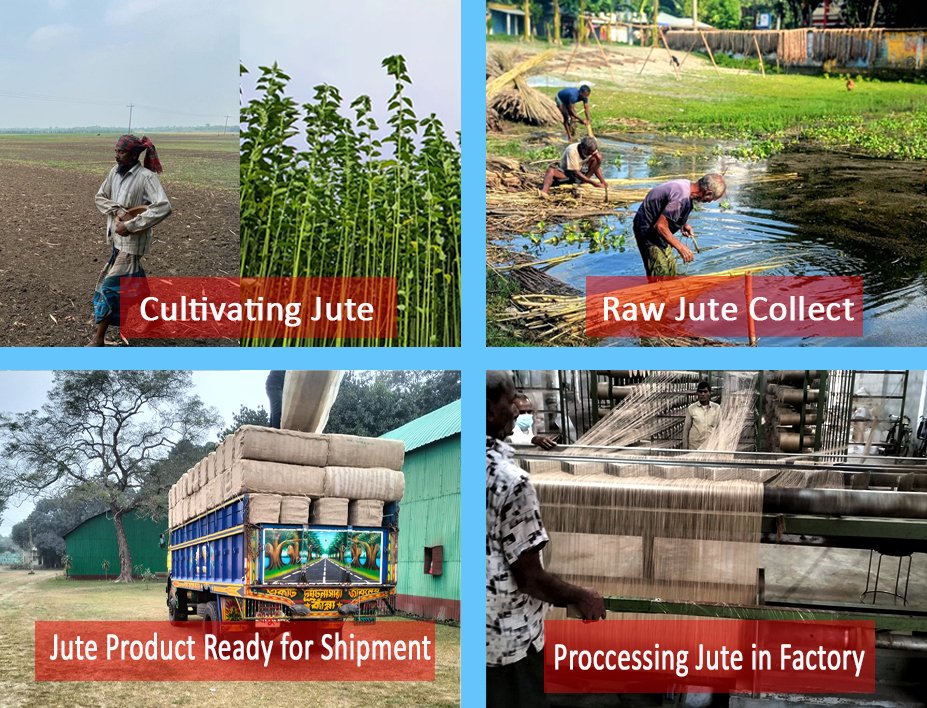
Jute has shaped Bangladesh for generations. It supports farmers, strengthens rural economies, and powers a global export industry that now serves the world’s growing demand for sustainable materials. At the same time, buyers want reliable suppliers who can deliver consistent quality, proper documentation, and export-ready packing. That’s where GFTCL (The Golden Fibre Trade Centre Ltd.) adds real value—by connecting Bangladesh’s best jute resources with global buyers who need raw jute, jute yarn, hessian cloth, sacking bags, and diversified jute products.
In this guide, you will learn about jute cultivation, how the fiber moves from farm to factory, how Bangladesh’s jute industry works today, and why global buyers continue to choose Bangladesh for premium jute. Moreover, you will understand how GFTCL supports international importers through quality control, specifications, and reliable export execution.
Why Jute Matters More Than Ever
Plastic pollution has changed buyer behavior. Brands, governments, and importers now prefer biodegradable packaging and natural fiber-based inputs. As a result, jute has regained its position as a premium natural fiber for both traditional industries and modern green manufacturing.
Jute offers benefits that modern markets cannot ignore:
- It biodegrades naturally and does not create microplastic pollution.
- It grows fast and renews within one season.
- It absorbs carbon during cultivation.
- It serves packaging, textile, construction, agriculture, and composite industries.
Because these benefits matter worldwide, buyers often search for Bangladesh jute exporter partners who can supply both large volumes and consistent grades. GFTCL supports that demand with export-ready supply planning, product knowledge, and shipment execution.
What Is Jute? A Simple Explanation
Jute is a natural bast fiber extracted from the stem of the jute plant. Farmers cultivate it in warm, humid climates with adequate rainfall and river basin soil. After harvest, they extract fibers through retting and stripping. Then they dry and grade the fibers, and finally they pack them into bundles or bales.
At that stage, the fiber becomes raw jute the key input for:
- Jute yarn (spun in mills)
- Hessian cloth / burlap fabric
- Sacking bags / gunny bags
- Jute rope and twine
- Carpet backing cloth
- Geotextiles
- Paper pulp and cellulose
- Diversified jute products
Internal link suggestion:
When you mention raw jute here, link to: /raw-jute-export-from-bangladesh/
Why Jute Is Called the “Golden Fibre”
People call jute the “Golden Fibre” for two strong reasons. First, it has a natural golden sheen that looks attractive even without dyeing. Second, jute historically earned major export income and supported millions of livelihoods.
Even today, jute remains deeply connected to Bangladesh’s rural economy. Farmers depend on it for seasonal income, and mills depend on it for production. Meanwhile, exporters like GFTCL work to deliver Bangladesh’s jute value to the global market through dependable shipments, market intelligence, and quality-focused supply.
About Jute Cultivation in Bangladesh
Where Jute Grows Best in Bangladesh
Bangladesh’s geography supports jute naturally. The riverine plains provide fertile alluvial soil, and the humid climate supports healthy plant growth. Because of that, Bangladesh produces jute fiber with strong length, strength, and spinnability.
Key jute-growing zones include:
- River basin belts with strong moisture retention
- Central floodplains with favorable soil texture
- Northern and southern regions depending on variety and seasonal water conditions
Different zones often produce slightly different fiber characteristics. Therefore, exporters and mills usually focus on proper grading and bale consistency to meet buyer expectations.
Jute Cultivation Cycle
Jute cultivation follows a seasonal cycle:
- Sowing (typically March–May): Farmers prepare land and sow seeds.
- Growth (around 100–120 days): Plants grow rapidly with rainfall and heat.
- Harvesting (typically July–September): Farmers cut plants at maturity.
- Retting and fiber extraction: Farmers separate fiber from the stem.
- Drying and grading: Fibers dry in sunlight and move into grading.
- Bundling/baling for storage and trade: Fibers get packed for mills or export.
Because jute is seasonal, prices can rise or fall based on supply and demand. For that reason, professional exporters plan inventory early and communicate clearly with buyers.
Major Types of Jute and Allied Fibers
Bangladesh produces several key natural fibers used in international trade:
1) Bangla Tossa (Tossa Jute)
Tossa jute is widely known for strength and longer fiber length. Because of that, mills often prefer it for quality yarn and stronger fabric.
2) Bangla White (White Jute)
White jute feels softer and often supports diversified product development and blended uses.
3) Meshta (Mesta / Kenaf-type allied fibers)
Meshta is often used where buyers accept slightly different fiber characteristics. It can also support industrial blending, pulp, and certain composite applications.
Keyword integration note (natural placement):
Your page can naturally cover “Kenaf Fiber” under allied fibers because many buyers search for kenaf/meshta alongside jute.
4) Cutting Grades (Export/industrial preparation)
Buyers often search for:
- Bangla Tossa Cutting
- Bangla White Cutting
- Meshta Cutting
These are cutting grades used in industrial processes or blended manufacturing.
From Field to Fiber: How Raw Jute Is Processed
Harvesting
Farmers harvest jute when the stem reaches maturity. If they harvest too early, fiber may become weaker. However, if they harvest too late, fiber can become coarser. Therefore, timing matters.
Retting (The Most Quality-Defining Step)
Retting separates fiber from the woody stem. Farmers submerge bundles in water and allow natural microbial activity to loosen the fiber.
Retting impacts:
- fiber color
- strength
- cleanliness
- uniformity
As a result, buyers often ask exporters about renting conditions and quality controls. Experienced suppliers therefore rely on consistent sourcing and careful grading.
Stripping, Washing, and Drying
After retting, farmers strip fibers manually, wash them, and then dry them under sunlight. Proper drying reduces excess moisture. That matters because moisture can cause mildew during storage or container transit.
Grading and Baling
Then graders classify raw jute based on:
- length
- strength
- color
- root content
- defects and cleanliness
After grading, workers pack fibers into bundles or bales. Export bales often require uniformity and controlled moisture for shipping safety.
Bangladesh Jute Industry: From Mills to Global Exports
Bangladesh’s jute industry includes a full value chain:
- farmers and raw fiber traders
- baling/pressing operations
- spinning mills (jute yarn)
- weaving and finishing units (hessian cloth, sacking cloth)
- bag making units (coffee sacks, cocoa sacks, sugar bags, grain bags)
- diversified jute product manufacturers
- exporters and logistics service networks
Because this value chain is broad, global buyers search for partners who can supply multiple categories under one professional export capability. GFTCL supports that need by offering jute-based solutions across fiber, yarn, cloth, and packaging products.
Jute Yarn: The Backbone of Jute Manufacturing
Mills spin jute yarn using raw jute as the base input. They use yarn to make:
- hessian cloth
- sacking cloth
- twine
- rope
- carpet backing cloth
- webbing and other industrial textiles
Buyers often care about:
- yarn count and consistency
- oil content and moisture
- tensile strength
- bale/bundle uniformity
- packing and labeling
Hessian Cloth / Burlap Fabric: A Global Favorite
Hessian cloth, also called burlap fabric, remains one of the most demanded jute textiles globally. Buyers use it for:
- packaging
- agriculture and nursery wraps
- crafts and décor
- erosion control and landscaping
- upholstery and industrial backing
Because buyers use hessian for many purposes, they often request different GSM, width, weave, and finish.
Internal link suggestion:
Create or link to /hessian-cloth/ with sub-sections for:
- hessian cloth specifications
- burlap roll export
- horticulture uses
Jute Bags, Sacks, and Packaging: The Buyer-Driven Market
When buyers search “jute bag vs plastic bag,” they often want a simple truth: jute wins on sustainability and strength. Yet, jute also wins on practicality because it breathes, supports heavy loads, and protects agricultural commodities.
Common export packaging items include:
- Jute sacks / gunny bags
- Coffee bags (green coffee bean packaging)
- Cocoa sacks
- Sugar bags
- Rice and grain bags
- Raw cotton bagging
- Onion and potato sacks
- Sandbags (hessian sandbags)
Jute packaging matters because it supports commodity trade and reduces plastic dependence. Moreover, many countries now encourage biodegradable packaging for agriculture.
Process Jute: What It Means and Why Buyers Search It
Buyers increasingly search terms like:
- Process Jute
- Process Jute Exporter
- Export Process Jute from Bangladesh
In trade language, “process jute” can refer to jute fiber that has moved beyond the raw stage into processed forms like yarn, cloth, or finished goods. Therefore, buyers who search “process jute exporter” often want a supplier that can provide ready-to-use industrial materials, not only raw fiber.
GFTCL can position strongly here by presenting a clear “process jute” pathway:
Raw Jute → Jute Yarn → Hessian/Sacking Cloth → Finished Bags & Diversified Products
Raw Jute Export from Bangladesh: What Buyers Want to Know
Even though this pillar page covers the full jute ecosystem, many buyers arrive with a specific search intent:
- raw jute export from Bangladesh
- raw jute HS code
- raw jute price today
- raw jute price in Bangladesh
- which countries import raw jute
- raw jute buyers
You should answer these questions across your site with a dedicated deep guide. However, you can still set trust signals in this pillar page.
What buyers usually request before ordering:
- fiber type (Bangla Tossa / Bangla White / Meshta)
- grade and cut specification
- moisture level guidance
- bale weight and packing
- origin and consistency
- shipment lead time
- documentation support
Where Bangladesh Exports Jute (Countries & Market Demand)
Buyers often ask: “Bangladesh exports raw jute in which countries?”
You can answer that fully on the raw jute export page, yet here you can mention market categories.
Bangladesh supplies raw jute and jute goods to:
- South Asia (mills and processors)
- East Asia (industrial users and composite producers)
- Europe (eco-textile, packaging, horticulture, décor)
- Middle East (re-export and industrial trade)
- Africa (coffee, cocoa, grain packaging demand)
- Americas (eco retail bags, specialty packaging, décor)
Because each region has different requirements, exporters must adapt specifications, labeling, and shipment planning. That’s why buyers value suppliers who communicate clearly and ship consistently.
Changes in the Marketing System of Raw Jute in Bangladesh
Buyers and researchers often search this exact phrase:
“changes in marketing system of raw jute in Bangladesh”
So you should cover it in a clean and neutral way. Over time, Bangladesh’s raw jute marketing system has evolved because:
- buyers demand stronger grading consistency
- exporters now focus on moisture-safe packing
- mills and exporters compete for supply during tight seasons
- logistics costs influence export timing
- documentation and compliance expectations have increased
As these pressures grow, professional exporters play a bigger role in stabilizing quality and supply. GFTCL can highlight its value by showing how it ensures export readiness through controlled sourcing, grading alignment, and shipment support.
Why Global Buyers Choose GFTCL
Many sites describe jute generally. However, this page must feel GFTCL–focused. Therefore, you should clearly position GFTCL as a partner, not just an information source.
GFTCL’s value for buyers
- Exporter mindset: You communicate like an exporter, not like a reseller.
- Product range: raw jute, jute yarn, hessian cloth, sacking bags, and jute products.
- Specification support: you help buyers choose the right grade and use case.
- Export documentation: you support invoice, packing list, origin documentation, and compliance readiness.
- Long-term supply thinking: you help buyers plan procurement for seasonal market cycles.
What you can add as trust signals (recommended)
- factory and pressing/baling photos
- packing details and bale markings
- quality checklist and moisture guidance
- buyer FAQs and export process overview
- internal links to product pages and inquiry form
Key Uses of Jute: Packaging, Textiles, and Green Industry
Jute serves both traditional and emerging industries. Because of that, your content can rank for many buyer-intent keywords naturally.
1) Packaging and commodity trade
- coffee, cocoa, grains, sugar, rice, onion, potato
- breathable storage and transport
2) Textile and home products
- rugs, mats, backing cloth, upholstery base
3) Agriculture and landscaping
- erosion control, plant wraps, soil saver textile
4) Industrial and green innovation
- composites (automotive interiors, panels)
- paper pulp and cellulose
- microcrystalline cellulose research uses
Since buyers explore alternatives to synthetics, you can also introduce jute as a raw input for advanced materials—without making the content too technical.
Jute’s Future and Bangladesh’s Opportunity (with GFTCL)
Jute will not disappear. Instead, it will grow stronger as sustainability becomes a business requirement. Bangladesh stands at the center of that global shift because it grows premium jute and supports an established industry ecosystem. However, buyers still need the right exporter to manage quality, specification, and shipment execution.
That’s why GFTCL positions itself as a trusted bridge between Bangladesh’s Golden Fibre heritage and international demand for responsible materials. If you want a supplier who understands both the fiber and the export process, GFTCL can support your procurement with clarity, quality focus, and consistent communication.
Jute Industry in Bangladesh: History, Growth, Global Leadership & Future Outlook
Introduction: Why the Jute Industry Still Matters in Bangladesh
The jute industry of Bangladesh holds a unique and irreplaceable position in the country’s economy, culture, and global trade identity. Often referred to as the land of the “Golden Fibre,” Bangladesh has built its international reputation around jute for more than a century. Even today, as the world searches for sustainable alternatives to plastic and synthetic materials, jute continues to regain strategic importance.
While many traditional industries have declined under globalization, the jute industry in Bangladesh has adapted, diversified, and repositioned itself. As a result, jute now serves not only traditional packaging markets but also modern sectors such as eco-textiles, geotextiles, composites, home décor, and sustainable consumer products.
This comprehensive article explores the history, structure, production system, export markets, challenges, policy framework, and future prospects of the Bangladesh jute industry. It also explains why Bangladesh remains the global leader in jute production and exports, and how companies like The Golden Fibre Trade Centre Ltd. (GFTCL) contributed to this legacy through export-grade jute products.
Historical Background of the Jute Industry in Bangladesh
Origins of Jute Cultivation
Jute cultivation in Bengal dates back hundreds of years. Farmers traditionally grew jute along riverbanks because of fertile alluvial soil, abundant water, and favorable climate. Over time, jute became deeply embedded in rural agricultural practices.
During the British colonial era, jute gained massive commercial importance. British traders recognized its strength and versatility, particularly for making sacks, ropes, and packaging materials. Consequently, jute mills emerged rapidly along the rivers of Bengal.
Colonial Era and Industrial Expansion
By the late 19th and early 20th centuries, Bengal present-day Bangladesh became the world’s largest producer of raw jute. Calcutta emerged as a global jute trading hub, while jute mills expanded to meet rising demand from Europe and North America.
At that time:
- Raw jute came primarily from rural Bengal
- Processing and spinning concentrated near ports
- Jute sacks dominated global agricultural trade
Thus, jute became known as the backbone of Bengal’s economy.
Post-Partition Challenges and Recovery
After the partition of India in 1947, most jute-growing areas fell within East Pakistan (now Bangladesh), while many jute mills remained in India. This imbalance created supply chain disruption.
However, Bangladesh gradually rebuilt its jute industrial base. Following independence in 1971, the government nationalized many jute mills to stabilize employment and exports. Although nationalization brought challenges, it also preserved the industry during a critical transition period.
Structure of the Jute Industry in Bangladesh
The jute industry operates through a multi-layered value chain, from farming to finished product exports.
1. Raw Jute Cultivation
Millions of farmers cultivate jute across Bangladesh. Jute remains one of the most important cash crops, especially in rural riverine areas.
Key characteristics:
- Rain-fed crop
- Short growing cycle (100–120 days)
- Low fertilizer requirement
- Environmentally regenerative
2. Primary Processing
After harvesting, farmers process jute through:
- Retting
- Fiber extraction
- Washing and drying
- Initial grading
This stage directly affects fiber quality, color, and strength.
3. Jute Mills and Manufacturing Units
Jute mills transform raw fiber into:
- Jute yarn
- Hessian cloth
- Sacking cloth
- Carpet backing cloth
- Twine and rope
In recent decades, diversified jute product (DJP) manufacturers have expanded into higher-value goods.
4. Exporters and Trading Houses
Exporters play a critical role by:
- Sourcing raw and processed jute
- Ensuring export-grade quality
- Managing logistics and compliance
- Serving global buyers
Companies like GFTCL bridge farmers, mills, and international markets.
Major Types of Jute Produced in Bangladesh
Bangladesh produces some of the finest jute varieties in the world.
Tossa Jute (Bangla Tossa)
- Longest and strongest fiber
- High cellulose content
- Preferred for export
- Used for yarn, sacking, and industrial products
White Jute (Bangla White)
- Softer texture
- Lighter color
- Used in domestic and diversified products
Mesta (Kenaf & Allied Fibres)
- Shorter fiber
- Used for pulp, composites, and blending
- Growing importance in eco-industrial applications
Jute Manufacturing Segments in Bangladesh
Traditional Jute Products
Historically, the industry focused on:
- Jute sacks
- Hessian bags
- Gunny bags
- Rope and twine
These products still dominate agro-commodity packaging worldwide.
Diversified Jute Products (DJPs)
In response to declining traditional demand, Bangladesh invested in diversification.
DJPs include:
- Shopping and tote bags
- Home décor items
- Floor mats and rugs
- Jute composites
- Geotextiles
- Paper and pulp
- Handicrafts
As a result, jute has entered lifestyle and consumer markets.
Role of Jute in Bangladesh’s Economy
Employment Generation
The jute industry supports:
- Millions of farmers
- Thousands of factory workers
- Traders, transporters, and exporters
Therefore, jute remains one of the largest employment generators in rural Bangladesh.
Export Earnings
Jute and jute goods consistently rank among Bangladesh’s top export sectors. Although garments dominate exports, jute provides diversification and sustainability.
Rural Development
Because jute cultivation spreads income across rural areas, it:
- Reduces urban migration
- Strengthens village economies
- Supports inclusive growth
Global Market for Bangladeshi Jute
Major Export Destinations
Bangladesh exports jute and jute goods to:
- Europe
- Africa
- Middle East
- Asia
- North America
Each region uses jute differently, ranging from agricultural packaging to retail and eco-products.
Why Global Buyers Prefer Bangladeshi Jute
Buyers choose Bangladesh because:
- Fiber quality remains superior
- Supply volume stays consistent
- Pricing remains competitive
- Export experience is deep-rooted
Exporters like GFTCL add reliability and compliance to this natural advantage.
Environmental Importance of the Jute Industry
Jute as a Sustainable Fiber
Jute is:
- 100% biodegradable
- Renewable annually
- Carbon-absorbing during growth
- Plastic-free
Therefore, jute aligns perfectly with global sustainability goals.
Climate Change and Carbon Footprint
Compared to synthetic fibers, jute:
- Emits far less carbon
- Requires minimal chemicals
- Improves soil health
As environmental regulations tighten, jute demand rises.
Government Policies and Institutional Support
Policy Framework
The Bangladesh government supports jute through:
- Mandatory jute packaging laws
- Export incentives
- Research institutions
- Farmer support programs
Bangladesh Jute Research Institute (BJRI)
BJRI develops:
- Improved jute varieties
- Modern retting techniques
- Diversified product research
Mandatory Jute Packaging Act
This law requires jute packaging for selected commodities, ensuring steady domestic demand.
Challenges Facing the Jute Industry
Despite strengths, the industry faces challenges.
Price Volatility
Weather dependence causes fluctuations in raw jute supply and price.
Quality Inconsistency
Traditional retting methods sometimes reduce fiber consistency.
Competition from Synthetics
Cheap plastic alternatives still dominate some markets.
Aging Mills and Technology Gaps
Some mills require modernization to improve efficiency.
Modernization and Innovation in the Jute Sector
Improved Retting Techniques
Ribbon retting and microbial retting improve fiber quality and reduce water pollution.
Product Diversification
Innovation expands jute into:
- Automotive composites
- Construction materials
- Eco-textiles
Branding and Marketing
Modern exporters now brand jute as:
- Premium
- Eco-friendly
- Ethical
Role of Private Exporters Like GFTCL
Supply Chain Integration
GFTCL connects:
- Farmers
- Processors
- Global buyers
Export-Grade Quality Control
The company emphasizes:
- Proper grading
- Moisture control
- Export documentation
Market Development
GFTCL actively serves Africa, Europe, the Middle East, and Asia with customized jute solutions.
Future Outlook of the Jute Industry in Bangladesh
Rising Global Demand
Plastic bans and ESG policies accelerate jute adoption.
Expansion of Diversified Products
Value-added products increase export value.
Strategic Positioning
Bangladesh remains best positioned to lead the global jute renaissance.
Jute Industry as Bangladesh’s Sustainable Advantage
In conclusion, the jute industry of Bangladesh represents far more than a traditional sector. It stands as a strategic, sustainable, and future-ready industry that aligns economic growth with environmental responsibility.
As the world moves away from plastic, jute regains its global relevance. With its unmatched natural advantage, skilled workforce, and experienced exporters like The Golden Fibre Trade Centre Ltd. (GFTCL), Bangladesh continues to lead the global jute industry—today and into the future.
Jute Yarn and Jute Bags of Bangladesh: Global Leadership, Quality, Uses & Future Outlook
Introduction: Why Jute Yarn and Jute Bags from Bangladesh Matter Globally
Bangladesh stands at the heart of the global jute industry. For decades, the country has supplied the world with high-quality jute yarn and jute bags, earning its reputation as the home of the Golden Fibre. Even today, when sustainability has become a global priority, jute products from Bangladesh continue to gain renewed importance.
As plastic pollution increases and environmental regulations tighten, industries worldwide actively search for natural, biodegradable alternatives. Consequently, jute yarn and jute bags from Bangladesh have emerged as reliable, eco-friendly, and cost-effective solutions. From agricultural packaging and carpet manufacturing to retail shopping bags and industrial applications, Bangladeshi jute products serve a wide range of global markets.
This article provides a complete overview of jute yarn and jute bags of Bangladesh, covering history, production, types, quality, applications, export markets, challenges, and future prospects. It also explains why Bangladesh remains the world’s most trusted source of jute products.
Historical Background of Jute in Bangladesh
Origins of Jute Cultivation
Jute cultivation in Bengal dates back centuries. Farmers traditionally grew jute in riverine regions because of fertile alluvial soil and abundant rainfall. Over time, jute became a major cash crop that supported rural livelihoods and regional trade.
During the British colonial period, jute gained international recognition. British traders used jute for sacks, ropes, and packaging materials, especially for agricultural commodities. As a result, jute mills expanded rapidly, and Bengal became the world’s largest raw jute supplier.
Post-Independence Development
After Bangladesh gained independence in 1971, the jute industry faced structural challenges. However, the sector survived due to strong domestic demand, government support, and global reliance on jute packaging. Over time, private exporters and manufacturers modernized operations and expanded export markets.
Today, Bangladesh produces both traditional jute products and diversified jute products, making the industry more resilient and future-ready.
Overview of the Jute Industry in Bangladesh
The jute industry in Bangladesh operates through a well-defined value chain. This structure ensures consistent supply, quality control, and export readiness.
Key Components of the Value Chain
- Raw Jute Cultivation
Millions of farmers grow jute every year across Bangladesh. - Primary Processing
Farmers harvest, ret, dry, and grade jute fibers. - Spinning and Manufacturing
Mills convert raw jute into jute yarn, cloth, and bags. - Export and Trading
Exporters connect Bangladeshi jute products with global buyers.
Because each stage operates within the country, Bangladesh maintains strong control over quality and supply continuity.
Jute Yarn of Bangladesh
What Is Jute Yarn?
Jute yarn is produced by spinning raw jute fibers into continuous strands. Manufacturers adjust fiber selection, spinning method, oil content, and twist level to create yarns suitable for different applications.
Jute yarn from Bangladesh is globally valued for its:
- High tensile strength
- Uniform consistency
- Natural breathability
- Eco-friendly profile
As a result, industries across the world rely on Bangladeshi jute yarn for both traditional and modern uses.
Types of Jute Yarn Produced in Bangladesh
Bangladesh manufactures several types of jute yarn to meet diverse industrial needs.
Sacking Yarn
Sacking yarn is coarse and strong. Manufacturers use it to produce heavy jute sacks and bags.
Common uses include:
- Rice and wheat sacks
- Sugar and fertilizer bags
- Coffee and cocoa packaging
This yarn withstands rough handling and heavy loads, making it ideal for bulk packaging.
Hessian Yarn
Hessian yarn is finer than sacking yarn. It produces lightweight jute fabrics such as hessian or burlap.
Applications include:
- Wrapping and lining
- Agricultural covers
- Decorative and craft items
Because of its flexibility and breathability, hessian yarn serves both functional and aesthetic purposes.
Carpet Backing (CB) Yarn
CB yarn is specially engineered for carpet backing cloth. It provides:
- Dimensional stability
- Strength
- Durability
Carpet manufacturers prefer Bangladeshi CB yarn for consistent performance in tufted carpets.
Specialized Carpet Yarns (CRM, CRT, CRX)
These yarns support advanced carpet manufacturing systems such as continuous running and Axminster looms.
They ensure:
- Precise weaving
- Uniform tension
- Compatibility with modern machinery
Manufacturing Process of Jute Yarn
The production of jute yarn follows several controlled steps.
- Softening – Fibers receive oil and moisture to improve flexibility.
- Carding – Machines align fibers and remove impurities.
- Drawing – Fibers stretch into slivers for uniformity.
- Spinning – Slivers twist into yarn.
- Winding – Yarn packs into spools or coils.
Each step directly affects yarn strength and consistency. Therefore, experienced mills in Bangladesh maintain strict quality control.
Applications of Jute Yarn
Jute yarn from Bangladesh serves multiple industries.
- Packaging and sacking
- Carpet and rug manufacturing
- Rope and twine production
- Geotextiles and erosion control
- Handicrafts and home décor
Because of its versatility, jute yarn remains one of the most widely used natural yarns worldwide.
Jute Bags of Bangladesh
What Are Jute Bags?
Jute bags are packaging and carrying bags made from woven jute fabric. They are known for their strength, breathability, and biodegradability.
Bangladesh supplies a wide range of jute bags to global markets, serving agriculture, retail, food, and industrial sectors.
Types of Jute Bags Produced in Bangladesh
Jute Sacking Bags
These are heavy-duty bags used for bulk packaging.
Common uses include:
- Rice, wheat, and maize
- Sugar and salt
- Fertilizers and animal feed
Their breathable structure prevents moisture buildup during storage and transport.
Hessian Bags (Burlap Bags)
Hessian bags are lighter and more flexible.
They are widely used for:
- Coffee and cocoa beans
- Potatoes and onions
- Seeds and pulses
Because of their airflow properties, these bags protect commodity quality.
Jute Shopping Bags and Tote Bags
Retailers increasingly use jute shopping bags as plastic alternatives.
Benefits include:
- Reusability
- High load capacity
- Eco-friendly image
As a result, branded jute tote bags have become popular worldwide.
Specialized Jute Bags
Bangladesh also manufactures:
- Coffee and cocoa bags (VOT treated)
- Sandbags
- Industrial packaging bags
- Promotional and customized bags
These products meet specific international standards.
Manufacturing Process of Jute Bags
Jute bag production involves several steps.
- Fabric weaving from jute yarn
- Cutting according to size
- Stitching using strong threads
- Treatment (VOT or MOT if required)
- Inspection and packing
Exporters ensure moisture control and strength testing before shipment.
Why Global Buyers Prefer Jute Bags from Bangladesh
Buyers choose Bangladeshi jute bags because:
- Fiber quality remains superior
- Supply volume stays consistent
- Prices remain competitive
- Export experience reduces risk
Moreover, Bangladesh offers full customization, which helps buyers meet local regulations and branding needs.
Environmental Benefits of Jute Yarn and Jute Bags
Jute products offer clear environmental advantages.
- 100% biodegradable and compostable
- Renewable within one growing season
- No microplastic pollution
- Low carbon footprint
Therefore, jute yarn and jute bags align with global sustainability and ESG goals.
Economic Importance of Jute Yarn and Jute Bags in Bangladesh
Employment Generation
The jute sector supports:
- Millions of farmers
- Thousands of factory workers
- Exporters and traders
As a result, jute remains one of Bangladesh’s most inclusive industries.
Export Earnings
Jute yarn and jute bags contribute significantly to export income. They also diversify exports beyond garments, strengthening economic resilience.
Export Markets for Bangladeshi Jute Products
Bangladesh exports jute yarn and jute bags to:
- Africa – agriculture and coffee sectors
- Europe – eco-packaging and retail
- Middle East – bulk food imports
- Asia – carpet and textile industries
- North America – sustainable consumer goods
Each market values jute for different reasons, yet quality remains the common factor.
Challenges Facing the Jute Yarn and Jute Bag Industry
Despite strengths, the sector faces challenges.
- Raw jute price volatility
- Quality variation due to traditional retting
- Competition from cheap plastics
- Need for modernization
Addressing these issues requires investment, research, and branding.
Innovation and Diversification
The industry increasingly focuses on:
- Improved retting techniques
- Diversified jute products
- Composite materials
- Eco-textiles and lifestyle goods
These innovations help jute remain competitive.
Role of Exporters Like GFTCL
Exporters play a critical role by:
- Ensuring export-grade quality
- Managing global logistics
- Customizing products
- Building long-term buyer relationships
Companies like The Golden Fibre Trade Centre Ltd. (GFTCL) strengthens Bangladesh’s global reputation through reliability and consistency.
Future Outlook of Jute Yarn and Jute Bags of Bangladesh
The future remains strong due to:
- Global plastic bans
- Growth of sustainable packaging
- Rising consumer awareness
- ESG compliance requirements
As demand grows, Bangladesh is well-positioned to lead the global jute renaissance.
Conclusion
In conclusion, jute yarn and jute bags of Bangladesh represent a powerful combination of tradition, sustainability, and global relevance. With unmatched fiber quality, skilled manufacturing, and experienced exporters, Bangladesh continues to supply the world with dependable jute products.
As industries move away from plastic, jute from Bangladesh stands out as the natural choice economically viable, environmentally responsible, and future-ready.
Bangladesh Jute Exporter: The Global Hub of the Golden Fibre Trade
Introduction: Why Bangladesh Leads the Global Jute Export Market
Bangladesh stands at the very heart of the global jute trade. Known worldwide as the home of the Golden Fibre, the country has earned its reputation as the most reliable and consistent Bangladesh jute exporter to international markets. Even as synthetic alternatives flooded global supply chains over past decades, Bangladesh maintained its dominance through superior raw material quality, deep industry expertise, and an export-oriented manufacturing base.
Today, the global market once again embraces jute. Environmental regulations, plastic bans, sustainability commitments, and conscious consumer behavior drive renewed demand for natural fibers. As a result, jute exporters from Bangladesh play a critical role in supplying raw jute, jute yarn, jute fabric, jute bags, and diversified jute products to buyers across Africa, Europe, Asia, the Middle East, and the Americas.
This comprehensive guide explains who Bangladesh jute exporters are, what they export, how they operate, why buyers prefer them, and how the industry continues to evolve.
Bangladesh: The Natural Home of Jute
Geographic and Climatic Advantage
Bangladesh enjoys a rare combination of natural advantages that no other jute-producing country can fully replicate.
- Fertile alluvial soil
- Abundant rainfall
- Warm and humid climate
- Extensive river systems
These conditions allow jute plants to grow long, strong, and lustrous fibers. As a result, jute from Bangladesh consistently achieves higher grades, better tensile strength, and superior spinnability compared to many competing origins.
Because of this natural advantage, Bangladesh jute exporters command strong trust in global markets.
Historical Evolution of Bangladesh Jute Exporters
Colonial Roots of the Export Industry
The jute export trade began during the British colonial era when European industries demanded large volumes of jute sacks and hessian cloth for packaging agricultural commodities. Bengal emerged as the global production hub, and jute mills expanded rapidly.
Exports flowed to Europe, North America, and beyond, establishing Bangladesh’s historical role as the backbone of the global jute supply chain.
Post-Independence Restructuring
After independence in 1971, Bangladesh inherited a large but aging jute industrial base. While the industry initially struggled due to market shifts and competition from synthetics, export demand never disappeared entirely.
Over time, private exporters modernized operations, diversified product lines, and rebuilt international relationships. This transformation created today’s resilient and export-oriented jute sector.
What Does a Bangladesh Jute Exporter Do?
A Bangladesh jute exporter acts as the bridge between domestic production and global consumption.
Their responsibilities include:
- Sourcing raw jute from farmers or mills
- Ensuring grading, moisture control, and compliance
- Manufacturing or coordinating finished jute products
- Managing export documentation and logistics
- Serving buyers with consistent quality and timelines
Strong exporters add value not only through products but also through reliability, communication, and long-term partnerships.
Categories of Jute Exporters in Bangladesh
Bangladesh hosts a wide range of exporters, each serving different segments of the global market.
Raw Jute Exporters
These exporters specialize in shipping unprocessed jute fiber to foreign mills and processors.
Typical buyers include:
- Spinning mills
- Carpet manufacturers
- Pulp and paper producers
Raw jute exporters focus heavily on grading accuracy, moisture control, and bale integrity.
Jute Yarn Exporters
Jute yarn exporters supply spun yarns to overseas weaving and manufacturing units.
Exported yarn types include:
- Sacking yarn
- Hessian yarn
- Carpet backing yarn
- Twine and cordage yarn
Bangladesh remains one of the world’s most trusted sources of jute yarn due to consistent quality.
Jute Fabric Exporters
Jute fabric exporters ship woven materials such as:
- Hessian cloth (burlap)
- Sacking cloth
- Carpet backing cloth
These fabrics support industries ranging from agriculture and construction to upholstery and flooring.
Jute Bag and Sack Exporters
Jute bag exporters form the largest segment of the export industry.
Major exported items include:
- Rice and wheat sacks
- Sugar and fertilizer bags
- Coffee and cocoa bean bags
- Sandbags and cement bags
Bangladeshi jute bags dominate global agricultural packaging markets.
Diversified Jute Product Exporters
This rapidly growing segment focuses on value-added products.
Examples include:
- Jute shopping bags and tote bags
- Handicrafts and home décor
- Jute rugs and mats
- Jute geotextiles
- Jute composite products
Diversified exporters help Bangladesh move up the value chain.
Why Global Buyers Prefer Bangladesh Jute Exporters
Superior Fiber Quality
Bangladesh produces longer, stronger, and more uniform jute fibers. This quality advantage translates into better yarn strength, fabric durability, and product performance.
Competitive Pricing
Because of large-scale cultivation and integrated supply chains, Bangladesh jute exporters offer competitive prices without sacrificing quality.
Wide Product Range
Buyers can source everything—from raw jute to finished lifestyle products—from a single country, simplifying procurement.
Export Experience and Compliance
Experienced exporters understand international standards, shipping practices, and documentation requirements. This expertise reduces risk for overseas buyers.
Major Export Markets for Bangladesh Jute Exporters
Africa
African countries import jute bags for packaging:
- Coffee
- Cocoa
- Cashew
- Pulses and grains
Bangladesh remains a preferred supplier due to durability and cost efficiency.
Europe
European markets demand:
- Eco-friendly shopping bags
- Jute carpets and rugs
- Sustainable packaging
Strict environmental policies strengthen demand for Bangladeshi jute goods.
Middle East
Middle Eastern buyers import jute sacks for:
- Food grains
- Construction materials
- Re-export purposes
Asia
Asian markets import:
- Raw jute
- Jute yarn
- Industrial fabrics
North and South America
These regions focus increasingly on:
- Sustainable retail bags
- Home décor items
- Specialty packaging
Export Process Followed by Bangladesh Jute Exporters
Sourcing and Production
Exporters source jute from reliable suppliers or produce in-house. They ensure grading accuracy and moisture compliance.
Quality Inspection
Quality checks include:
- Fiber strength
- Fabric GSM
- Stitching quality
- Moisture content
Documentation
Standard export documents include:
- Commercial invoice
- Packing list
- Certificate of origin
- Phytosanitary certificate (when required)
Shipping and Logistics
Most shipments move via sea freight using:
- Containers
- Break-bulk vessels
Exporters coordinate stuffing, fumigation if required, and shipment tracking.
Role of Bangladesh Jute Goods Exporters Association (BJGEA)
The Bangladesh Jute Goods Exporters Association (BJGEA) represents exporters and supports:
- Policy advocacy
- Trade promotion
- Buyer-seller networking
- Industry standards
Membership adds credibility and visibility for exporters.
Challenges Faced by Bangladesh Jute Exporters
Despite strong fundamentals, exporters face challenges:
- Raw jute price volatility
- Weather-dependent supply
- Competition from synthetics
- Rising freight costs
However, exporters continue to adapt through efficiency and diversification.
Sustainability and the Future of Bangladesh Jute Exporters
Environmental Leadership
Jute is biodegradable, renewable, and carbon-absorbing. As sustainability becomes a global priority, Bangladesh jute exporters gain long-term relevance.
Innovation and Product Development
Exporters increasingly invest in:
- Laminated jute bags
- Jute composites
- High-design lifestyle products
Innovation allows Bangladesh to capture premium markets.
The Role of Trusted Exporters Like GFTCL
Companies such as The Golden Fibre Trade Centre Ltd. (GFTCL) represent the modern face of Bangladesh jute exporters.
They focus on:
- Premium raw materials
- Export-ready production
- Global buyer relationships
- Long-term reliability
Such exporters strengthen Bangladesh’s global image.
How to Choose the Right Bangladesh Jute Exporter
Buyers should evaluate:
- Export experience
- Product range
- Quality certifications
- Communication and responsiveness
- Market reputation
Strong exporters prioritize partnership over transactions.
Future Outlook of Bangladesh Jute Exporters
The outlook remains highly positive due to:
- Global plastic bans
- Sustainable packaging demand
- Growth in diversified jute products
- Government and private sector support
Bangladesh is poised to remain the world’s leading jute export hub.
Conclusion
Bangladesh jute exporters form the backbone of the global natural fiber supply chain. Backed by superior raw materials, skilled manufacturing, and decades of export expertise, they continue to supply the world with reliable, eco-friendly jute solutions.
As sustainability reshapes global trade, Bangladesh jute exporters stand ready to lead, delivering quality, value, and environmental responsibility to every corner of the world.
Jute Products of Bangladesh: The Golden Fibre Powering a Sustainable Global Future
Introduction: Why Jute Products of Bangladesh Matter More Than Ever
Bangladesh holds a unique and historic position in the global jute industry. Often called the land of the Golden Fibre, the country remains the world’s largest producer and exporter of raw jute and jute-based products. Even in today’s era of synthetic materials and plastics, jute products of Bangladesh continue to grow in relevance because of rising environmental awareness, strict plastic regulations, and the global shift toward sustainable materials.
Jute products are biodegradable, renewable, reusable, and environmentally safe. As a result, industries across agriculture, food packaging, retail, construction, home décor, and industrial manufacturing increasingly rely on Bangladeshi jute goods. From traditional jute sacks to modern lifestyle products, Bangladesh supplies a diverse and expanding portfolio of jute items to global markets.
This article presents a comprehensive, in-depth overview of jute products of Bangladesh, covering history, types, manufacturing processes, export markets, economic importance, environmental benefits, challenges, and future prospects.
Historical Background of Jute Products in Bangladesh
The Roots of the Golden Fibre
Jute cultivation in Bengal dates back hundreds of years. The fertile deltaic soil, abundant rainfall, and river systems of Bangladesh create ideal conditions for growing high-quality jute. Historically, farmers cultivated jute primarily for domestic use, producing ropes, mats, and sacks.
During the British colonial era, global demand for jute products increased rapidly. European industries used jute for packaging agricultural commodities, making sacks, ropes, and carpet backing. Consequently, jute mills expanded, and Bengal became the world’s leading jute-processing region.
Evolution After Independence
After Bangladesh gained independence in 1971, the jute sector faced structural and market challenges. However, strong export demand, government support, and private-sector initiatives allowed the industry to survive and adapt. Over time, manufacturers diversified products beyond traditional sacks and yarn, leading to the development of diversified jute products (DJPs).
Today, Bangladesh exports a wide range of jute products that combine tradition with innovation.
Overview of the Jute Industry in Bangladesh
The jute industry of Bangladesh operates through an integrated value chain, ensuring consistent quality and supply.
Key Segments of the Industry
- Raw Jute Cultivation
Millions of farmers grow jute annually across Bangladesh. - Primary Processing
Jute fibers undergo retting, drying, grading, and baling. - Manufacturing Sector
Mills and factories produce yarn, fabric, sacks, and finished goods. - Export and Trading
Exporters connect Bangladeshi jute products with global buyers.
Because most stages occur locally, Bangladesh maintains strong control over production quality and cost efficiency.
Classification of Jute Products of Bangladesh
Jute products from Bangladesh can be broadly divided into traditional jute products and diversified jute products.
Traditional Jute Products of Bangladesh
Traditional jute products form the backbone of the industry. These products continue to dominate global demand, especially in agriculture and bulk packaging.
Jute Yarn
Jute yarn is the foundation of most jute products. Manufacturers spin raw jute fibers into yarns of varying thickness, strength, and twist.
Major types include:
- Sacking yarn
- Hessian yarn
- Carpet backing yarn
- Twine and cordage yarn
Uses of jute yarn:
- Weaving jute fabrics
- Making ropes and twines
- Carpet and rug production
- Industrial applications
Bangladesh is globally recognized for producing high-quality, consistent jute yarn.
Jute Fabric (Hessian and Sacking Cloth)
Jute fabric is woven from jute yarn and plays a crucial role in packaging and industrial uses.
Common jute fabrics include:
- Hessian cloth (burlap)
- Sacking cloth
- Carpet backing cloth (CBC)
Applications:
- Agricultural packaging
- Construction curing
- Wrapping and covering
- Upholstery backing
Bangladeshi jute fabric stands out for its durability, breathability, and eco-friendliness.
Jute Sacks and Gunny Bags
Jute sacks, also known as gunny bags, represent one of Bangladesh’s most exported jute products.
Common uses:
- Rice, wheat, and maize packaging
Sugar and salt bags - Fertilizer and cement bags
- Coffee and cocoa bean sacks
These bags allow air circulation while protecting goods during transport and storage.
Hessian Bags (Burlap Bags)
Hessian bags are lighter and more flexible than sacking bags.
Widely used for:
- Coffee and cocoa packaging
- Potato and onion storage
- Seed and pulse packaging
Because of their breathable structure, hessian bags preserve product quality during long-distance shipping.
Jute Rope, Twine, and Cordage
Bangladesh produces large quantities of jute rope and twine.
Applications include:
- Agricultural tying and bundling
- Marine and fishing uses
- Decorative and craft purposes
- Industrial binding
Jute rope remains popular due to its strength, natural texture, and biodegradability.
Diversified Jute Products (DJPs) of Bangladesh
To reduce dependence on traditional sacks, Bangladesh has successfully developed diversified jute products. These products offer higher value and broader market appeal.
Jute Shopping Bags and Tote Bags
Jute shopping bags have become popular worldwide as eco-friendly alternatives to plastic bags.
Key features:
- Reusable and durable
- Customizable with logos and prints
- Stylish and functional
Retailers, supermarkets, and brands increasingly use Bangladeshi jute shopping bags to meet sustainability goals.
Jute Handicrafts and Lifestyle Products
Bangladesh exports a wide range of handcrafted jute items.
Examples include:
- Handbags and purses
- Home décor items
- Storage baskets
- Rugs and mats
These products combine traditional craftsmanship with modern design, making them attractive in global lifestyle markets.
Jute Carpets and Rugs
Jute carpets and rugs are valued for their natural appearance and durability.
Applications:
- Residential interiors
- Commercial spaces
- Eco-conscious design projects
Bangladeshi jute rugs offer affordability without compromising quality.
Jute Geotextiles
Jute geotextiles represent a growing industrial application.
Used for:
- Soil erosion control
- Road construction
- Riverbank protection
- Landscaping
Because jute geotextiles biodegrade naturally, they improve soil quality over time.
Jute Composite Products
Jute fibers now combine with resins and other materials to create composites.
Applications include:
- Automotive interiors
- Furniture components
- Construction panels
These products reduce plastic use while maintaining structural strength.
Jute Pulp, Paper, and Packaging
Jute pulp is used to manufacture:
- Paper products
- Biodegradable packaging
- Specialty boards
As plastic bans expand, jute-based packaging continues to gain attention.
Manufacturing Process of Jute Products in Bangladesh
The manufacturing process follows systematic steps to ensure quality and consistency.
Raw Jute Processing
- Harvesting
- Retting
- Drying
- Grading and baling
Spinning and Weaving
- Fiber softening
- Carding and drawing
- Spinning into yarn
- Weaving into fabric
Finishing and Fabrication
- Cutting and stitching
- Treatment (VOT/MOT if required)
- Quality inspection
- Packing for export
Experienced manufacturers ensure compliance with international standards.
Environmental Benefits of Jute Products
Jute products offer unmatched environmental advantages.
- 100% biodegradable
- Renewable annually
- Carbon dioxide absorbing crop
- No microplastic pollution
As a result, jute supports global climate and sustainability goals.
Economic Importance of Jute Products in Bangladesh
Employment Generation
The jute sector supports:
- Millions of farmers
- Factory workers
- Export professionals
It remains one of the most inclusive industries in the country.
Export Earnings
Jute products contribute significantly to Bangladesh’s export revenue, helping diversify the economy beyond garments.
Global Export Markets for Bangladeshi Jute Products
Bangladesh exports jute products to:
- Africa – agriculture and coffee sectors
- Europe – sustainable retail and packaging
- Middle East – bulk food imports
- Asia – carpets and textiles
- North America – eco-friendly consumer goods
These markets rely on Bangladesh for quality and reliability.
Challenges Facing the Jute Products Industry
Despite strong demand, the industry faces challenges.
- Raw jute price fluctuations
- Traditional retting limitations
- Competition from synthetics
- Need for branding and innovation
However, ongoing modernization addresses many of these issues.
Role of Exporters and Companies Like GFTCL
Exporters play a vital role by:
- Ensuring consistent quality
- Meeting buyer specifications
- Managing global logistics
- Building long-term partnerships
Companies like The Golden Fibre Trade Centre Ltd. (GFTCL) strengthen Bangladesh’s reputation by supplying premium jute products with professionalism and trust.
Future Outlook of Jute Products of Bangladesh
The future remains highly promising due to:
- Global plastic bans
- Rising eco-conscious consumers
- Demand for sustainable packaging
- Expansion of diversified jute products
Bangladesh is well-positioned to lead the next phase of the global green materials economy.
Conclusion
In conclusion, jute products of Bangladesh represent a powerful blend of tradition, sustainability, and economic strength. With unmatched raw material quality, skilled manufacturing, and experienced exporters, Bangladesh continues to supply the world with reliable, eco-friendly jute solutions.
As global demand for sustainable materials accelerates, jute products from Bangladesh will remain at the forefront supporting livelihoods, protecting the environment, and shaping a greener future.
1. What makes Bangladesh the world’s leading jute exporter?
Bangladesh holds a global leadership position in jute exports because the country controls the entire jute value chain from cultivation to finished products. The fertile delta regions, abundant rainfall, and warm climate allow farmers to grow long, strong, and uniform jute fibers. In addition, Bangladesh has generations of farming and processing expertise, which ensures consistent quality. Exporters benefit from large-scale production, competitive labor costs, and strong logistics networks. As a result, international buyers rely on Bangladesh for reliable, high-volume jute supply.
2. Why is Bangladeshi jute called the “Golden Fibre”?
Bangladeshi jute earns the name “Golden Fibre” because of its natural golden shine and historical economic importance. For decades, jute served as the backbone of Bangladesh’s export economy and rural employment. Moreover, jute grows quickly, absorbs carbon dioxide, and improves soil health, which enhances its environmental value. As sustainability becomes a global priority, the golden fibre regains relevance in modern industries. Therefore, jute represents both economic heritage and future green growth.
3. What types of jute products does Bangladesh export?
Bangladesh exports a wide variety of jute products to meet global industrial and consumer demand. These include raw jute fiber, jute yarn, hessian cloth, sacking fabric, carpet backing cloth, ropes, twines, and geotextiles. In addition, exporters produce jute shopping bags, coffee sacks, tote bags, and lifestyle products. Many exporters also offer customized and branded jute solutions for international buyers. This product diversity strengthens Bangladesh’s position in the global jute market.
4. What is raw jute, and why do exporters ship it directly?
Raw jute refers to unprocessed jute fiber obtained after harvesting, retting, washing, and drying. Exporters ship raw jute directly because many overseas buyers prefer to process the fiber locally. Raw jute serves as the base material for yarn spinning, carpet manufacturing, pulp production, and composite industries. Moreover, direct export allows buyers to control quality specifications and costs. As a result, raw jute remains a high-demand export item from Bangladesh.
5. How do Bangladesh jute exporters ensure consistent quality?
Bangladesh jute exporters maintain quality through strict sourcing, grading, and handling practices. They select fibers based on length, strength, color, and cleanliness. Exporters also monitor moisture content carefully to prevent mold or damage during shipment. In addition, reputable exporters provide samples, inspection reports, and test certificates to buyers. These quality-control measures build long-term buyer trust.
6. What role does jute yarn play in global trade?
Jute yarn plays a central role in the global jute value chain because it connects raw fiber to finished products. Mills use jute yarn to manufacture bags, fabrics, carpets, ropes, and industrial textiles. Bangladeshi jute yarn offers high tensile strength and uniform twist, which ensures smooth weaving and durability. Furthermore, buyers value jute yarn for its eco-friendly profile. As a result, jute yarn exports continue to grow worldwide.
7. Why are Bangladeshi jute bags preferred worldwide?
Bangladeshi jute bags attract global buyers because they combine strength, breathability, and sustainability. These bags protect agricultural commodities while allowing air circulation, which prevents spoilage. In addition, jute bags biodegrade naturally and comply with plastic-reduction policies. Exporters also offer multiple sizes, weights, and printing options. Therefore, buyers choose Bangladeshi jute bags for both functional and environmental benefits.
8. Which countries import jute from Bangladesh?
Bangladesh exports jute products to Asia, Africa, Europe, the Middle East, and the Americas. African countries import jute bags mainly for coffee, cocoa, and grain packaging. European buyers focus on eco-textiles, lifestyle bags, and green construction materials. Meanwhile, Asian markets use jute for industrial and manufacturing applications. This broad demand supports stable export growth.
9. What documents are required to export jute from Bangladesh?
Jute exporters prepare several mandatory documents to ensure smooth customs clearance. These include a commercial invoice, packing list, certificate of origin, and export registration certificate. For raw jute, exporters also provide phytosanitary and fumigation certificates. In some cases, buyers request inspection or quality certificates. Proper documentation ensures compliance and reduces shipment delays.
10. How does moisture control affect jute exports?
Moisture control directly affects jute quality and shipment acceptance. Excess moisture can cause fungal growth, odor, and fiber discoloration. Exporters dry jute properly and use moisture meters before packing. They also follow correct container-stuffing practices to prevent condensation during transit. As a result, moisture management protects buyer investments.
11. What is the difference between Tossa, White, and Mesta jute?
Tossa jute produces long, strong fibers suitable for export-grade applications. White jute offers softer fibers and lighter color, which works well for diversified products. Mesta jute provides shorter fibers and often supports blending, pulp, and composite uses. Exporters select jute types based on buyer specifications. Each variety serves a distinct industrial purpose.
12. Why do African coffee exporters rely on Bangladeshi jute bags?
African coffee exporters rely on Bangladeshi jute bags because these bags preserve bean quality during transport. Jute allows airflow, which prevents moisture buildup and mold. In addition, jute bags meet sustainability expectations in the global coffee trade. Bangladeshi exporters offer consistent sizing and printing for traceability. Consequently, coffee exporters trust Bangladesh as a packaging source.
13. How do Bangladesh jute exporters compete with synthetic packaging?
Bangladesh jute exporters compete by emphasizing sustainability, biodegradability, and compliance. Synthetic packaging creates environmental pollution and regulatory challenges. In contrast, jute offers natural decomposition and carbon absorption. Exporters also highlight jute’s long-term cost efficiency and brand value. These advantages strengthen jute’s market position.
14. What role does BJGEA play in the export sector?
BJGEA represents jute goods exporters and supports industry development. The association helps resolve trade issues, promotes exports, and engages with policymakers. Membership increases exporter credibility and buyer confidence. BJGEA also participates in international trade fairs. This support strengthens Bangladesh’s jute export ecosystem.
15. How does jute support sustainable development goals?
Jute supports sustainability by reducing plastic use and promoting renewable materials. It absorbs carbon dioxide during growth and decomposes naturally after use. Jute cultivation also supports rural employment and income stability. Exporters contribute to green supply chains through jute trade. Therefore, jute aligns closely with global sustainability goals.
16. What challenges do Bangladesh jute exporters face?
Jute exporters face challenges such as price volatility, climate dependency, and logistics costs. Weather conditions can affect yield and fiber quality. Rising freight rates also impact export margins. However, experienced exporters manage risks through diversified sourcing and long-term contracts. Strategic planning helps maintain stability.
17. Why is Bangladesh still competitive despite global competition?
Bangladesh remains competitive because it produces jute at scale and controls the full supply chain. Exporters benefit from local raw material availability and skilled labor. The country also offers cost-effective manufacturing. Furthermore, global buyers trust Bangladeshi quality standards. These factors ensure continued competitiveness.
18. How do jute exporters add value beyond raw fiber?
Exporters add value by converting raw jute into yarn, fabric, bags, and finished goods. Many companies offer customization, printing, and branding services. Value addition increases export earnings and buyer appeal. It also reduces dependency on raw material exports. This strategy strengthens long-term growth.
19. What industries rely most on Bangladeshi jute exports?
Agriculture, food packaging, construction, carpet manufacturing, and retail industries rely heavily on jute. These industries value jute for strength, breathability, and sustainability. Exporters tailor products to industry-specific needs. As demand grows, jute applications continue to expand. This diversification supports export resilience.
20. How do jute exports contribute to Bangladesh’s economy?
Jute exports generate foreign exchange and rural employment. Millions of farmers depend on jute cultivation for income. Export manufacturing creates jobs across the value chain. Jute trade also strengthens Bangladesh’s global reputation. Therefore, jute remains economically significant.
21. Why do buyers prefer long-term contracts with Bangladesh jute exporters?
Buyers prefer long-term contracts because they ensure supply stability and price predictability. Exporters provide consistent quality and reliable delivery schedules. Long-term relationships also reduce procurement risk. In addition, exporters prioritize loyal buyers during peak demand. This partnership benefits both sides.
22. How do exporters handle customization requests?
Exporters customize products by adjusting size, weight, weave, and printing. They also modify oil content and packaging based on buyer needs. Customization helps buyers meet market regulations and branding goals. Exporters communicate closely with buyers during production. This flexibility increases buyer satisfaction.
23. What makes GFTCL a reliable Bangladesh jute exporter?
GFTCL focuses on quality sourcing, compliance, and transparent communication. The company supplies premium raw jute, jute yarn, and jute bags to global markets. It maintains strict quality checks and timely delivery. GFTCL also supports long-term buyer relationships. These strengths build trust and reliability.
24. How does jute compare to plastic in packaging?
Jute offers natural breathability and biodegradability, unlike plastic. Plastic packaging causes long-term environmental pollution. Jute decomposes safely without harming soil or water. Moreover, jute aligns with global plastic-ban policies. Therefore, jute represents a superior packaging alternative.
25. What certifications do jute exporters follow?
Exporters follow ISO standards, phytosanitary regulations, and buyer-specific protocols. These certifications ensure quality, safety, and compliance. They also facilitate smooth customs clearance. Certified exporters gain buyer confidence. Certification strengthens market access.
26. Can jute exports meet large-volume demand?
Bangladesh produces millions of tons of jute annually. Exporters maintain scalable operations and inventory management. They can fulfill bulk orders efficiently. Large buyers rely on Bangladesh for continuous supply. This capacity supports global demand.
27. How do exporters manage shipping logistics?
Exporters coordinate freight booking, container stuffing, and documentation. They also monitor transit conditions to protect cargo. Experienced logistics teams reduce delays and damage. Proper planning ensures on-time delivery. Logistics expertise supports export success.
28. Why is jute suitable for food-grade packaging?
Jute allows air circulation, which preserves food quality. It does not release harmful chemicals. Jute also absorbs excess moisture naturally. These properties make it ideal for grains and coffee. Food industries trust jute packaging.
29. How does climate change affect jute exports?
Climate variability affects rainfall and harvest timing. Extreme weather can influence fiber quality. Exporters mitigate risks through diversified sourcing and improved retting practices. Research and innovation also help adaptation. Climate management remains essential.
30. What future trends support jute exports?
Plastic bans, sustainability laws, and eco-labeling drive demand. Consumers prefer biodegradable materials. Industries seek green alternatives. Jute fits these trends perfectly. Export growth looks promising.
31. How do exporters ensure ethical sourcing?
Exporters source from regulated markets and support fair labor practices. They follow compliance guidelines and ethical standards. Ethical sourcing improves brand reputation. Buyers increasingly demand transparency. Exporters respond accordingly.
32. What is the role of jute in green construction?
Jute supports erosion control and insulation. Builders use jute geotextiles for soil stabilization. These applications reduce environmental impact. Jute replaces synthetic materials. Green construction benefits significantly.
33. Why do European buyers prefer Bangladeshi jute?
European buyers value sustainability and traceability. Bangladeshi jute meets strict quality standards. Exporters provide consistent documentation. Jute supports EU environmental policies. Trust drives preference.
34. How does jute help branding and marketing?
Jute packaging signals eco-conscious values. Brands use jute to enhance sustainability image. Natural texture adds premium appeal. Consumers respond positively. Jute strengthens brand identity.
35. What makes Bangla Tossa jute export-grade?
Bangla Tossa jute offers long fibers and high strength. It performs well in industrial use. Exporters grade it carefully. Buyers prefer its consistency. Therefore, it qualifies as export-grade.
36. How do exporters price jute products?
Exporters consider grade, demand, and seasonality. Processing level affects pricing. Freight costs also matter. Transparent pricing builds trust. Buyers appreciate clarity.
37. What role does technology play in jute exporting?
Technology improves quality testing and moisture control. Exporters use digital logistics tracking. Automation increases efficiency. Technology reduces errors. It enhances competitiveness.
38. Can small buyers source from Bangladesh exporters?
Many exporters serve both small and large buyers. Flexible MOQs support smaller orders. Exporters provide guidance. This inclusivity expands market reach. Small buyers benefit.
39. How do exporters handle buyer inspections?
Exporters welcome third-party inspections. They provide samples and reports. Transparency builds confidence. Inspections ensure compliance. Buyers value openness.
40. Why does jute remain relevant in the modern world?
Jute aligns with sustainability goals. It replaces plastic effectively. Industries seek natural fibers. Jute meets modern needs. Relevance continues to grow.
41. How does jute support rural communities?
Jute farming creates employment. Processing adds value locally. Rural incomes improve. Export demand sustains livelihoods. Communities benefit.
42. What is the future of jute exports from Bangladesh?
Demand continues to rise globally. Sustainability policies favor jute. Export diversification grows. Bangladesh holds natural advantages. The future remains strong.
43. How does jute help reduce carbon footprint?
Jute absorbs CO₂ during growth. It replaces fossil-based materials. Biodegradation avoids pollution. Carbon impact stays low. Environmental benefits remain significant.
44. Why do governments support jute exports?
Governments promote sustainability and employment. Jute supports green policies. Export earnings strengthen economies. Policy support continues. Jute aligns with national goals.
45. How does Bangladesh maintain export leadership?
Bangladesh invests in skills and diversification. Exporters build buyer relationships. Quality standards improve continuously. Leadership remains intact. Commitment drives success.
46. What risks do buyers face with low-quality exporters?
Poor quality risks rejection and loss. Delays harm supply chains. Compliance failures increase costs. Buyers face reputation damage. Reliable exporters prevent these risks.
47. How can buyers verify exporter credibility?
Buyers check export history and certifications. Samples confirm quality. References build trust. Factory visits help evaluation. Verification ensures safety.
48. What role do diversified jute products play?
Diversification increases export value. It reduces dependency on raw materials. Exporters reach new markets. Innovation drives growth. Stability improves.
49. How does GFTCL support international buyers?
GFTCL offers transparent communication and quality assurance. The company customizes solutions. Timely delivery matters. Long-term partnerships define strategy. Buyers feel confident.
50. Why should buyers choose Bangladesh for long-term jute sourcing?
Bangladesh offers quality, scale, and sustainability. Exporters understand global markets. Supply remains reliable. Costs stay competitive. Long-term sourcing succeeds.
51. What is Kenaf Fiber?
Kenaf Fiber or Raw jute is the natural bast fiber extracted from the stem of the jute plant after harvesting and retting. Farmers dry, grade, and bundle the fiber before any industrial processing. Manufacturers later use raw jute to produce jute yarn, hessian cloth, jute bags, ropes, and diversified jute products.
GFTCL exports premium raw jute from Bangladesh with export-grade grading and packing.
52. Why is Bangladesh the best source of raw jute?
Bangladesh produces the world’s finest raw jute due to fertile river basins, ideal climate, and generations of farming expertise. As a result, Bangladeshi jute offers longer fiber length, higher strength, and better spinnability.
Because of these advantages, global buyers prefer Bangladesh jute exporters like GFTCL for consistent quality and reliable supply.
53. What are the main types of raw jute exported from Bangladesh?
Bangladesh exports three main types of raw jute:
- Bangla Tossa (Tossa Jute): longest and strongest fiber
- Bangla White: softer fiber for diversified uses
- Meshta (Mesta / Kenaf allied fiber): used in pulp and composites
GFTCL supplies all major grades including Bangla Tossa Cutting, Bangla White Cutting, and Meshta Cutting.
54. What is the HS code for raw jute?
Raw jute falls under HS Code 5303, which covers jute and other bast fibers, raw or processed but not spun.
GFTCL prepares export documents using correct HS/HSN classification to ensure smooth customs clearance.
55. Is raw jute subject to GST or tax?
In most cases, raw jute is nil-rated or exempt at the primary agricultural level. However, GST may apply when raw jute is sold under specific commercial or processing transactions.
Exporters like GFTCL guide buyers and partners on proper tax treatment and documentation.
56. What is the raw jute price today in Bangladesh?
Raw jute prices in Bangladesh vary based on:
- Fiber type (Tossa, White, Meshta)
- Grade and cut
- Seasonal supply
- Domestic mill demand
- Export demand
For accurate and updated pricing, buyers usually request a direct quotation from exporters like GFTCL.
57. Which countries import raw jute from Bangladesh?
Bangladesh exports raw jute to:
- South Asia (jute mills)
- East Asia (industrial and composite users)
- Europe (eco-textiles and packaging)
- Middle East (re-export and manufacturing)
- Africa (agriculture and commodity packaging)
GFTCL serves buyers across Africa, Europe, the Middle East, and Asia.
58. What documents are required to export raw jute from Bangladesh?
Typical export documents include:
- Commercial invoice
- Packing list
- Certificate of origin
- Phytosanitary certificate
- Quality and grading report
GFTCL supports buyers with complete export documentation and compliance readiness.
59. How is raw jute packed for export?
Raw jute is packed in compressed bales or standardized bundles. Exporters control moisture levels to prevent mildew during transit.
GFTCL ensures export-safe packing that meets international shipping requirements.
60. What industries use raw jute?
Raw jute supports multiple industries, including:
- Jute yarn and textile mills
- Bag and sacking manufacturers
- Carpet and rug producers
- Paper and pulp mills
- Geotextile and construction firms
- Sustainable packaging companies
Because of this versatility, demand for raw jute continues to grow globally.
61. How does raw jute compare to synthetic fibers?
Raw jute offers several advantages over synthetic fibers:
- Fully biodegradable
- No microplastic pollution
- Renewable and compostable
- Breathable and moisture-regulating
As sustainability regulations tighten, raw jute increasingly replaces synthetic materials.
Contact Info:
Get in touch with us today for detailed information about our jute products and export services.
For Raw & Processed Jute Inquiries: +880 1750-128381
For Sacking, Hessian & Yarn Inquiries: +880 1750-128388
WhatsApp: +8801711561252
Email: info@simuragroup.com
Telephone: +88028713301-04
Office Address: 109 Masjid Road, Banani, Dhaka, Bangladesh
Reference:
- The official website of the Golden Fibre Trade Centre LTD. (GFTCL) and its listing on the BJGEA Member List provide the primary credentials for government-vetted jute exports from Bangladesh (Link).
- For a strategic academic perspective on the sector’s evolution, the book “The Jute of Bangladesh: Way Forward” by M. Z. Mamun is an essential resource for understanding industrial challenges and growth (Link).
- Global standards and regulatory frameworks are established by organizations like the International Jute Study Group (IJSG) and the FAO, which define the technical and policy landscape (Link).
- Quality assurance and factory audits for the industry are managed by global inspection leaders such as Bureau Veritas and SGS Bangladesh to ensure international compliance (Link).
- Detailed export procedures and technical fiber profiles are maintained by the Bangladesh Trade Portal, the EPB, and the Bangladesh Jute Research Institute (BJRI)